
Navigating Global Market Volatility in Late 2025: Tactical Asset Allocation Amid Macroeconomic Uncertainty
Global markets in late 2025 are navigating a complex web of macroeconomic forces, from fiscal activism and trade tensions to the transformative potential of artificial intelligence. As volatility persists, tactical asset allocation has emerged as a critical tool for investors seeking to balance risk and reward. This analysis synthesizes insights from leading institutions to outline strategies for positioning portfolios in this dynamic environment.
Macroeconomic Headwinds and Structural Shifts
The global economy is grappling with a slowdown in growth, driven by elevated tariffs and policy uncertainty. Global GDP growth is projected to decelerate from 3.3% in 2024 to 3.2% in 2025 and further to 2.9% in 2026, according to the Chief Economists' Outlook. In the United States, the Federal Reserve faces a dual challenge: managing sticky inflation-pegged at 3.1% for 2025-and navigating a backdrop of slowing economic activity, as outlined in a MetLife report. The U.S. economy, however, remains resilient, with real GDP growth projected at 1.6% for 2025, supported by robust labor markets and AI-driven productivity gains in the FOMC projections.
Trade tensions, meanwhile, have disrupted traditional portfolio relationships. The U.S. has imposed tariffs averaging 19.5% on imports from nearly all countries by late 2025, creating ripples across global supply chains (the Chief Economists' Outlook). This has led to divergent regional outcomes: Europe shows fragile but improving growth, while China faces deflationary pressures (the Chief Economists' Outlook). Emerging markets, particularly in Sub-Saharan Africa and the Middle East, are bucking the trend with stronger growth momentum (the Chief Economists' Outlook).
Tactical Allocation Strategies: Balancing Risk and Opportunity
In response to these dynamics, institutional investors are adopting nuanced strategies. J.P. Morgan advocates a "modestly pro-risk" stance, overweighting U.S. tech and communication services while emphasizing regional opportunities in Japan, Hong Kong, and emerging markets (MetLife report). This aligns with BlackRock's focus on U.S. growth equities, driven by AI-driven earnings potential and capital expenditures (MetLife report). Both firms highlight the importance of diversifying into non-traditional assets, such as liquid alternatives and digital assets, to mitigate the breakdown of traditional stock-bond correlations (MetLife report).
Conversely, T. Rowe Price maintains a more cautious approach, keeping a balanced stance on risk assets while factoring in supportive fiscal policies against trade tensions in its global asset allocation viewpoints. MetLife emphasizes fixed-income allocations and sectors less exposed to U.S. trade policies, such as utilities and healthcare (MetLife report). Pathstone echoes this, shifting toward short-duration fixed income and cash to preserve liquidity amid policy uncertainty (FOMC projections).
A key theme across strategies is the pivot to short-duration fixed income. With inflation peaking in late 2025 and the Fed signaling a potential pivot in 2026 (FOMC projections), investors are favoring shorter maturities to hedge against rate volatility. LPL Financial recommends quality fixed-income investments and a tilt toward communication services and financials, which exhibit manageable tariff exposure in its positioning insights.
Regional and Sectoral Opportunities
Japan and emerging markets are gaining traction as relative value plays. J.P. Morgan's overweight in Japan reflects its structural reforms and AI-driven productivity gains (MetLife report), while Brown Advisory highlights Japan's market transformation as a key theme (the Chief Economists' Outlook). Emerging markets, particularly in Asia and the Middle East, are seen as beneficiaries of stimulus measures offsetting trade-related headwinds (FOMC projections).
In the U.S., the tech sector remains a focal point. BlackRockBLK-- and J.P. Morgan underscore the sector's resilience, driven by AI adoption and capital expenditure cycles (MetLife report). However, Vanguard cautions that tactical allocations are inherently challenging to execute over the long term, emphasizing the need for disciplined rebalancing (LPL positioning insights).
Challenges and Implementation Risks
Despite these opportunities, tactical allocation is fraught with challenges. Trade tensions and geopolitical risks-notably in the Middle East-threaten to disrupt growth trajectories (T. Rowe Price viewpoints). Additionally, the implementation costs of tactical shifts, coupled with market unpredictability, require careful risk management (LPL positioning insights). Firms like U.S. Bank recommend a dynamic approach, adjusting allocations in response to inflation trends and interest rate cycles (T. Rowe Price viewpoints).
Conclusion
Late 2025 presents a paradox: a resilient U.S. economy coexists with global fragility, and AI-driven innovation offsets trade-related headwinds. Tactical asset allocation must prioritize flexibility, diversification, and sectoral specificity. Investors who align with these principles-whether through U.S. tech exposure, short-duration fixed income, or regional diversification-will be better positioned to navigate the volatility ahead.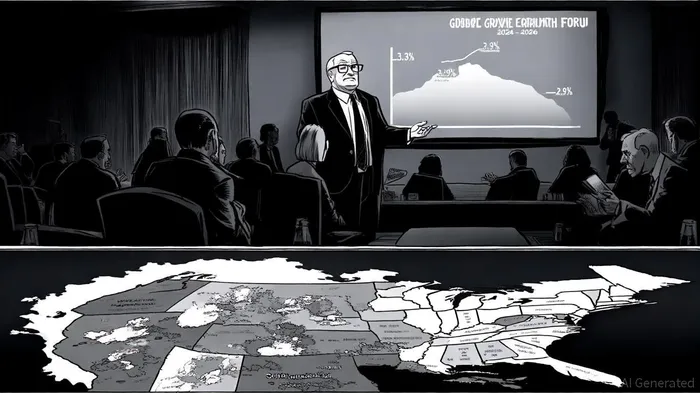







Comentarios
Aún no hay comentarios