
Navigating Geopolitical Uncertainty: The Strategic Value of Supply Chain Resilience in the U.S.-China Trade Truce Era
The U.S.-China trade truce extension, announced in May 2025, has temporarily calmed global markets by suspending reciprocal tariffs until late August. This 90-day pause has provided relief to sectors like technology and agriculture, but the underlying tensions remain unresolved. As investors assess the implications, one theme stands out: the strategic value of supply chain resilience and diversification in an era of geopolitical unpredictability.
The Truce's Immediate Impact and Lingering Risks
The extension has stabilized global supply chains, particularly in the tech sector, where China's dominance in rare earth minerals and advanced chip manufacturing is critical. U.S. semiconductor companies like NVIDIANVDA-- and AMDAMD-- have benefited from relaxed export controls, allowing AI chips to flow into China. This has fueled a tech sector resurgence, with the Nasdaq and S&P 500 hitting record highs in June 2025.
However, the truce is a tactical pause, not a resolution. The U.S. Commerce Department's recent restrictions on Huawei's AI chips—effectively banning their use in U.S.-aligned markets—highlight the fragility of this détente. For investors, the key challenge is balancing near-term gains with the risk of renewed regulatory clashes, particularly as AI becomes a central battleground in the U.S.-China rivalry.
Supply Chain Diversification: A Sector-by-Sector Analysis
The truce has accelerated a global shift toward supply chain diversification, with companies and governments adopting strategies to reduce reliance on China. Here's how different sectors are adapting:
Semiconductors and Advanced Manufacturing
The U.S. CHIPS Act, with its $52 billion investment, is driving reshoring of chip production. IntelINTC-- and TSMCTSM-- are building state-of-the-art facilities in the U.S., aiming for strategic independence by 2027. While this transition is costly and time-consuming, it reflects a broader trend: semiconductors are now viewed as critical infrastructure, not just a commodity. Investors should monitor companies like Intel and TSMC, as well as U.S. policy shifts that could further boost domestic production.Automotive and Green Energy
TeslaTSLA-- and General MotorsGM-- are pivoting to U.S.-based battery production to avoid tariffs on Chinese imports, now exceeding 30%. However, securing critical minerals like lithium and cobalt remains a hurdle. Companies like MP MaterialsMP-- and AlbemarleALB-- are expanding operations in Australia and Africa to diversify sourcing. Meanwhile, Vietnam and India are emerging as key hubs for EV components and solar panels, offering a more geopolitically stable alternative to China.Pharmaceuticals and Medical Devices
The U.S. is reshoring critical drug and medical device production, with MerckMRK-- and PfizerPFE-- leveraging federal incentives. This shift prioritizes supply chain resilience over cost efficiency, particularly in sectors tied to national security and public health. The sector's long-term success will depend on companies' ability to integrate automation and digital tools to streamline production.Logistics and Port Operators
Companies like C.H. Robinson and DP World are benefiting from the truce's temporary stability. These firms facilitate U.S.-China trade and are less exposed to tariff volatility than manufacturers. However, long-term growth hinges on resolving port bottlenecks and geopolitical risks.
Investment Opportunities in a Fragmented World
The U.S.-China trade landscape is increasingly fragmented, with China maintaining retaliatory tariffs on certain commodities while lowering others. For example, while soybean tariffs have been reduced, U.S. polyformaldehyde copolymer exports face a 74.9% anti-dumping tariff. This complexity demands agile investment strategies.
Key sectors to consider:
- Rare Earths and Critical Minerals: Companies involved in rare earth processing, such as MP Materials, are positioned to benefit from global demand for clean energy and tech applications.
- Emerging Market Equities: Vietnam, India, and Mexico are becoming alternative manufacturing hubs. Investors should focus on multinational corporations with exposure to these markets, such as Samsung Electronics and UnileverUL--.
- Logistics and Automation: Firms like ABB and Fanuc, which provide advanced robotics for reshoring efforts, are well-positioned for growth.
The Path Forward: Agility Over Certainty
The U.S.-China trade truce is a bridge, not a destination. Investors must prioritize agility and resilience, favoring sectors with strong fundamentals and global demand. The coming months will be critical: negotiations in Stockholm (July 2025) could determine whether the truce evolves into a framework for cooperation or leads to renewed escalation.
In this environment, companies that embrace diversification, invest in automation, and leverage free trade agreements will thrive. For investors, the lesson is clear: in a world of geopolitical uncertainty, the ability to adapt is the ultimate competitive advantage.
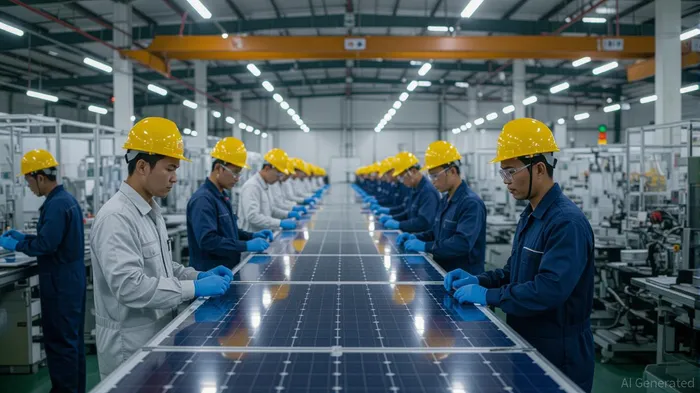
By focusing on supply chain resilience and strategic diversification, investors can navigate the turbulence of the U.S.-China trade dynamic and position themselves for long-term success. The future belongs to those who build not just for today, but for the uncertainties of tomorrow.





Comentarios
Aún no hay comentarios