
Navigating Geopolitical Storms: Short-Term Asset Reallocation in 2025
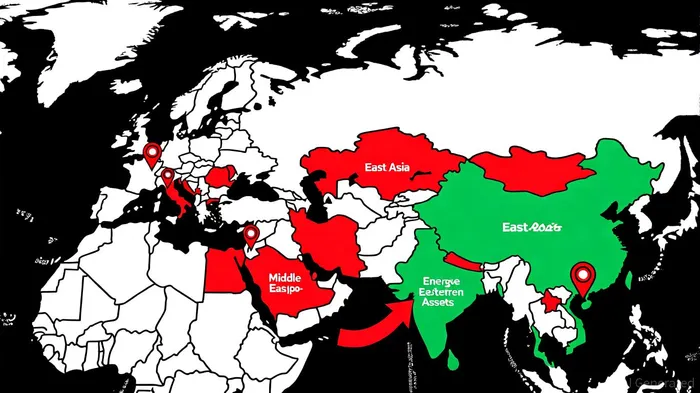
The world in 2025 is a tinderbox. From the U.S.-China tech cold war to the spiraling conflicts in the Middle East and the lingering scars of the Ukraine-Russia war, geopolitical risks are no longer abstract threats-they're market-moving forces. Investors who ignore these dynamics are playing with fire. But for those who can read the tea leaves, this chaos creates golden opportunities. Let's break it down.
The Risks That Can't Be Ignored
The U.S.-China rivalry isn't just about tariffs anymore-it's a full-blown battle for technological supremacy, with AI, semiconductors, and quantum computing as the new frontlines. According to a World Economic Forum report, this competition is fragmenting global supply chains and forcing companies to pick sides, creating volatility in everything from rare earth metals to cloud computing. Meanwhile, the Middle East is back in the spotlight, with energy prices teetering on the edge of a cliff due to escalating tensions, according to a J.P. Morgan report. And let's not forget the cyberwarfare arms race: as nations weaponize digital infrastructure, cybersecurity stocks are becoming the new "utility" sector, according to a T. Rowe Price article.
Where to Put Your Money: Sectors on the Rise
Defense and Energy: The New "Safe Havens"
Defense spending is blowing up. With the U.S. and its allies ramping up military budgets and China modernizing its forces, defense contractors are seeing orders surge. Lockheed MartinLMT-- (LMT) and BoeingBA-- (BA) are already benefiting, but don't sleep on smaller players like Raytheon Technologies (RTX)-they're the ones with the most room to run.
Energy? It's a no-brainer. As OPEC+ fiddles with production quotas and geopolitical snarls disrupt shipping lanes, energy prices are a rollercoaster. Short-term plays like oil drillers (e.g., ChevronCVX-- (CVX)) and LNG exporters are prime targets. But don't overlook the renewables angle: governments are pouring money into green energy to reduce dependence on volatile regions, making solar and wind infrastructure a long-term bet, according to a KPMG report.
Gold, Treasuries, and the "Unconventional" Safe Havens
Gold hit $2,500 an ounce in Q3 2025, defying logic as bond yields soared. Why? Because in a world where trust in institutions is eroding, gold remains the ultimate hedge. Pair it with short-dated U.S. Treasuries-yes, even as yields climb-and you've got a diversified safety net, as T. Rowe Price argues. But here's the twist: investors are also piling into inflation-protected securities (TIPS) and cryptocurrencies like BitcoinBTC-- (BTC), which are increasingly seen as digital gold, according to an EY analysis.
Emerging Markets: Opportunity Knocks (But Watch the Door)
Emerging markets are a mixed bag. On one hand, countries like India and Vietnam are becoming manufacturing hubs as companies ditch China for "friendshoring." On the other, conflicts in the Middle East and South Asia are making these markets dicey. The key? Focus on nations with strong fiscal policies and diversified exports. For example, Mexico's automotive sector is booming thanks to U.S. reshoring, while Indonesia's nickel reserves make it a critical player in the EV revolution, according to an HSBC analysis.
Case Studies: How the Pros Are Moving
Take a page from the European pension fund that used AI to dynamically adjust its portfolio. When tensions spiked in the Middle East, it ratcheted up allocations to inflation-protected securities and real assets like farmland and timber-sectors that thrive when chaos reigns, as T. Rowe Price notes. Similarly, a Scandinavian sovereign wealth fund pivoted to green bonds and renewable energy infrastructure, betting on the long-term shift toward sustainability. These moves weren't just reactive-they were strategic, leveraging volatility to lock in gains.
The Road Ahead: Stay Nimble, Stay Ahead
The message is clear: this isn't the time to sit on the sidelines. J.P. Morgan's Q3 2025 asset allocation report highlights a "modestly pro-risk" stance, with overweights in U.S. tech, Japan, and emerging markets-despite the geopolitical noise. The trick is balancing aggression with caution. Hedge your bets with defensive sectors like utilities and healthcare, but keep a chunk of cash ready to pounce on dips in AI or energy stocks.
Final Call: Act Now, Adapt Later
Geopolitical risks are here to stay, but they're also a catalyst for innovation and reallocation. The investors who thrive in 2025 won't be the ones clinging to old paradigms-they'll be the ones who see chaos as a chance to rebuild their portfolios from the ground up. So, dust off that playbook, double-check your hedges, and get ready to outmaneuver the curve.





Comentarios
Aún no hay comentarios