
Navigating Geopolitical Storms: Sector Resilience and Hedging Strategies in the Middle East
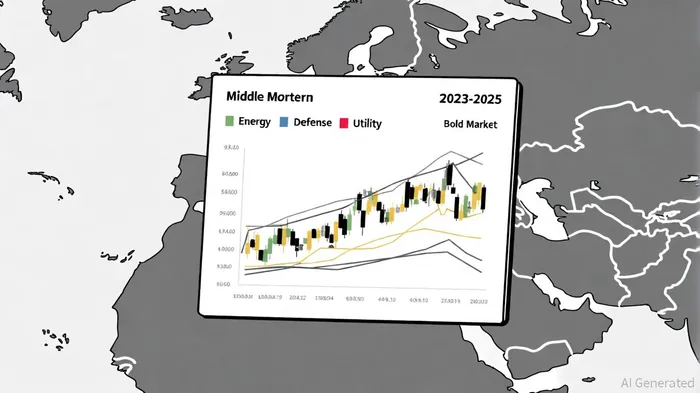
The Middle East remains a powder keg of geopolitical risks, from Iran's nuclear standoff with the West to the simmering Israel-Hamas conflict and regional proxy wars. Yet, for investors, volatility isn't always a villain-it's an opportunity to capitalize on sectoral resilience and deploy smart hedging strategies. Let's break down how to navigate this turbulent landscape.
The Historical Headwinds: Geopolitical Risks and Market Volatility
Geopolitical shocks in the Middle East have long acted as a double-edged sword for equities. Take Egypt's EGX30, which lost over 50% of its value during the Arab Spring in 2011, according to an IGSDA report. Similarly, U.S.-Iran tensions in 2023 triggered a 1% drop in the S&P 500 within days of military strikes, according to an LPL Research note. The common thread? Immediate market jolts, but recovery is often swift-the LPL analysis shows equities typically rebound within 42 days if economic fundamentals hold.
The energy sector, however, is a wildcard. A military confrontation in the region could send oil prices surging 10%–30%, rippling through global economies. Yet, as 2023's drone attacks on Israel demonstrated, prices often stabilize if tensions de-escalate quickly.
Sector Resilience: Where to Play the Long Game
1. Energy: The Unshakable Giant
Middle East energy markets have shown remarkable resilience. Despite missile attacks and supply fears, oil prices have remained stable due to robust supply buffers and advanced monitoring systems, a MENAFN report notes. Saudi Arabia, the UAE, and Oman are even pivoting to renewable energy, though progress is slow due to reliance on imported tech, per a Utilities Middle East article. For now, energy remains a cornerstone-investors should eye ETFs like the iShares MSCI Saudi Arabia ETF (KSA) or the iShares MSCI UAE ETF (UAE) for exposure, according to a MutualFunds.com list.
2. Defense: A Hidden Beneficiary
Geopolitical tensions are a tailwind for defense stocks. As governments ramp up spending, companies in the region and beyond benefit. In 2023, Middle East sovereign funds increased allocations to defense infrastructure, recognizing its dual role as a strategic and financial asset, as reported by MENAFN.
3. Financial Services: Reform-Driven Resilience
Saudi Arabia's banking sector, for instance, has maintained strong profitability despite turmoil, buoyed by Vision 2030 reforms, according to MutualFunds.com. The UAE's fintech boom-exemplified by Emirates NBD's acquisition of Emirates Islamic Bank-also highlights the sector's adaptability, a trend noted in IGSDA's coverage.
Hedging Strategies: Protecting Against the Unknown
1. Diversify with Safe Havens
When tensions flare, 67% of investors flee to gold or government bonds, IGSDA finds. Central banks in the Middle East are even stockpiling gold, with regional holdings expected to rise 15% by 2025, MENAFN projects. The iShares Gold Trust (IAU) or physical gold ETFs make sense here.
2. Leverage Derivatives
Sovereign wealth funds and institutional investors are increasingly using derivatives-currency swaps, oil futures, and ISDA-compliant instruments-to hedge against supply shocks, per the LPL Research analysis. For retail investors, options on energy ETFs or inverse VIX products can mimic this strategy.
3. Sector Rotation and ETFs
ETFs like the iShares MSCI Israel ETF (EIS) offer a 15.69% three-year annualized return, according to MutualFunds.com, capitalizing on Israel's tech resilience despite conflict. Pairing these with defensive utilities or consumer staples ETFs can balance risk.
The Bottom Line: Stay Informed, Stay Agile
Geopolitical risks in the Middle East won't vanish, but neither will the opportunities. Energy and defense sectors offer growth, while gold and derivatives provide safety. The key is agility-rotate sectors, hedge with alternatives, and keep a finger on the pulse of regional developments.
As the old adage goes, "Volatility is your friend if you know where to look." Right now, the Middle East is one of those places-if you're bold enough to play it smart.







Comentarios
Aún no hay comentarios