
Navigating Geopolitical Storms: Building Resilient Portfolios Amid Iran-Israel Tensions
The escalating conflict between Iran and Israel has thrust global markets into a volatile new phase, with geopolitical risks now inextricably linked to energy prices, equity sector rotations, and shifts in investor sentiment. As crude oil prices surge and stock markets gyrate, investors must reassess their portfolios to balance protection against downside risks while capitalizing on emerging opportunities. This article dissects the market impacts of the Iran-Israel standoff and proposes tactical allocations to navigate this precarious landscape.
The Oil Shock and Its Ripple Effects
The immediate trigger for market turbulence has been Israel's preemptive strikes on Iranian nuclear facilities, which sent West Texas Intermediate (WTI) crude prices soaring 13% before settling at a 6-7% gain. Analysts warn of further escalation: Goldman Sachs projects Brent crude could hit $90/barrel, while JPMorgan's worst-case scenario envisions $120/barrel if the conflict spills into the Strait of Hormuz. 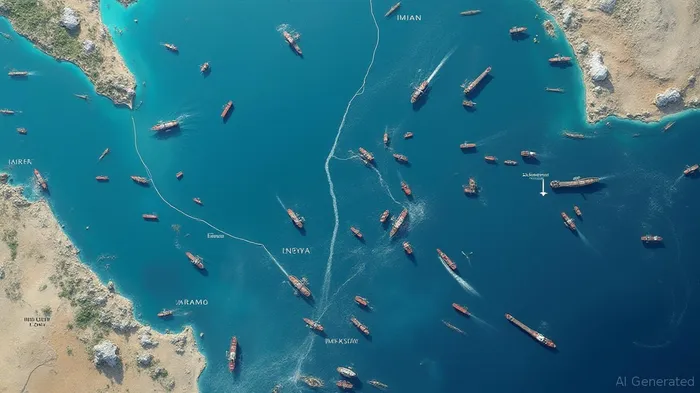
The energy sector has been the clearest beneficiary, with Exxon Mobil (XOM) and Chevron (CVX) rising 3–6% as investors bet on sustained oil price support. Energy service firms like Halliburton (HAL) and Schlumberger (SLB) also gained, reflecting expectations of increased production activity.
However, the oil-driven inflationary pressures pose risks. Analysts like Daiwa's Chris Scicluna caution that prices near $80/barrel could force central banks to delay rate cuts, complicating monetary policy. This creates a precarious balancing act for investors: profiting from short-term energy gains while hedging against inflationary headwinds.
Equity Markets: Winners and Losers in the Geopolitical Crossfire
The broader equity market has reacted nervously, with the S&P 500 and Nasdaq declining modestly as investors rotated into safer havens. The clearest losers are sectors exposed to oil price volatility: airlines (DAL, UAL) and cruise lines (RCL, CCL) fell 2–5% due to soaring fuel costs, while tech giants like Apple (AAPL) and Microsoft (MSFT) dipped 1–2.6% as growth stocks fell out of favor.
On the flip side, defense contractors such as Raytheon Technologies (RTX) and Lockheed Martin (LMT) surged 4.8–5.5%, fueled by expectations of increased military spending. Similarly, gold prices jumped to $3,400/ounce, with Bloomberg's Mike McGlone predicting a potential $3,600 peak if tensions escalate—a stark reminder of gold's role as a crisis hedge.
Bond Markets: Steady for Now, but Risks Loom
U.S. Treasury yields have remained surprisingly stable, with the 10-year note hovering around 4.36% despite the geopolitical turmoil. Carmignac's Kevin Thozet notes this reflects uncertainty over whether bond markets are pricing in inflation fears or safe-haven demand.
While central banks are unlikely to pivot policy immediately, prolonged conflict could force adjustments. Nuveen's Global Investment Committee warns that sustained oil prices above $80/barrel would amplify inflationary pressures, complicating the Fed's path. For bond investors, this suggests staying cautious on duration exposure and prioritizing high-quality, short-term debt.
Tactical Allocations: Building a Resilient Portfolio
To navigate this environment, investors should adopt a multi-pronged strategy:
Commodities as a Hedge: Allocate to gold (GLD) and energy equities (XLE) to capitalize on the conflict-driven price spikes. Consider broader commodity ETFs like the Invesco DB Commodity Index Tracking Fund (DBC), which offers exposure to oil, metals, and agricultural products.
Defensive Sectors: Utilities (XLU) and healthcare (XLV) offer stability, as their dividends and recession-resistant cash flows shield portfolios from volatility.
Reduce Exposure to Oil-Sensitive Sectors: Lighten positions in airlines and cruise lines until oil prices stabilize. Tech and growth stocks may remain under pressure until inflation fears ease.
Diversify Geographically: Consider exposure to Middle East-focused ETFs (such as the Market Vectors Gulf States ETF (MES)) for regional plays, but exercise caution due to geopolitical uncertainty.
Reassess ESG Portfolios: Traditional ESG funds, which often exclude fossil fuels and defense stocks, have lagged amid the Iran-Israel conflict. Investors may need to rebalance by adding tactical ESG exceptions or using “impact” funds that align with conflict-driven themes like energy security.
Final Considerations
The Iran-Israel standoff underscores a fundamental truth: geopolitical risks are now a core component of market volatility. While the immediate focus is on oil prices and defense stocks, investors must also prepare for second-order effects, such as supply chain disruptions or shifts in global alliances.
A resilient portfolio demands flexibility and discipline: protect capital through defensive allocations, capitalize on inflation-linked assets, and avoid overreacting to short-term noise. As Bob Elliott of Unlimited Funds reminds us, history shows that commodities can deliver outsized returns during conflicts—a lesson worth heeding in today's turbulent markets.
In this era of heightened geopolitical risk, the most successful investors will be those who blend opportunism with caution, ensuring their portfolios can weather storms while positioning for the calm that inevitably follows.





Comentarios
Aún no hay comentarios