
Navigating Geopolitical Risks in the Crypto Sector: Strategic Hedging in a Regulatory Uncertain World
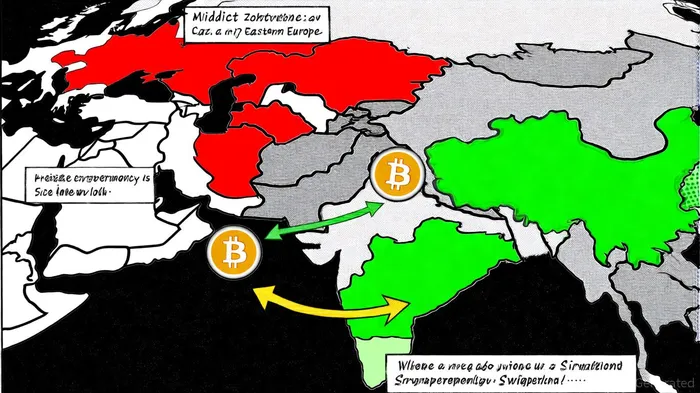
The cryptocurrency sector has become a battleground for geopolitical forces, regulatory experiments, and economic resilience strategies. As 2025 unfolds, investors face a dual challenge: navigating the volatility of global conflicts while deciphering the rapidly shifting regulatory landscape. For those seeking to hedge against these risks, the crypto sector offers both opportunities and pitfalls.
Geopolitical Tensions as Catalysts for Crypto Adoption
Geopolitical instability has accelerated the adoption of cryptocurrencies as tools for economic survival. Sanctioned nations like Russia and Iran have turned to BitcoinBTC-- and stablecoins to circumvent Western financial systems, with Russian entities using digital assets to sustain trade amid Western sanctions [1]. Similarly, in hyperinflationary economies such as Venezuela and Argentina, citizens have embraced cryptocurrencies to preserve purchasing power, with Bitcoin adoption rates rising by over 300% in these regions since 2023 [2].
However, this adoption has not translated into consistent safe-haven status for cryptocurrencies. During the 2024 stock market crash and the April 2024 Middle East conflict escalation, Bitcoin plummeted below $100,000—a stark contrast to gold's relative stability [3]. This duality—cryptocurrencies as both speculative assets and economic lifelines—complicates their role in hedging portfolios.
Regulatory Uncertainty: A Double-Edged Sword
Regulatory frameworks are reshaping the crypto landscape, creating both barriers and opportunities. The European Union's Markets in Crypto-Assets (MiCA) regulation, which took effect in late 2024, imposes stringent requirements on stablecoins and exchanges, aiming to harmonize rules across member states [4]. Meanwhile, the U.S. under a pro-crypto administration has passed the STABLE and GENIUS Acts, mandating 100% reserve backing for stablecoins while banning central bank digital currencies (CBDCs) [5].
These divergent approaches create a fragmented global market. For instance, Singapore and Hong Kong have emerged as crypto-friendly hubs, issuing over 30 Major Payment Institution (MPI) licenses for stablecoin operations and developing tailored regulatory frameworks [6]. Conversely, China's digital yuan project highlights the growing competition between CBDCs and decentralized assets, with Beijing aiming to reduce reliance on the U.S. dollar [7].
Strategic Hedging: A Framework for Investors
To navigate this volatile environment, investors must adopt a multi-layered hedging strategy:
- Jurisdictional Diversification: Allocate capital across crypto-friendly jurisdictions to mitigate regulatory risks. For example, Singapore's clear licensing regime and Switzerland's favorable tax policies make them attractive for institutional investors [8].
- Stablecoin Arbitrage: Leverage stablecoins like USDCUSDC-- and DAIDAI--, which are now subject to stricter reserve requirements under the STABLE Act, to hedge against fiat devaluation in unstable economies [9].
- Regulatory Alignment: Prioritize assets and platforms compliant with emerging regulations. The approval of EthereumETH-- spot ETFs in the U.S., for instance, has boosted institutional confidence, driving Ethereum's price higher [10].
- Decentralized Finance (DeFi) Exposure: Invest in DeFi protocols that offer yield generation and lending in regions with restricted access to traditional banking. However, balance this with caution, as DeFi remains a regulatory gray area in many jurisdictions [11].
The Road Ahead: Balancing Risk and Resilience
The crypto sector's future hinges on its ability to adapt to geopolitical and regulatory shifts. While digital assets offer unprecedented financial autonomy, their role as hedging tools remains contingent on macroeconomic conditions and policy clarity. Investors must remain agile, leveraging both on-chain data and geopolitical intelligence to anticipate market shifts.
As central banks and governments continue to experiment with CBDCs and regulatory frameworks, the crypto sector will likely see further consolidation. For now, the key to success lies in strategic hedging—balancing exposure to speculative assets with the stability of regulated instruments.






Comentarios
Aún no hay comentarios