
Navigating Geopolitical Risk: Strategic Investment Opportunities in the U.S.-China Trade Landscape
The U.S.-China trade war has evolved into a high-stakes geopolitical chess match, with tariffs, currency fluctuations, and supply chain realignments creating both risks and opportunities for investors. From 2023 to 2025, the two economic giants have alternated between de-escalation and renewed tensions, producing a volatile environment that demands strategic agility. This article dissects actionable investment strategies to profit from these shifts, leveraging sector rotation, options trading, and currency positioning.
Trade Policy Developments: A Timeline of Uncertainty and Opportunity
The May 2025 trade deal marked a pivotal moment, reducing U.S. tariffs on Chinese goods from 145% to 10% and Chinese tariffs on U.S. goods from 125% to 28%. This temporary truce stabilized markets, with J.P. Morgan Research projecting a 4.8% GDP growth for China in 2025. However, the August 2025 extension of the truce-keeping tariffs at 30% and 10% for another 90 days-introduced renewed uncertainty, as markets braced for potential escalations after August 2025, according to CNN.
The dynamic impacts of these policies are stark. U.S. manufacturing initially benefited from import protection, but service and agricultural sectors faced declines, according to options traders. Conversely, China's export diversification to ASEAN and the EU mitigated some losses, while fiscal stimulus (e.g., bond issuance and rate cuts) cushioned domestic demand, as noted by China Briefing. For investors, these shifts highlight the importance of sector-specific positioning and hedging against policy-driven volatility.
Currency Volatility: USD/CNY as a Barometer of Tensions
The yuan's depreciation against the dollar-peaking at 7.35 in April 2025-reflected China's strategic response to U.S. tariffs, according to CNN. While the People's Bank of China avoided aggressive devaluation, the gradual weakening of the yuan to 7.10 by September 2025 underscored the currency's sensitivity to trade policy, as noted on the YCharts blog. Forex traders capitalized on this volatility by employing carry trades and straddles, betting on further yuan declines or rebounds if tensions eased.
For example, a long-position trade on the yuan in late 2025 (as tariffs were rolled back) yielded gains as the currency stabilized. Conversely, short sellers profited during periods of escalation, such as the April 2025 tariff announcement, when the VIX surged to 60.13, a pattern highlighted by options traders. Currency traders must remain attuned to central bank interventions and geopolitical signals, as even temporary policy pauses can trigger sharp reversals.
Sector Rotation: Aligning with the Economic Cycle
Trade wars create distinct economic phases, each favoring specific sectors. During periods of tariff de-escalation (e.g., May–August 2025), cyclical sectors like industrials and consumer discretionary outperformed, as supply chains stabilized and demand for electronics and machinery rebounded. Conversely, defensive sectors such as healthcare and utilities gained traction during escalations, as investors sought safety amid market jitters, a trend discussed on the YCharts blog.
A case in point: In Q1 2025, as U.S. tariffs loomed, the Utilities Select Sector SPDR Fund (XLU) outperformed the S&P 500 by 21%, while the Technology Select Sector Index (XLK) surged during the May 2025 truce. Investors who rotated into XLK and out of XLU during this period capitalized on the shift from risk-off to risk-on sentiment.
Options Strategies: Hedging and Speculating in a Volatile Environment
Options trading thrived in the high-volatility environment of 2023–2025. Protective puts on sector indices (e.g., XLK for tech) became a staple for hedging against sudden downturns, while straddles and strangles allowed traders to profit from unpredictable price swings without directional bets, as noted by options traders. For instance, after the April 2025 tariff announcement, traders who purchased straddles on the S&P 500 reaped gains as the index swung between panic and recovery.
Vertical spreads and calendar spreads also gained traction. A bullish vertical spread on the Financial Select Sector Fund (XLF) in mid-2025 capitalized on the sector's outperformance during mid-cycle growth, while a calendar spread on the Energy Select Sector Fund (XLE) benefited from prolonged volatility in oil prices linked to trade tensions.
Actionable Insights for Investors
- Monitor Policy Timelines: The August 2025 truce expiration creates a binary event-either a permanent tariff reduction or a 54% U.S. tariff hike. Position portfolios accordingly, favoring sectors resilient to short-term shocks (e.g., healthcare) or those poised to benefit from supply chain reshoring (e.g., industrials).
- Leverage Currency Pairs: Use USD/CNY options or futures to hedge against yuan depreciation or speculate on rebounds if trade tensions ease.
- Dynamic Sector Rotation: Align with the economic cycle. For example, overweight Energy and Materials during inflationary periods and shift to Utilities and Healthcare during downturns.
- Options as Insurance: Allocate a portion of portfolios to protective puts or straddles during high-uncertainty periods (e.g., pre-announcements of tariff changes).
Conclusion
The U.S.-China trade war is not a static event but a fluid contest of economic leverage and diplomatic maneuvering. While the May 2025 truce offered temporary relief, the underlying structural issues-intellectual property disputes, supply chain dependencies-remain unresolved. Investors who adopt a proactive, adaptive approach-combining sector rotation, options strategies, and currency positioning-can transform geopolitical risk into a competitive advantage. As the August 2025 deadline looms, the key will be agility: preparing for both the best-case scenario of sustained de-escalation and the worst-case of renewed hostilities.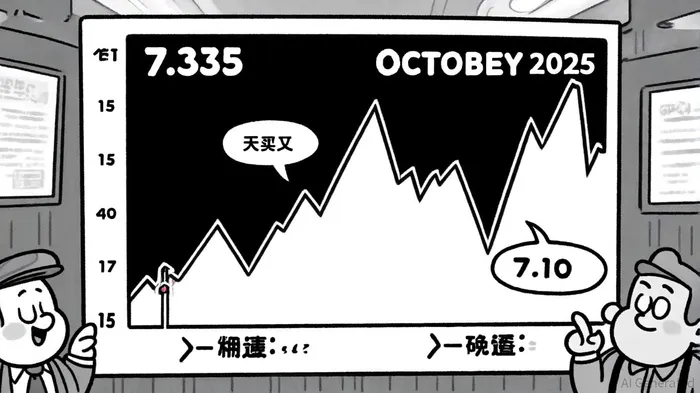







Comentarios
Aún no hay comentarios