
Navigating Geopolitical Risk: Investment Strategies for Trump's Cautionary Stance Toward China
In October 2025, President Donald Trump's escalation of U.S.-China trade tensions-marked by a 100% additional tariff on Chinese goods, bringing total tariffs to 130%-has sent shockwaves through global markets. This aggressive policy, framed as a response to China's rare earth export controls, has exacerbated supply chain fragility, triggered sharp market declines, and forced investors to recalibrate their strategies. As geopolitical risks intensify, understanding how to navigate this volatile landscape is critical for preserving capital and identifying opportunities.
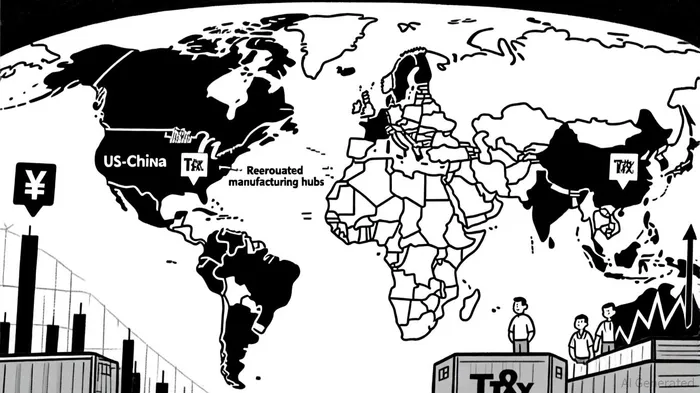
The Trump Tariff Regime: A Double-Edged Sword
Trump's 2025 policies have created a paradox: while they aim to protect U.S. industries, they also introduce systemic risks. The 130% tariff on Chinese imports, coupled with threats to restrict U.S. tech exports to China, has disrupted global supply chains and inflamed inflationary pressures. According to a report by CNN, the S&P 500 plummeted 2.7% and the Nasdaq dropped 3.5% following the tariff announcement, reflecting investor fears of a trade war resurgence[3]. Meanwhile, U.S. companies reliant on Chinese manufacturing face a "Catch-22": remaining in China to avoid higher tariffs risks long-term dependency, while relocating production incurs steep costs and operational delays[2].
Strategic Diversification: Beyond "China+1"
The "China+1" strategy-diversifying manufacturing to countries like Vietnam, India, and Mexico-has become increasingly unworkable due to overlapping tariff pressures and infrastructure limitations[2]. Investors are now advised to adopt a more nuanced approach:
1. Geographic Diversification: Prioritize markets with lower political risk and robust infrastructure. For example, India's growing tech and manufacturing sectors, supported by U.S.-India trade agreements, offer a viable alternative to China[4].
2. Sectoral Hedging: Defensive sectors like utilities and healthcare, which are less exposed to tariffs, have shown resilience. The Utilities Select Sector SPDR Fund (XLU) and Vanguard Total Bond Market ETF (BND) are highlighted for their stability[1].
3. Technology Exposure: China-based tech ETFs, such as KraneShares CSI China Internet ETF (KWEB) and Invesco China Technology ETF (CQQQ), have outperformed U.S. counterparts, capitalizing on the decoupling of global tech markets[1].
Hedging Against Volatility: Assets and Instruments
Financial institutions have recommended specific tools to mitigate risks:
- Gold and Commodities: As a safe-haven asset, gold surged to $3,500 in April 2025 amid trade tensions, with central banks and institutional investors driving demand[3].
- Inflation-Protected Securities: U.S. Treasury Inflation-Protected Securities (TIPS) and longer-duration bonds are favored for their real yield advantages in an inflationary environment[5].
- Liquid Alternatives: BlackRock advocates for digital assets and liquid alternatives to diversify portfolios amid shifting correlations between stocks and bonds[1].
Sector-Specific Opportunities and Risks
While tariffs disproportionately affect export-heavy sectors like technology and materials, opportunities exist in less exposed areas:
- Services and Cybersecurity: Sectors with low foreign revenue exposure, such as software and cybersecurity, are less vulnerable to tariffs and benefit from AI-driven growth[2].
- European Financials: The iShares MSCI Europe Financials ETF (EUFN) has outperformed U.S. peers, reflecting the EU's push for strategic autonomy[1].
- Defensive Stocks: Healthcare and utilities are expected to outperform cyclicals in a prolonged tariff regime, given their stable demand and lower geopolitical exposure[2].
Conclusion: Agility in an Uncertain Era
Trump's 2025 policies have redefined the investment landscape, blending protectionism with geopolitical brinkmanship. For investors, the key lies in balancing risk mitigation with strategic agility. By diversifying geographically, hedging with defensive assets, and capitalizing on sector-specific opportunities, portfolios can weather the turbulence while positioning for long-term growth. As the U.S. and China navigate their interdependent yet adversarial relationship, adaptability will remain the cornerstone of successful investment strategies.







Comentarios
Aún no hay comentarios