
Navigating Geopolitical and Regulatory Crosscurrents: Snam's Strategic Reassessment in Europe's Energy Transition
The Geopolitical Undercurrents of a Stalled Deal
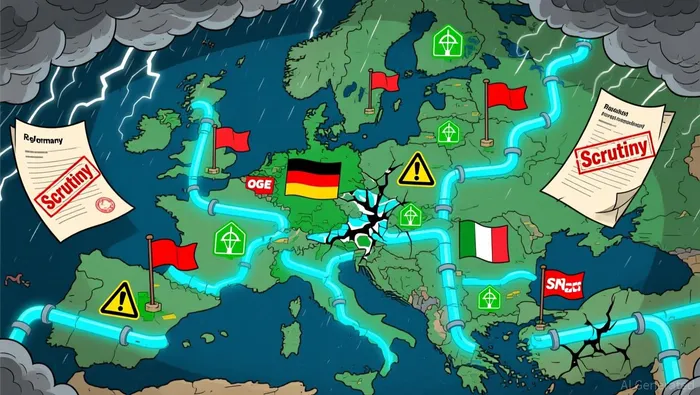
The German government's resistance to the Snam-ADIA deal highlights the intersection of energy security and geopolitical risk. As noted by analysts, Europe's wariness of Chinese investments in energy infrastructure has intensified since 2023, driven by concerns over supply chain dependencies and national security. Snam's refusal to "pursue the acquisition 'come hell or high water'" signals a pragmatic recalibration of its international expansion strategy. This shift aligns with a broader European Union (EU) policy pivot toward insulating energy systems from external vulnerabilities, a theme central to the bloc's Clean Industrial Deal, launched in February 2025.
Strategic Resilience Amid Regulatory Uncertainty
Despite the setback, Snam's strategic posture remains anchored in long-term decarbonization goals. The company's collaboration with the European Investment Bank on a €264 million loan to integrate biomethane into Italy's gas network exemplifies its commitment to aligning with EU climate objectives. This initiative, which includes constructing 240 km of new pipelines to transport renewable energy, supports the National Recovery and Resilience Plan (NRRP) and the REPowerEU strategy. Such projects not only mitigate the impact of the terminated OGE deal but also position Snam as a key player in the EU's transition to low-carbon infrastructure.
Financial analysts have noted that Snam's focus on domestic decarbonization projects has offset the lack of immediate strategic shifts post-termination. RBC analyst Stephen D'Ambrisi highlighted that OGE Energy's recent tailwinds-such as data center-driven demand growth-have not yet translated into significant earnings upside. This suggests that Snam's decision to pivot away from the OGE stake may not have a material near-term impact on its valuation, even as it redirects capital toward EU-aligned initiatives.
The EU's Regulatory Framework: A Double-Edged Sword
The EU's aggressive regulatory agenda, including streamlined permitting for renewable projects and a €1 billion industrial decarbonisation facility, offers Snam and its peers a clearer long-term investment horizon. However, these initiatives also introduce short-term volatility. For example, the EU's plan to reduce non-energy taxes on electricity and accelerate offshore grid integration in the North Sea could reshape competitive dynamics in the sector. Snam's ability to leverage these policies-while navigating the geopolitical sensitivities that derailed its ADIA deal-will determine its success in the next phase of the energy transition.
Implications for Investors
For investors, Snam's experience underscores the dual risks and opportunities inherent in Europe's energy transition. On one hand, regulatory and geopolitical headwinds can disrupt high-profile deals, as seen with the ADIA termination. On the other, the EU's commitment to decarbonisation creates a fertile ground for companies that align with its strategic priorities. Snam's EIB-backed biomethane project and its carbon neutrality target for 2040 position it to benefit from the €600 billion in grid upgrades planned by 2030.
Yet, the company's reliance on domestic projects also exposes it to the slower pace of EU-wide integration. While the bloc aims to finalize cross-border interconnector projects by 2026, Snam's current strategy appears to prioritize Italy's energy transition over broader European expansion. This could limit its growth potential in the short term, even as it insulates the company from geopolitical risks.
Conclusion
Snam's terminated stake-sale with ADIA is a microcosm of the challenges facing energy infrastructure firms in Europe. The deal's collapse highlights the growing influence of geopolitical considerations in regulatory decisions, while the company's pivot to EU-backed decarbonisation projects illustrates a strategic resilience that could pay dividends in the long run. As the EU's regulatory framework matures, investors must weigh the immediate uncertainties of policy implementation against the transformative potential of a unified, low-carbon energy market. For Snam, the path forward lies in balancing these dual imperatives-navigating short-term turbulence while capitalizing on the long-term tailwinds of the energy transition.







Comentarios
Aún no hay comentarios