
Navigating Geopolitical Minefields: Assessing Portfolio Risks Linked to Gaza Humanitarian Foundation
The Middle East has long been a cauldron of geopolitical volatility, but the emergence of the Gaza Humanitarian Foundation (GHF) has injected new layers of complexity into regional infrastructure projects. As tensions between Israel, Hamas, and global powers escalate, investors must scrutinize exposure to entities entangled with the GHF—a Delaware-registered organization whose operations are deeply embedded in U.S.-Israeli strategic objectives.
The GHF's Geopolitical Tightrope
The GHF, launched in 2023, is a privately managed entity with ties to U.S. evangelical leaders, private military firms, and Israeli intelligence networks. Its executive chairman, Rev. Johnnie Moore—a former Trump ally—has framed the group as a humanitarian alternative to UN-led efforts. Yet its operational structure reveals a stark reality: the GHF's aid distribution is intertwined with Israel's military objectives, such as its “Gideon's Chariots” campaign to relocate Gazans southward.
Key Portfolio Risks:
1. Operational Disruptions: The GHF's reliance on IDF-controlled zones creates a direct link to military actions. Over 500 civilian deaths and 4,000 injuries by mid-2025, attributed to violence near aid sites, highlight the fragility of its logistics. Investors in private security contractors like Safe Reach Solutions (or similar firms) face risks of operational halts or reputational damage.
2. Funding Volatility: While the GHF reported $119M in May 2025 from “other government donors,” its opaque funding streams—including alleged Israeli shellSHEL-- company ties—could lead to sudden capital cuts.
3. Regulatory Scrutiny: U.S. lawmakers and European governments may impose sanctions on entities complicit in humanitarian controversies. The GHF's alignment with the Trump Plan—a U.S.-backed proposal to resettle Gazans—could trigger legal challenges or diplomatic fallout.
The Infrastructure Angle: A Double-Edged Sword
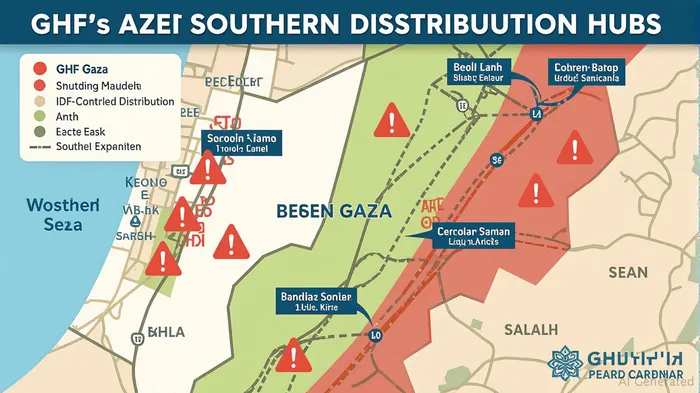
The GHF's activities are part of a broader push to reshape Gaza's infrastructure. Its distribution hubs, managed by U.S. private contractors, serve as de facto logistical nodes for regional influence. However, this creates vulnerabilities:
- Reputational Damage: Major aid groups like Oxfam and Save the Children have boycotted the GHF, citing ethical breaches. Infrastructure firms partnering with GHF-linked entities risk ESG downgrades.
- Geopolitical Blowback: Middle Eastern infrastructure projects (e.g., ports, roads) near GHF zones could face sabotage or sanctions if perceived as enabling displacement.
Investment Strategy: Mitigating Exposure
- Avoid Direct Ties: Steer clear of companies directly contracted by the GHF or its U.S. security partners.
- Hedge with Commodities: Geopolitical instability often boosts gold and oil prices. Allocate 5–10% of portfolios to commodities via ETFs like GLD or USO.
- Focus on Neutral Infrastructure: Prioritize projects in less contentious regions (e.g., UAE's renewable energy initiatives) or those with multilateral backing (e.g., World Bank-funded projects).
- Monitor Geopolitical Indices: Track the MSCIMSCI-- Middle East Index and defense sector ETFs (e.g., PXMD) for volatility signals.
Conclusion
The GHF's rise underscores the perils of conflating humanitarian aid with geopolitical strategy. For investors, the lesson is clear: Middle Eastern infrastructure projects linked to contentious entities like the GHF carry disproportionate risks—from sudden funding cuts to reputational collapse. Diversification, hedging, and a laser focus on ESG-compliant opportunities are critical to navigating this minefield.
As the region's tensions simmer, portfolios must remain agile—ready to pivot when the next geopolitical tremor strikes.







Comentarios
Aún no hay comentarios