
Navigating Geopolitical Crosscurrents: Strategic Sector Rotation in a Post-Deal World
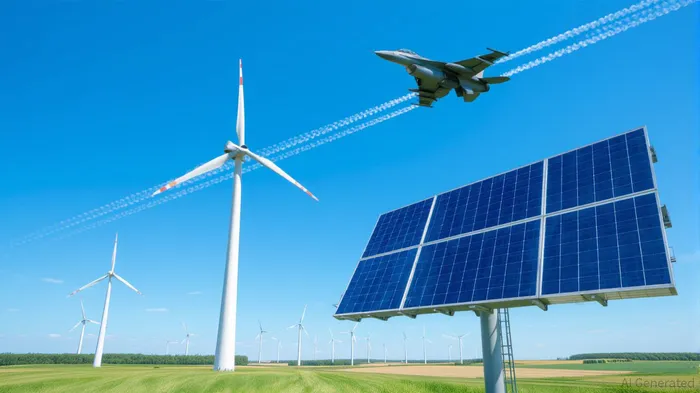
The U.S.-EU trade agreement finalized in July 2025 has recalibrated the dynamics of global equity markets, offering both clarity and uncertainty. While the deal curtailed the worst-case tariff scenarios, it also introduced new asymmetries that have reshaped sector valuations and investor behavior. For those seeking to navigate the volatility of a post-deal landscape, the key lies in strategic sector rotation and disciplined risk mitigation.
The New Geopolitical Equilibrium
The July 2025 agreement, which capped U.S. tariffs on EU goods at 15% and secured $600 billion in EU investments into U.S. infrastructure, initially stabilized markets. The S&P 500 and Nasdaq Composite surged in the quarter following the deal, with the Nasdaq outperforming due to megacap earnings and AI optimism. However, the euphoria was tempered by sector-specific headwinds. European automakers faced a sixfold tariff increase, while U.S. steel and aluminum producers grappled with 50% EU tariffs. Energy and defense, however, emerged as clear beneficiaries.
Sector Rotation: Winners and Losers
Energy and Defense: The New Pillars
The EU's commitment to $750 billion in U.S. energy exports has positioned American LNG firms like Cheniere EnergyLNG-- and NextEra EnergyNEE-- as top performers. Similarly, defense contractors such as Lockheed MartinLMT-- and Raytheon Technologies secured multiyear contracts under the EU's $150 billion procurement pledge. These sectors now offer a unique blend of policy-driven growth and geopolitical insulation.
Automotive and Pharmaceuticals: Navigating Uncertainty
European automakers initially rallied post-announcement but later retreated as investors questioned the enforceability of the EU's spending commitments. Meanwhile, pharmaceuticals face a cloud of uncertainty, with potential tariffs as high as 200% prompting firms like Roche and NovartisNVS-- to reshore production. U.S. biotech firms with domestic supply chains, such as ModernaMRNA--, are emerging as hedges against this risk.
Technology and AI: A Mixed Bag
The Nasdaq's outperformance in Q2 2025 was fueled by AI-driven earnings and rate-cut optimism. However, the EU's ambiguous stance on semiconductorON-- tariffs and its push for domestic pharmaceutical production pose long-term risks. Investors are advised to balance exposure with defensive tech plays, such as data-center REITs or cloud infrastructure providers.
Risk Mitigation: Diversification and Derivatives
Geographic diversification has become critical. Pairing U.S. energy stocks (e.g., ExxonMobil) with European renewable energy firms (e.g., Siemens Energy) helps hedge against regional volatility. Derivatives on sector ETFs, such as the iShares Global Clean Energy ETF (ICLN), offer additional protection against short-term swings in energy prices or trade policy shifts.
The Road Ahead: Tactical Adjustments
As the Fed delays rate cuts to assess inflationary impacts of tariffs, investors must remain agile. Key indicators to monitor include the U.S. trade deficit with the EU, the EU's anti-coercion instrument activation status, and the pace of U.S. LNG infrastructure development. For those with a longer time horizon, the EU's $600 billion infrastructure pledge in clean energy and AI presents opportunities in firms like NextEra Energy or semiconductor leaders such as ASML.
Conclusion: A Framework for Resilience
The U.S.-EU trade deal is a temporary truce, not a permanent solution. Investors who overweight energy and defense while hedging pharmaceutical and automotive risks are best positioned to capitalize on near-term gains and navigate evolving trade dynamics. In a world of geopolitical crosscurrents, adaptability and a focus on structural resilience will define success in 2025 and beyond.





Comentarios
Aún no hay comentarios