
Navigating FX Markets Amid Tariff Uncertainty: Central Bank Policies and Currency Opportunities
The global FX landscape in mid-2025 is defined by a paradox: persistent trade tensions have created prolonged uncertainty, yet central banks are responding with divergent policies that are reshaping currency dynamics. As the Federal Reserve hesitates on rate cuts, the Bank of Japan (BOJ) faces fiscal headwinds, and Asian economies navigate trade risks, investors must recalibrate their strategies to exploit opportunities and mitigate risks. This article explores how shifting inflation trends, central bank actions, and tariff volatility are creating distinct opportunities in the U.S. dollar, yen, and Asian currencies.
The Fed's Hesitant Hand: USD Strength Persists
The Federal Reserve's June 2025 decision to keep rates at 4.25%-4.5% underscores its cautious approach to inflation and trade risks. While core PCE inflation has eased to 2.6%, the Fed remains wary of tariff-driven cost pressures and labor market resilience (unemployment at 4.1%).
This patience is bolstering the USD. Even with expected cuts in late 2025 or 2026, the U.S. yield curve remains steep relative to peers, attracting carry trades. The dollar's safe-haven appeal is amplified by geopolitical risks, such as Middle East tensions and U.S.-China trade disputes. Actionable Insight: Maintain a long USD bias against majors like the yen and euro, but hedge against abrupt Fed pivots via options or inverse ETFs.
Japan's Yen Dilemma: Fiscal Risks and Policy Gridlock
Japan's fiscal and monetary challenges are exacerbating yen weakness. The BOJ's June decision to halve bond sales to ¥200 billion/month reflects its struggle to balance tapering with market stability. With debt at 265% of GDP and 10-year bond yields at 0.5%, even a modest rise in yields could add ¥2.5 trillion to annual interest costs.
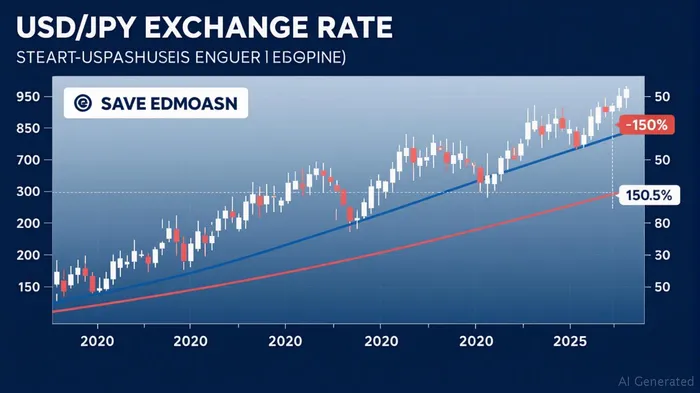
Trade tensions are compounding the pain. A weaker yen (USD/JPY near 150) boosts export revenues but fuels import inflation, squeezing households. The BOJ's reluctance to tighten further leaves the yen vulnerable to global rate differentials. Actionable Insight: Short JPY/USD futures or use inverse ETFs like DXJ to profit from depreciation. Avoid long-dated JGBs; focus on shorter durations or inflation-linked bonds.
Asian Currencies: Diversification Meets Resilience
While the yen falters, Asian currencies like the Singapore dollar (SGD) and South Korean won (KRW) are proving resilient. These economies benefit from diversified trade ties, tech-driven growth, and central banks that are more proactive in managing inflation. For example:
- Malaysia's ringgit (MYR): Supported by commodity exports and a current account surplus.
- Taiwan's NT dollar: Underpinned by tech exports and stable inflation.
Central banks in the region are navigating trade risks with mixed policies. The Reserve Bank of India (RBI) has kept rates steady, while Thailand's central bank has gradually normalized. Actionable Insight: Allocate 5-10% of FX exposure to Asian baskets via ETFs like DBJP or FEZ, which track regional currencies. Monitor China's trade policies closely—any de-escalation could boost ASEAN currencies.
Key Risks and Hedging Strategies
- Fed Surprise Cuts: If inflation drops faster than expected, USD could weaken. Use put options on USD/JPY to cap losses.
- BOJ Policy Shift: A sudden yield curve control adjustment could spike JGB yields, temporarily strengthening the yen. Diversify yen exposure with yen-denominated equities.
- Tariff Escalation: A U.S.-China trade war could hurt Asian exporters. Pair currency bets with inverse China ETFs (FXI) or gold (safe haven).
Conclusion: Position for Volatility, Not Certainty
In this era of tariff uncertainty, central bank policies and inflation dynamics are the key drivers of FX markets. The USD's relative strength, Japan's fiscal fragility, and Asia's resilience present clear paths for profit—but require vigilance. Investors should:
- Go long USD against JPY and EUR.
- Short JPY via futures or ETFs, but stay nimble on BOJ moves.
- Diversify into Asian currencies through ETFs, hedging with inverse China exposure.
The coming months will test central banks' resolve. Stay agile.







Comentarios
Aún no hay comentarios