
Navigating the Future: How Navigator Holdings is Reshaping Energy Logistics Through Strategic Capital Allocation
In an era where energy logistics face relentless pressure from regulatory shifts, volatile demand, and technological disruption, Navigator HoldingsNVGS-- (NYSE: NVGS) has emerged as a case study in disciplined capital allocation and long-term value creation. By strategically modernizing its fleet, optimizing infrastructure, and leveraging market arbitrage opportunities, the company is positioning itself to thrive in a sector undergoing profound transformation.
Fleet Modernization: A Catalyst for Operational Efficiency
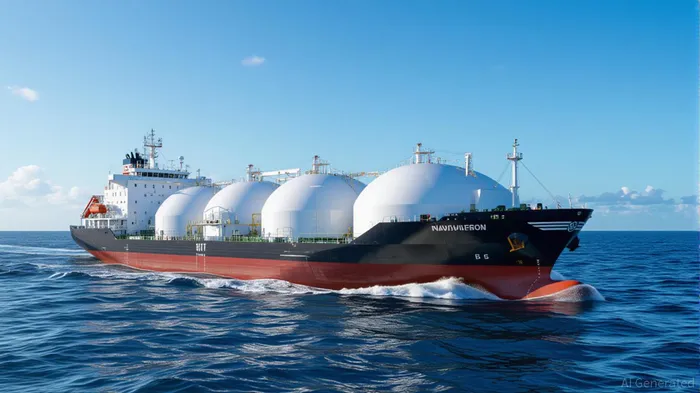
Navigator's recent acquisition of three ethylene-capable liquefied gas vessels—Navigator Hyperion, Navigator Titan, and Navigator Vesta—for $84 million underscores its commitment to fleet modernization. These German-built vessels, now operating in the spot market, not only expand the company's capacity but also enhance its ability to serve niche markets with specialized cargo handling. While specific fuel efficiency metrics remain undisclosed, the 92.4% fleet utilization rate in Q1 2025 (up from 89.3% in the same period in 2024) and a 7.3% year-over-year increase in average daily Time CharterCHTR-- Equivalent (TCE) rates suggest operational improvements.
The strategic value of these acquisitions lies in their alignment with the growing ethylene export sector, particularly in the U.S. Gulf Coast. By securing vessels tailored to this market, NavigatorNVGS-- reduces reliance on generic dry bulk carriers, which face stiffer competition and lower margins. This specialization allows the company to capture higher charter rates during periods of supply tightness, a critical advantage in a sector where asset specificity often dictates profitability.
Financial Discipline: Balancing Growth and Prudence
Navigator's financial strategy exemplifies a rare blend of growth ambition and fiscal restraint. The $74.6 million Senior Secured Term Loan from Nordea Bank Abp, used to partially fund the vessel acquisitions, features a non-amortizing structure for the first 18 months and a modest interest rate of Term SOFR plus 180 basis points. This approach minimizes near-term liquidity pressure while providing flexibility to refinance or repay as market conditions evolve.
The company's May 2025 $300 million Senior Secured Term Loan and Revolving Credit Facility further illustrates its proactive stance. By securing long-term financing at favorable terms, Navigator ensures it can fund future investments without overleveraging. This contrasts with peers who rely on short-term debt or equity dilution, which can erode shareholder value during downturns. The ability to self-fund the $4 million final contribution for its Ethylene Export Terminal expansion (completed in December 2024) also highlights its strong cash flow generation.
Market Arbitrage: Capitalizing on Structural Shifts
Navigator's strategic positioning extends beyond asset management to exploiting market inefficiencies. The expansion of its 50%-owned Morgan's Point ethylene export terminal—from 1 million to 1.55 million tons per annum—creates a flywheel effect: increased terminal capacity drives demand for its vessels, while vessel availability supports terminal utilization. This synergy is particularly valuable in a sector where infrastructure bottlenecks often limit growth.
The company's dual approach to chartering—securing multi-year offtake contracts while retaining spot market flexibility—further enhances its resilience. Long-term contracts provide stable cash flows, while spot operations allow Navigator to capitalize on short-term price spikes. For instance, the recent surge in ethylene demand from Asia, driven by petrochemical expansion, has created arbitrage opportunities for companies with the right assets in the right locations.
The Road Ahead: Risks and Opportunities
While Navigator's strategy is compelling, investors must remain cognizantCTSH-- of risks. Regulatory shifts, such as the IMO's 2020 sulfur cap and potential carbon pricing mechanisms, could increase compliance costs. However, the company's focus on operational efficiency—evidenced by its high utilization rates and TCE growth—suggests it is already adapting to these pressures.
The broader energy transition also presents a paradox: while renewable energy gains traction, ethylene demand is expected to grow for decades due to its role in plastics and industrial materials. Navigator's specialization in this segment positions it to benefit from this "green paradox," where traditional energy logistics remain indispensable even as the sector evolves.
Investment Thesis
Navigator Holdings' strategic modernization, financial prudence, and market agility make it a compelling long-term investment. For investors seeking exposure to the energy logistics sector, NVGS offers a rare combination of asset specificity, operational discipline, and growth potential. The company's ability to generate consistent cash flows while reinvesting in high-ROIC projects—such as the terminal expansion and vessel acquisitions—creates a durable competitive advantage.
In a market where many shipping firms struggle with overleveraging and outdated fleets, Navigator's approach is a masterclass in capital efficiency. As the energy logistics sector navigates the next phase of its evolution, companies that prioritize long-term value over short-term gains will emerge as leaders—and Navigator is already charting a course toward that future.







Comentarios
Aún no hay comentarios