
Navigating the New Frontier: Regulatory Risk in Cryptocurrency and the Path to Market Maturity
The cryptocurrency market of 2025 stands at a crossroads. Once a Wild West of speculation and innovation, it is now being reshaped by a wave of regulatory frameworks aimed at balancing investor protection with market maturation. While these developments signal crypto's integration into traditional finance, they also introduce new risks-compliance costs, fragmentation, and stifled innovation-that investors and firms must navigate.
Regulatory Advancements: A Double-Edged Sword
In 2025, major jurisdictions have moved decisively to regulate crypto. The U.S. SEC and CFTC's Joint Statement on spot crypto asset products and the GENIUS Act for stablecoins have provided clarity for exchanges and institutional investors, fostering mainstream adoption, according to a Finance Monthly overview. Similarly, the EU's Markets in Crypto-Assets (MiCA) regulation, fully effective by late 2024, has harmonized rules across 27 member states, setting global benchmarks for licensing, stablecoin reserves, and transparency, as detailed in a FinancialContent report.
These frameworks aim to enhance investor trust. For instance, MiCA's requirement for stablecoins to be 1:1 backed by high-quality assets reduces the risk of collapses like Terra's 2022 meltdown, as explained in a Coin Edition analysis. Meanwhile, Hong Kong and Singapore's innovation-friendly licensing regimes have attracted global capital, proving that regulation can coexist with growth, according to a Crypto.com University guide.
Investor Protection and Market Maturation
Regulators increasingly recognize crypto's permanence. The U.S. and Hong Kong's potential approval of spot crypto ETFs in 2025 marks a milestone in institutional adoption, with BlackRock and Fidelity leading the charge, per an Analytics Insight report. Such products offer retail investors a safer on-ramp to crypto, while institutional participation boosts liquidity and price stability.
However, tokenized stocks-a 2025 innovation-highlight lingering gaps. Unlike traditional equities, they often lack voting rights and are structured as derivatives, exposing investors to counterparty risk and limited transparency, as noted in a Reuters report. Regulatory frameworks like MiCA and the GENIUS Act aim to address these issues by mandating audits and reserve disclosures, but the sector remains nascent.
Risks: Compliance Costs, Fragmentation, and Stifled Innovation
While regulation brings order, it also introduces friction. Compliance costs have surged, with global penalties for crypto firms reaching $1.23 billion in the first half of 2025 alone-a 417% increase-due to AML/KYC mandates and the FATF's Travel Rule, according to a ComplianceHub guide. Smaller firms, particularly in the EU, struggle with MiCA's licensing and transparency obligations, which require costly infrastructure upgrades, as highlighted in a PWC report.
Regulatory fragmentation further complicates the landscape. Of 75 major economies, 45 permit crypto fully, while 20 impose partial bans and 10 enforce near-total bans, based on a CoinspaidMedia survey. The U.S. lacks a unified federal framework, relying on overlapping SEC, CFTC, and FinCEN rules. This patchwork creates uncertainty, as noted in the Crypto.com University guide.
Meanwhile, innovation is at risk. MiCA's stringent capital and risk management rules have deterred smaller crypto-native firms from entering the EU market, according to reporting by Analytics Insight. In the U.S., DeFi projects face friction as traditional regulations are applied to decentralized protocols-requiring front-end registration and protocol-level disclosures-undermining their core ethos of decentralization, a concern also discussed in the Crypto.com University guide.
The Balancing Act: Protection vs. Progress
The challenge for regulators is to avoid stifling innovation while protecting investors. The UK's upcoming "same risk, same regulation" framework and Australia's costly licensing requirements exemplify the tension between oversight and agility, as observed in the Coin Edition analysis. Conversely, Switzerland and Singapore's progressive approaches demonstrate that innovation can thrive under clear rules.
For investors, the key is to assess how regulatory shifts impact their portfolios. Firms with robust compliance infrastructure-like Binance and Coinbase-are better positioned to navigate MiCA and the GENIUS Act. Conversely, smaller players or DeFi protocols may face headwinds unless regulators adapt.
Conclusion: A Maturing Market, but at What Cost?
Cryptocurrency is undeniably maturing. Yet, the path to legitimacy is fraught with risks. While regulations like MiCA and the GENIUS Act enhance investor protection and attract institutional capital, they also impose compliance burdens and fragment the market. The future of crypto will depend on regulators' ability to strike a balance-fostering innovation without sacrificing stability. 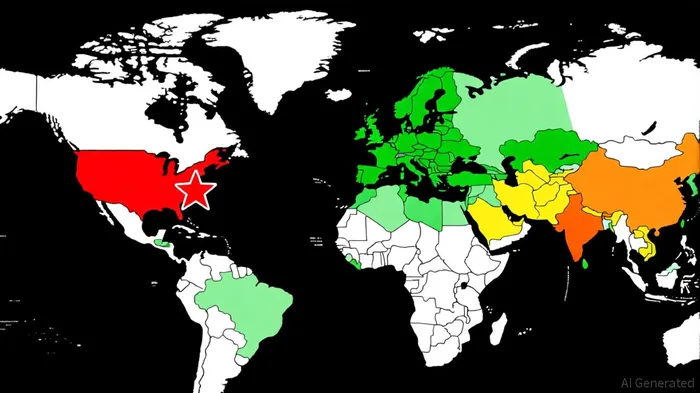





Comentarios
Aún no hay comentarios