
Navigating the Fog: Investor Strategies Amid Fed Uncertainty and Government Shutdowns
The is no stranger to navigating choppy waters, but the looming threat of government shutdowns and data delays has turned the economic seas into a tempest. With key economic indicators like the jobs report and CPI at risk of being buried under bureaucratic gridlock, investors must prepare for a world where the Fed is flying blind. This isn't just about missing a data point-it's about losing the compass that guides monetary policy.
The Data Blackout: A Recipe for Policy Paralysis
When the (BLS) shuts its doors, the entire economic ecosystem falters. As CNBC reports, a prolonged shutdown could delay the release of critical inflation and employment data for months, leaving the Fed with outdated or incomplete information. As one economist put it, this would force the Fed to "fly blind," increasing the risk of misjudging inflationary pressures or labor market strength, as CNBC noted.
The consequences are twofold: First, the Fed's data-dependent approach becomes a liability. Second, the uncertainty spills into markets, amplifying volatility. For example, during the 2023 shutdown scare, , surpassing even the chaos of the early pandemic, the St. Louis Fed found. This isn't just noise-it's a warning shot for investors to recalibrate their strategies.
Investor Preparedness: Diversify, Hedge, and Stay Agile
In a data-starved environment, the old rules of investing don't apply. Here's how to position your portfolio:
Defensive Sectors: The Unshakable Anchors
When the economy stumbles, consumer staples and utilities become safe havens. Procter & Gamble (PG) and Walmart (WMT) have historically outperformed during fiscal crises, as households prioritize essentials over discretionary spending, Wedbush notes. Similarly, utility companies like Dominion Energy (D) offer stable dividends and low volatility, making them ideal ballast in turbulent times, as the explains.Inflation Hedges: Gold and TIPS
, investors should allocate to assets that outpace inflation (as CNBC reported). Gold, , is no longer a speculative play-it's a necessity, FinancialContent reports. Treasury Inflation-Protected Securities (TIPS) also shine here, as their principal adjusts with the CPI, shielding portfolios from currency erosion (as CNBC noted).Avoiding the Landmines: Sectors at Risk
Government contractors like Lockheed Martin (LMT) and Northrop Grumman (NOC) face a double whammy: delayed payments and halted projects during shutdowns, the St. Louis Fed observed. Similarly, travel and healthcare sectors could crater if agencies like the FDA or CDC shut down, stalling approvals and services, as Archyde warns.
The Fed's Dilemma: Rate Cuts in a Vacuum
The Fed's 2024 rate-cutting cycle was already a tightrope walk, balancing inflation control with growth preservation, as CNBC noted. Now, data delays could force the Fed into a "wait-and-see" mode, prolonging uncertainty. The St. .
Investors must prepare for a scenario where rate cuts are delayed or reversed. This means avoiding rate-sensitive sectors like real estate and high-yield bonds while favoring short-duration fixed-income instruments, as CNBC reported.
Conclusion: Charting a Course Through the Fog
The message is clear: Government shutdowns aren't just political theater-they're economic disruptors. By doubling down on defensive sectors, hedging against inflation, and avoiding vulnerable industries, investors can weather the storm. As the lighthouse in our metaphor cuts through the fog, so too can a well-prepared portfolio navigate the chaos.
The Fed may be flying blind, but you don't have to be.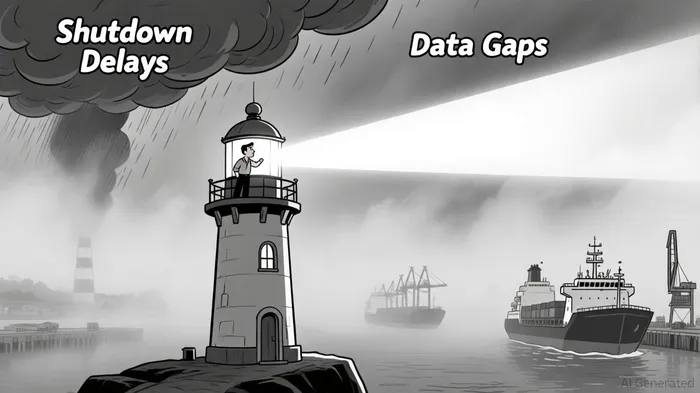







Comentarios
Aún no hay comentarios