
Navigating the Fiscal-Yield Tightrope: Risks and Rewards in a High-Yield World
The U.S. fiscal deficit now stands at a staggering $1.9 trillion, while the 10-year Treasury yield has surged to 4.43%—a level last seen during the Fed's aggressive rate-hike cycle of 2022. This convergence of record-high borrowing costs and unsustainable deficits has created a precarious equilibrium, with profound implications for bond markets, equities, and the U.S. dollar. Investors must now confront a critical question: Can the market's tolerance for rising yields keep pace with the fiscal recklessness of policymakers? The answer will shape portfolios for years to come.
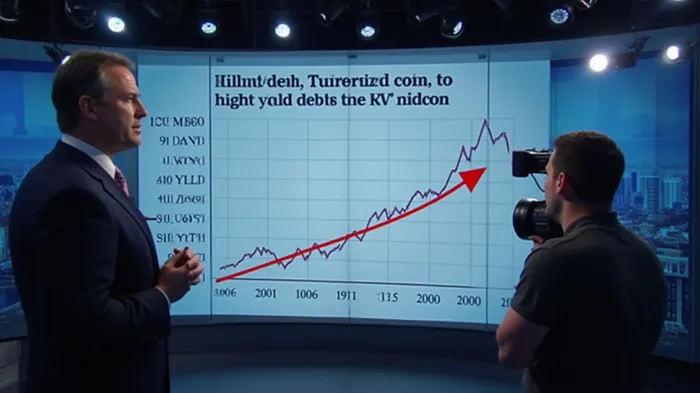
The Bond Market's New Reality
The bond market is sending a clear warning signal. . The yield's climb to nearly 4.5% reflects investor skepticism over the sustainability of $36 trillion in national debt, which now exceeds 120% of GDP. Moody'sMCO-- downgrade to Aa1 in April 2025 was no accident—it underscored the fiscal math that even rating agencies can no longer ignore.
This environment has created a paradox:
- High yields punish borrowers, with net interest costs projected to hit $2.2 trillion by 2034 (Congressional Budget Office).
- High yields reward savers, offering a 4%+ risk-free return that equity valuations can't match.
The result? A bifurcated market where long-duration Treasuries face structural headwinds, but short-term notes offer ballast against volatility. Investors should avoid locking into 30-year bonds yielding 4.89% when the CBO warns of a debt-to-GDP path exceeding 220% by 2055 under current policies.
Equity Markets: Yield Chasers vs. Reality Check
Equities face a double-edged sword. On one hand, the 10-year yield's 4.4% offers a compelling alternative to stocks trading at 18.5x forward earnings—a premium that may not hold if earnings growth falters. .
- Winners: Companies with pricing power (energy, industrials) and rock-solid balance sheets will thrive. Utilities and REITs with embedded inflation hedges could also outperform.
- Losers: Growth stocks reliant on cheap capital and high-multiple tech names face valuation pressure. The Nasdaq's 35x earnings multiple is particularly vulnerable.
The Fed's reluctance to cut rates (projected one cut in 2025) adds fuel to this fire. Investors must ask: Can earnings growth offset the drag of higher discount rates? The answer could determine whether this is a buying opportunity or a bubble's final breath.
The Dollar: A Reluctant Safe Haven
The U.S. dollar's position as the world's reserve currency is under siege. While higher yields attract carry-trade investors, the fiscal recklessness erodes confidence. .
- Near-term support: Emerging markets' 7% yields can't compete with 4.5% Treasuries—yet.
- Long-term risks: A debt-to-GDP ratio approaching 200% could trigger capital flight, especially if China's renminbi continues its quiet rise.
Investors should hedge dollar exposure through diversification into commodities or a basket of stable currencies like the Swiss franc. The greenback's era as the default safe haven may be nearing its end.
A Strategic Playbook for This Environment
- Shorten duration: Stick to Treasuries with maturities under 5 years. Avoid long-dated bonds in a world where debt dynamics are unsustainable.
- Focus on quality equities: Prioritize companies with strong free cash flow (e.g., ) and low debt ratios.
- Hedge inflation: Gold and commodity ETFs (e.g., GLD, SLV) provide ballast against the Fed's inflation tolerance.
- Dollar diversification: Allocate 10-15% to a basket of major currencies (EUR, JPY, CHF) to mitigate reserve currency risks.
The fiscal-yield tightrope is narrowing. With debt costs consuming 29% of federal revenue by 2030 (CBO), the market's patience is not infinite. Investors who recognize this—and position accordingly—are best placed to navigate the storm ahead. The time to act is now.
Data as of May 2025. Past performance does not guarantee future results.





Comentarios
Aún no hay comentarios