
Navigating the Fed's Rate-Cutting Strategy: Credibility and Market Implications in 2025
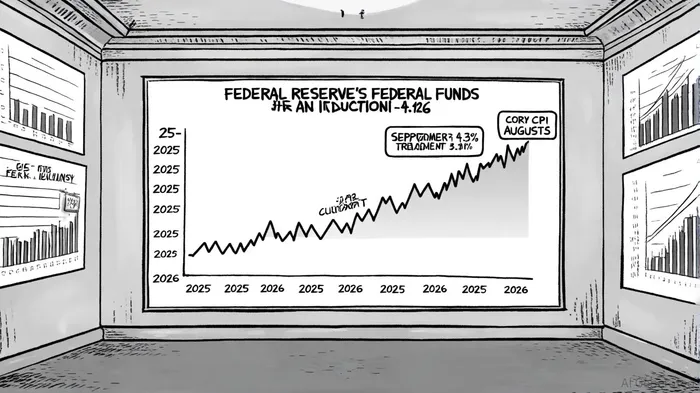
The Federal Reserve's September 2025 decision to cut interest rates by 25 basis points marked a pivotal shift in its monetary policy approach, reflecting both evolving economic conditions and a strategic emphasis on maintaining institutional credibility. Former St. Louis Fed President James Bullard, a vocal advocate for measured easing, has underscored that the Fed's independence and transparency are critical to sustaining long-term economic stability [1]. His recent statements, coupled with broader economic signals, offer valuable insights into how rate cuts might reshape bond and equity markets in the coming months.
Bullard's Credibility-Driven Framework
James Bullard has consistently argued that the Fed's credibility hinges on its ability to balance inflation control with labor market resilience. In a Bloomberg interview, he affirmed that the September 2025 rate cut was “aligned with current economic conditions,” particularly as inflation trends approach the 2% target and labor market vulnerabilities emerge [1]. However, Bullard has cautioned against overreacting to short-term data, advocating for a “measured pace” of easing to avoid undermining the Fed's inflation-fighting reputation [3]. This approach aligns with his historical emphasis on policy consistency, which he views as essential for anchoring market expectations and public trust [4].
Economic Signals and the Fed's Dilemma
Recent data underscores the Fed's delicate balancing act. While the unemployment rate rose to 4.3% in August 2025—the highest since 2021—and payroll gains slowed to 22,000 jobs, consumer spending remained resilient, contributing to stronger-than-expected Q2 GDP growth [2]. Meanwhile, core CPI inflation held at 3.1% year-over-year, above the 2% target, complicating the case for aggressive rate cuts [2]. The Fed's September 2025 decision, therefore, reflects a pragmatic response to a “softening labor market” while acknowledging that inflation remains a constraint [2].
Bond Market Reactions: Yields and Fiscal Policy
The bond market has priced in a 96% probability of a 25-basis-point cut at the Fed's next meeting, with two-year and 10-year Treasury yields hitting multi-year lows [2]. This rally reflects investor demand for safe-haven assets amid expectations of further easing. However, long-end yields remain firm due to inflationary pressures from tariffs and fiscal stimulus, creating a “nuanced” yield curve [4]. Bullard's emphasis on gradualism suggests that front-end yields may continue to decline, but long-term rates could stabilize if inflationary risks persist [3].
Equity Market Implications: Sectors and Sentiment
Equity markets have responded positively to the rate-cut narrative, with financials and dividend-paying stocks outperforming as investors shift away from fixed income [1]. Lower borrowing costs are expected to benefit consumers with variable-rate debt, potentially boosting retail and housing sectors in the coming months. However, mortgage rates are likely to decline only gradually, as they remain tied to Treasury yields [4]. Analysts at Deutsche BankDB-- and Bank of AmericaBAC-- now project three rate cuts in 2025, which could further fuel risk-on sentiment but may also test the Fed's credibility if inflation rebounds [2].
Conclusion: Credibility as a Policy Anchor
James Bullard's advocacy for a cautious, credibility-focused approach highlights the Fed's dual challenge: addressing near-term labor market strains while preserving its inflation-fighting reputation. As the central bank navigates this path, bond and equity markets will likely remain sensitive to both data surprises and shifts in policy communication. For investors, the key takeaway is that the Fed's measured easing—rooted in institutional credibility—may provide a stable backdrop for markets, even as inflation and fiscal policy uncertainties linger.





Comentarios
Aún no hay comentarios