
Navigating the Fed's Rate Crossroads: Fixed-Income Strategies for a Volatile Outlook
The Federal Reserve's recent policy statements have painted a picture of a central bank straddling two critical goals: curbing lingering inflation and avoiding a premature economic slowdown. With its benchmark rate held steady at 4.25%-4.5% since late 2024, the Fed has adopted a “wait-and-see” approach, citing heightened uncertainty from trade policy shifts. This cautious stance contrasts with market expectations of gradual rate cuts later in 2025, creating a fertile environment for misalignment between central bank guidance and investor assumptions. For fixed-income investors, this disconnect presents both risks and opportunities. Here's how to navigate it.
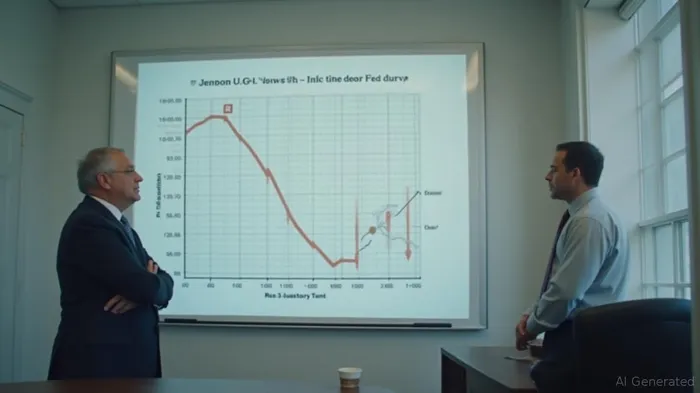
The Fed's Dual Mandate Dilemma
The Fed's May 2025 statement underscored its dual challenge: inflation remains above the 2% target, while labor markets are resilient. Chair Jerome Powell emphasized that risks to both price stability and employment have risen, particularly due to trade policy volatility. The Fed's forward guidance—relying on incoming data—hints at a potential rate cut by September 2025 if inflation eases or unemployment rises, but it has stopped short of committing to a path.
The Fed's communication strategy hinges on its dual mandate, but external pressures complicate the picture. The Trump administration has amplified calls for immediate rate cuts, framing the Fed's caution as “monetary malpractice.” This political noise contrasts with the Fed's data-driven approach, which prioritizes labor market data and inflation trends over political posturing.
Market Expectations: Priced for Easing, but Is the Fed Buying?
Markets have priced in a gradual easing cycle, with Fed funds futures assigning an 88% probability of at least two rate cuts by year-end. Yet the Fed's “dot plot” projections suggest fewer cuts—possibly only one—reflecting concerns about tariff-driven inflation persistence. This misalignment is stark: traders anticipate a more dovish Fed than the central bank itself is signaling.
The bond market has already reacted, with short-term Treasury yields declining while longer-term yields held steady, steepening the yield curve. This reflects investor bets on near-term Fed cuts and lingering uncertainty about long-term inflation. However, if the Fed's caution persists—and tariffs reignite price pressures—the market's easing expectations could prove overly optimistic.
Why Duration Exposure Is Risky Now
Fixed-income portfolios heavily weighted in long-dated bonds (e.g., 10-year Treasuries or corporate bonds) face two threats:
1. Rate Cut Disappointment: If the Fed delays cuts due to inflation stickiness, long-duration bonds could suffer sharp price declines.
2. Inflation Resurgence: Tariff-induced cost pressures could force the Fed to keep rates higher longer, further penalizing long-dated debt.
Historically, duration-heavy portfolios have underperformed when rate expectations diverge from central bank actions. The 2013 “taper tantrum” serves as a cautionary tale: when the Fed hinted at reducing bond purchases, 10-year yields surged 140 basis points in six months, crushing long-duration funds. Today's environment poses similar risks.
Positioning for a Misalignment: Short-Term and Floating Rates
To mitigate these risks, investors should rebalance toward short-duration bonds and floating-rate instruments, which are less sensitive to rate fluctuations and better positioned to capitalize on Fed policy shifts.
- Short-Term Bonds:
- Why: Short-term Treasuries (e.g., 1-3 year maturities) or corporate debt face minimal price risk if rates remain elevated.
- ETF Option: Vanguard Short-Term Bond ETF (BSV), which holds bonds with an average duration of ~2.5 years.
Data Point:
Floating-Rate Instruments:
- Why: Loans and securities with interest rates tied to short-term benchmarks (e.g., SOFR) adjust as the Fed moves, reducing interest rate risk.
- ETF Option: iShares Floating Rate Bond ETF (FLTR), which invests in corporate bank loans.
- Data Point:
A Historical Precedent: The 1990s Playbook
During the late 1990s, the Fed kept rates higher than expected to combat inflation, leading bond markets to overcorrect. Investors who shifted into short-term Treasuries and floating-rate notes outperformed peers stuck in long-dated bonds. Today's scenario mirrors that environment: central bank patience meets market eagerness for easing.
Final Considerations
- Avoid Long-Duration Bonds: Sell or reduce exposure to ETFs like TLT, which have durations exceeding 8 years.
- Monitor the Dot Plot: The June 2025 FOMC meeting will clarify the Fed's path—watch for revisions to the “dot plot” for clues on rate cuts.
- Stay Flexible: Use laddered bond portfolios to stagger maturities, allowing reinvestment at potentially higher rates.
Conclusion
The Fed's caution and market's eagerness for rate cuts have set the stage for a fixed-income market reckoning. By pivoting to short-duration and floating-rate instruments, investors can reduce exposure to duration risk while positioning for the Fed's likely path. This strategy isn't just about avoiding losses—it's about capitalizing on the Fed's communication strategy and the inherent misalignments it creates. In uncertain times, staying nimble and duration-neutral is the wisest move.







Comentarios
Aún no hay comentarios