
Navigating the Fed's Precision Cuts: Investment Implications in a Cooling Labor Market
The Federal Reserve's September 2025 rate cut-its first reduction in over a year-marks a pivotal shift in monetary policy, driven by a labor market that has lost its pre-pandemic vigor. According to a CNBC report, the U.S. added just 22,000 jobs in August 2025, far below the 75,000 forecast, while the unemployment rate climbed to 4.3%. This softening, compounded by the lingering effects of high interest rates and the Trump-era tariff policies, has forced the Fed to adopt a more nuanced approach to normalization. The 25-basis-point cut, bringing the federal funds rate to 4.00–4.25%, is not merely a technical adjustment but a signal of the central bank's willingness to recalibrate in the face of evolving economic realities, as noted in a FinancialContent article.
A Labor Market in Transition
The labor market's cooling is evident across multiple metrics. Wage growth, at 3.7% annually, fell slightly short of expectations, while the broader unemployment rate-including discouraged workers and part-timers-hit 8.1%, the highest since October 2021, according to the CNBC report. These figures underscore a labor market that, while not in crisis, is no longer the engine of robust growth it once was. The healthcare sector, which added 31,000 jobs in August, has become an anchor for employment, while manufacturing and wholesale trade have contracted. Such sectoral shifts complicate the Fed's task: how to stimulate growth without reigniting inflation, which remains stubbornly above 2%.
Targeted Cuts and Strategic Flexibility
The Fed's approach to rate cuts in 2025 reflects a departure from the blunt-force tactics of previous cycles. Chair Jerome Powell has emphasized a "data-dependent" strategy, with future cuts contingent on incoming labor and inflation data, according to a BlackRock note. This cautious normalization-potentially culminating in a 3.6% federal funds rate by year-end-aims to balance the need for liquidity with the risk of overstimulation, as a Morningstar analysis highlights. Unlike the aggressive rate hikes of 2022–2023, the current easing cycle is characterized by smaller, targeted reductions, a tactic designed to test the economy's resilience while avoiding market volatility.
Investment Implications: Sectors and Strategies
For investors, the Fed's pivot opens both opportunities and risks. Lower rates are expected to boost asset classes sensitive to borrowing costs. The S&P 500 has already reached record highs on the back of reduced discount rates, with technology and consumer discretionary sectors leading the charge. BlackRockBLK-- analysts note that portfolios should tilt toward intermediate bonds and sectors like real estate, which benefit from cheaper financing. The housing market, too, may see a modest rebound as adjustable-rate mortgages become more attractive, though persistent housing shortages will cap price gains.
However, the Fed's reluctance to provide strong forward guidance introduces uncertainty. Long-term Treasury bonds, for instance, may underperform if inflation remains anchored and recession risks stay low, as discussed in the BlackRock note. Investors must also remain wary of sectoral divergences: while healthcare and tech thrive, manufacturing and trade face headwinds from global supply chain adjustments and domestic policy constraints.
The Road Ahead
The Fed's 2025 normalization strategy is a balancing act. By prioritizing flexibility over predictability, the central bank aims to navigate a labor market that is neither overheating nor collapsing. For markets, this means a focus on agility-adjusting exposures in response to real-time data rather than relying on rigid forecasts. As the Morningstar analysis highlights, the key will be monitoring wage inflation and job growth in the coming months to gauge whether further cuts are warranted.
In this environment, investors are advised to adopt a dual strategy: capitalizing on the immediate tailwinds of lower rates while hedging against potential volatility from geopolitical or inflationary shocks. The Fed's precision cuts may not be a silver bullet, but they signal a willingness to adapt-a trait that will define both monetary policy and market resilience in the months ahead.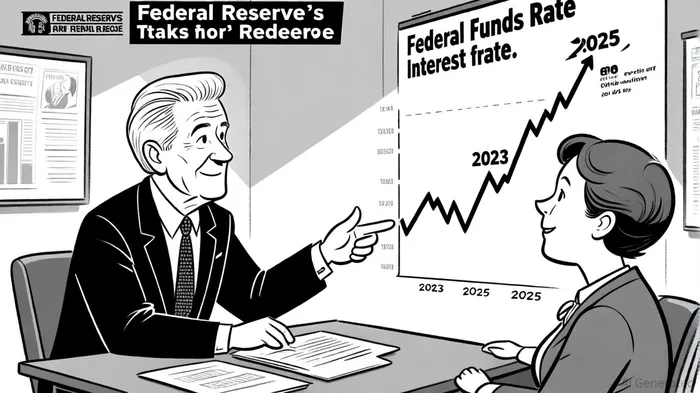





Comentarios
Aún no hay comentarios