
Navigating the Fed's Final 2025 Policy Move: Implications for Equity and Crypto Markets
The Federal Reserve's September 2025 policy decision marked a pivotal moment in its ongoing balancing act between inflation control and economic growth. While the central bank delivered a 25-basis-point rate cut, the move was explicitly framed as "hawkish," signaling a higher bar for future easing and a cautious stance toward 2026. This nuanced approach, underscored by internal divisions and evolving macroeconomic risks, has left investors recalibrating their strategies for equities and cryptocurrencies ahead of a year of heightened uncertainty.
The Fed's Policy Stance: A Hawkish Cut in a Divided Climate
The Federal Open Market Committee (FOMC) reduced the federal funds rate to a target range of 3.75%-4.00% in September 2025, but its forward guidance emphasized that further cuts would depend on "substantial further progress" toward inflation normalization. This conditional language, coupled with upgraded growth forecasts and warnings about inflationary risks from new fiscal and tariff policies, has led analysts to label the move a "hawkish cut".
Chair Jerome Powell's post-meeting remarks reinforced this duality, stating that a rate reduction at the December meeting was "not a forgone conclusion" according to Nuveen. The Summary of Economic Projections (SEP) further highlighted the Fed's restraint, slashing its 2026 rate-cut outlook from four to two, reflecting heightened caution about the durability of the economic expansion and inflation's stickiness. Such signals suggest the Fed is prioritizing inflation credibility over aggressive easing, even as labor market momentum softens.
Market Reactions: Volatility as the New Normal
Historical precedents indicate that hawkish rate cuts often trigger mixed market responses. For equities, the S&P 500's performance hinges on whether the Fed's easing is perceived as a mid-cycle stimulus or a recessionary lifeline. J.P. Morgan research notes that in non-recessionary easing cycles, growth stocks and high-yield bonds tend to outperform, while defensive sectors like utilities and Treasuries gain traction in downturns according to J.P. Morgan. With the Fed's current trajectory leaning toward a "mid-cycle adjustment," investors may find opportunities in U.S. large-cap equities, particularly those with strong cash flows and pricing power.
Cryptocurrencies, however, face a more precarious outlook. While lower rates typically reduce the opportunity cost of holding non-yielding assets like BitcoinBTC--, a hawkish bias introduces volatility. As of October 2025, Bitcoin has already entered a bearish phase, with technical indicators suggesting a potential test of critical support levels in early 2026. The Fed's emphasis on future tightening risks exacerbates this vulnerability, especially if regulatory scrutiny intensifies-a concern echoed by Fitch's recent warning to U.S. banks about crypto-related risks.
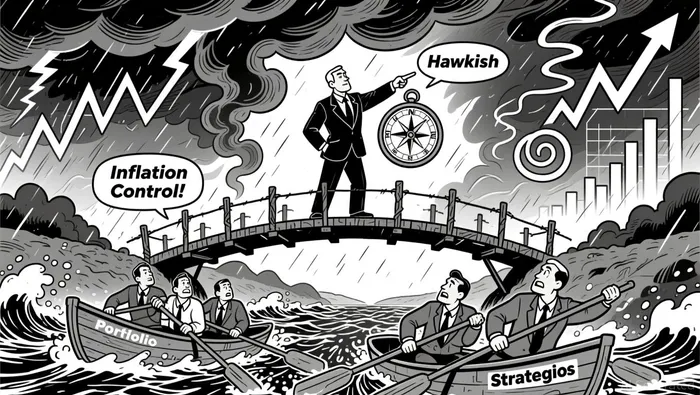
Portfolio Positioning for 2026: Balancing Caution and Opportunity
Given the Fed's constrained rate-cut path and macroeconomic uncertainties, portfolio strategies must prioritize flexibility and risk mitigation. Key recommendations include:
- Intermediate-Duration Bonds Over Long-Term Treasuries: J.P. Morgan and BlackRock advise favoring intermediate-duration credit over long-term bonds, as the former offers better protection against potential rate volatility and a weaker dollar.
U.S. Large-Cap Equities with Low Correlation: Defensive large-cap stocks, particularly in sectors like technology and healthcare, provide resilience against sector-specific shocks while benefiting from the Fed's accommodative stance according to BlackRock.
Alternative Assets for Diversification: Allocating to alternatives such as private equity or infrastructure can reduce portfolio correlation to traditional markets, a critical hedge in a hawkish environment according to BlackRock.
- Crypto Caution and Regulatory Vigilance: Investors should limit exposure to cryptocurrencies, given their dual sensitivity to rate hikes and regulatory headwinds. Positioning should align with a "risk-on" macro backdrop and favorable technical levels according to Investing.com.
Conclusion: Preparing for a Fed-Driven 2026
The Fed's final 2025 rate cut, while modest, has set the stage for a 2026 marked by policy caution and market volatility. Investors must navigate this landscape by prioritizing liquidity, diversification, and sectoral selectivity. As the central bank's dual mandate of price stability and maximum employment remains in tension, portfolios that adapt to the Fed's evolving calculus will be best positioned to weather the uncertainties ahead.






Comentarios
Aún no hay comentarios