
Navigating the Fed's Dovish Pivot: Portfolio Rebalancing Ahead of the September 2025 Rate Decision
The U.S. labor market has entered uncharted territory. The July 2025 jobs report delivered a stark warning: nonfarm payrolls grew by just 73,000 jobs, far below the 100,000 forecast, while prior months' data were slashed by 258,000 jobs. This “larger than normal” revision from the Bureau of Labor Statistics has shattered the illusion of a resilient labor market. The unemployment rate inched up to 4.2%, but the true story lies beneath the surface—a shrinking labor force, driven by immigration restrictions and aging demographics, has masked a more dire reality. Without the drop in labor force participation, unemployment would have climbed to 4.3%, signaling a labor market teetering on the edge of stall speed.
The Fed's Crossroads: September Rate Cut Probability Rises
The Federal Reserve's July 2025 meeting left rates unchanged, with Chair Jerome Powell clinging to the narrative of a “solid” labor market. Yet the revised data have rendered this stance untenable. The probability of a September rate cut has surged to 67%, a dramatic shift from the pre-report 38%. The Fed now faces a dual mandate dilemma: tame inflation amid President Trump's 1930s-level tariffs or risk a stagflationary spiral. The July report's 3.9% year-over-year wage growth adds to the tension, as sticky inflation could force the Fed to balance cuts with caution.
Portfolio Rebalancing: Equity, Bond, and Commodity Strategies
As markets brace for a dovish pivot, investors must reassess asset allocations. Historical data from 11 Fed rate cut cycles since 1980 reveals a clear playbook:
Equities: Quality and Cyclical Sectors in Focus
Rate cuts typically boost equities by lowering discount rates and stimulating economic activity. However, the current environment is nuanced. The S&P 500's 1.7% drop post-July report reflects fears of a stagflationary outcome. Investors should prioritize:
- Quality stocks with strong balance sheets and consistent cash flows (e.g., MicrosoftMSFT--, Apple), which historically outperform in uncertain cycles.
- Cyclical sectors like consumer discretionary and industrials, which benefit from improved liquidity and economic recovery.
- Defensive sectors such as utilities and healthcare, which thrive in low-interest environments.
Bonds: Duration Extension and Yield Curve Opportunities
With the 10-year Treasury yield dropping post-July report, bonds are gaining traction as a diversifier. Key strategies include:
- Long-duration bonds (e.g., 30-year Treasuries) to capitalize on inverse rate-price dynamics.
- Inflation-linked bonds (TIPS) to hedge against Trump-era tariff-driven inflation.
- Corporate bonds with BBB ratings to balance yield and risk, as the Fed's easing could reduce default probabilities.
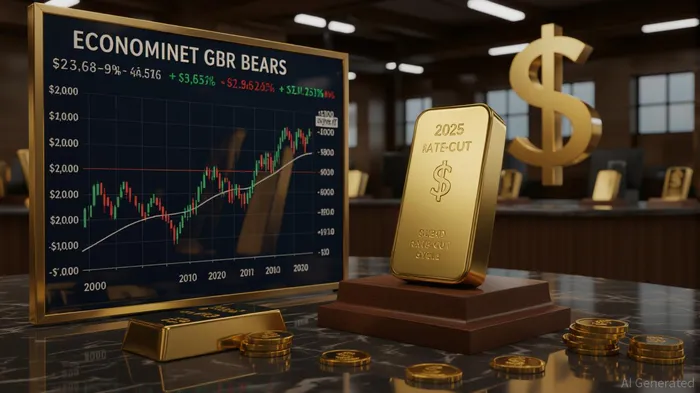
Commodities: Gold as a Stagflation Hedge
Gold's historical role as a safe haven shines in dovish environments. The metal's price surged during the 2008 crisis and could replicate this performance if stagflation looms. Investors should consider:
- Physical gold (ETFs like GLD) to hedge against currency devaluation and inflation.
- Industrial metals (copper, aluminum) to bet on a potential rebound in manufacturing demand.
- Energy commodities (oil, natural gas) if geopolitical tensions or Trump's policies disrupt global supply chains.
The Stagflation Risk: A New Normal?
The Fed's hands are tied by Trump's tariff policies, which have pushed the effective tariff rate to its highest since the 1930s. This creates a unique scenario: rate cuts to stimulate growth could exacerbate inflation, while inaction risks a recession. Investors must prepare for volatility. The 2024 pattern—elevated volatility pre-rate cuts—suggests a bumpy September.
Action Plan for September
- Equities: Overweight quality and cyclical sectors; underweight small-cap and value stocks, which are more vulnerable to a slowdown.
- Bonds: Extend duration and allocate 10–15% to TIPS. Reduce exposure to short-term corporate bonds as yield curves flatten.
- Commodities: Allocate 5–7% to gold and 3–5% to energy/industrial metals.
The September 2025 Fed meeting is a pivotal moment. The July jobs report has rewritten the narrative, shifting focus from “transitory inflation” to a potential policy-driven recovery. By aligning portfolios with historical trends and current macroeconomic realities, investors can position themselves to thrive in a world of lower rates and heightened uncertainty.







Comentarios
Aún no hay comentarios