
Navigating FDA Hurdles: Assessing Outlook Therapeutics' Path to Lytenava Approval in the U.S.
The biotechnology sector remains a high-stakes arena where regulatory outcomes can redefine corporate trajectories. For Outlook TherapeuticsOTLK--, the repeated rejections of its Biologics License Application (BLA) for Lytenava (bevacizumab-vikg) by the U.S. Food and Drug Administration (FDA) underscore the inherent risks of navigating complex regulatory frameworks. Yet, the company's persistence and strategic recalibrations also highlight the potential for recovery in a sector where resilience often separates success from failure.
The CRL Conundrum: A Pattern of Regulatory Scrutiny
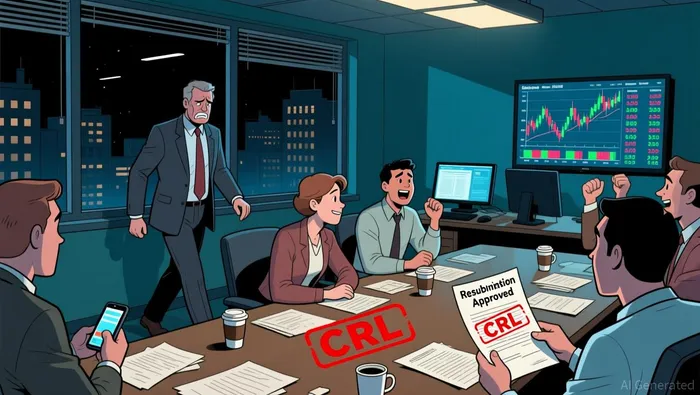
Outlook Therapeutics' journey with Lytenava has been marked by a series of Complete Response Letters (CRLs). The first, issued in August 2023, flagged CMC deficiencies. A resubmission in August 2025 addressed these issues but faced a second CRL for insufficient evidence of efficacy, as the NORSE EIGHT trial failed to meet its primary endpoint. The latest CRL, dated December 31, 2025, reiterated the need for confirmatory efficacy data, despite the company's incorporation of additional CMC information and trial data into its resubmitted BLA.
This pattern reflects the FDA's stringent standards for therapeutic approvals, particularly in competitive markets like anti-VEGF treatments for wet age-related macular degeneration (AMD). While the NORSE TWO trial demonstrated efficacy, the agency's insistence on "substantial evidence" highlights its preference for robust, reproducible data-a hurdle that has derailed many biotech candidates.
Strategic Resubmission and Regulatory Engagement
Outlook Therapeutics' response to these challenges has been methodical. Following the August 2025 CRL, the company engaged in a Type A meeting with the FDA in September 2025, a high-level dialogue typically reserved for critical regulatory discussions. This meeting likely provided clarity on the agency's expectations, enabling the resubmission of a BLA that addressed prior CMC concerns and included NORSE EIGHT data. The FDA's acceptance of this resubmission and its PDUFA goal date of December 31, 2025, suggest a willingness to evaluate the updated application.
However, the third CRL, issued on the same date as the PDUFA deadline, indicates that the agency remains unconvinced. The lack of specificity regarding the type of confirmatory evidence required introduces uncertainty. For investors, this ambiguity underscores the risk of prolonged regulatory delays, which can erode financial resources and market confidence.
Commercial Diversification and Market Realities
While U.S. approval remains a pivotal goal, Outlook Therapeutics has diversified its commercial strategy. Lytenava is already marketed in the European Union and the United Kingdom, where it received marketing authorization for wet AMD in 2025. This European foothold provides a revenue stream and real-world evidence that could inform future regulatory submissions. However, the U.S. market, with its larger patient population and higher reimbursement rates, represents a critical growth opportunity.
The company's ability to balance regulatory engagement with commercial expansion is a testament to its operational flexibility. Yet, the repeated CRLs raise questions about the feasibility of achieving U.S. approval without additional clinical trials-a costly and time-intensive endeavor.
Investment Implications: Risk vs. Reward
For investors, the key question is whether Outlook Therapeutics can bridge the gap between its current data and the FDA's expectations. The company's commitment to addressing the CRL deficiencies is evident, but the repeated rejections signal a high bar for approval. Historical precedents suggest that biotech firms facing multiple CRLs often require significant capital infusions or strategic partnerships to advance, both of which carry their own risks.
On the other hand, the European approval validates Lytenava's safety and efficacy profile, offering a partial offset to U.S. regulatory delays. If the FDA ultimately approves the BLA, the commercial upside could be substantial, given Lytenava's potential as the first ophthalmic bevacizumab formulation in the U.S. market.
Conclusion: A Test of Resilience
Outlook Therapeutics' experience with Lytenava encapsulates the dual-edged nature of biotech innovation: regulatory rigor acts as both a barrier and a gatekeeper. While the repeated CRLs highlight the FDA's exacting standards, the company's strategic resubmissions and European commercialization demonstrate a capacity to adapt. For investors, the path forward hinges on the FDA's next move and the company's ability to generate the confirmatory evidence required for approval. In a sector where regulatory outcomes are often binary, the stakes for Outlook Therapeutics-and its shareholders-remain exceptionally high.







Comentarios
Aún no hay comentarios