
Navigating European Equities Amid Trade Truce and Recession Risks: STOXX 600 Target Conflicts Signal Strategic Opportunities
The STOXX 600, Europe’s flagship equity index, sits at a crossroads. Barclays’ revised 2025 target of 540 points—already surpassed by current levels of ~545—contrasts starkly with Goldman Sachs’ bearish outlook of 520 points, driven by tariff-driven recession risks and weak earnings. This divergence is no mere technical debate; it reflects a critical inflection point in global trade and economic cycles. For investors, reconciling these views is essential to capitalize on sector rotation opportunities while managing risk.
The Bearish Case: Barclays’ Crisis Precautions
Barclays warns of lingering vulnerabilities. Its initial 2025 target cut to 490 points (later revised to 540 after the U.S.-China trade truce) underscores persistent risks:
- Trade Tensions: 60% of STOXX 600 revenues come from non-European markets. U.S. tariffs—now at 10% on key sectors—erode export competitiveness, with German industrials and French luxury stocks bearing the brunt.
- Recession Risks: Goldman’s 45% U.S. recession probability and ECB’s delayed rate cuts (projected to drop to 1.75% by mid-2025) amplify fears of a synchronized slowdown. BarclaysBCS-- notes a 25% blanket tariff scenario could shave 1.5% off European GDP.
- Earnings Downgrades: Goldman’s revised 7% STOXX EPS decline in 2025 (vs. consensus 4% growth) suggests profit headwinds, particularly in energy and financials.
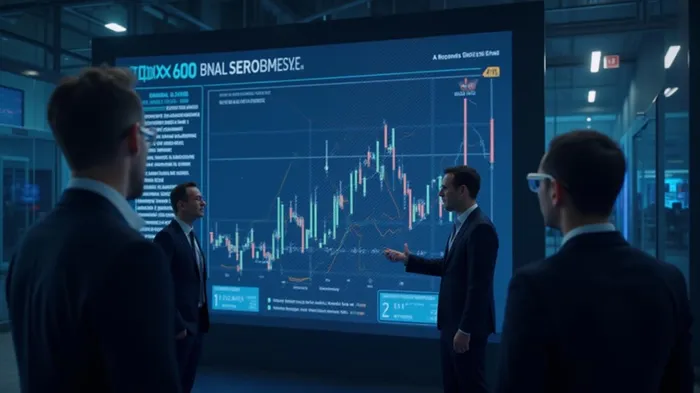
The Bullish Case: Goldman’s Trade-Driven Optimism
Goldman sees a silver lining in the trade truce:
- Debt Relief and Policy Tailwinds: A U.S. recession avertance (if achieved) could push STOXX 600 valuations to 15–16x P/E (from 14x), buoyed by ECB rate cuts and fiscal reforms in Germany.
- Sector Winners: Consumer-facing sectors (retail, travel) and tech outperform if trade tensions ease, as 60% of their revenue comes from stable domestic demand. Goldman’s “Peer Pressure” report highlights telecoms and real estate as rate-sensitive beneficiaries.
- Technical Thresholds: A breakout above 550 points (resistance level) could signal a sustained rebound, while a drop below 390 points (support level) would confirm a bear market.
Sector Rotation: The Key to Risk-Adjusted Returns
Investors must pivot dynamically between defensive and cyclical plays:
1. Defensive Overweight (Trade Tensions Resurge):
- Healthcare: Insulated from trade wars, with 70% of revenue from domestic markets.
- Utilities: Low beta, high dividends, and inelastic demand.
- Action: Allocate 30% to healthcare/utilities if STOXX dips below 520 or recession odds hit 60%.
- Cyclical Overweight (Trade Truce Stabilizes Growth):
- Consumer Discretionary: Post-pandemic recovery in travel and luxury goods (e.g., LVMH, Kering).
- Technology: Cloud infrastructure and AI-driven firms (e.g., SAP, ASML) benefit from global digitization.
- Action: Shift 25% to cyclicals if STOXX breaches 550 and U.S. recession odds fall to 35%.
Critical Metrics to Monitor
- Recession Probability: Track JPMorgan’s 45–60% U.S. recession odds. A drop below 40% signals cyclical optimism.
- Technical Levels: STOXX 600’s 550 resistance and 390 support are non-negotiable thresholds.
- ECB Policy Shifts: Rate cuts beyond 1.75% could trigger a “Greenspan put”-style rally in cyclicals.
Final Call: Time the Market, Don’t Follow It
The STOXX 600’s current position above Barclays’ target reflects priced-in truce optimism, but Goldman’s caution is a reminder of fragility. Investors should:
- Dollar-Cost Average into Defensive Sectors if trade headlines sour.
- Aggressively rotate to cyclicals if STOXX breaches 550 and recession odds retreat.
- Avoid overexposure to financials/energy, which remain earnings drag candidates until inflation cools.
In this bifurcated landscape, success hinges on agility: position for the truce’s upside while hedging against tariff-driven downside. The STOXX 600’s next move isn’t just about numbers—it’s about mastering the dance between geopolitical calm and economic storm.
Act now—before the next headline shifts the tides.





Comentarios
Aún no hay comentarios