
Navigating European Equities: Macro-Driven Sector Rotation in the Shadow of ECB Policy
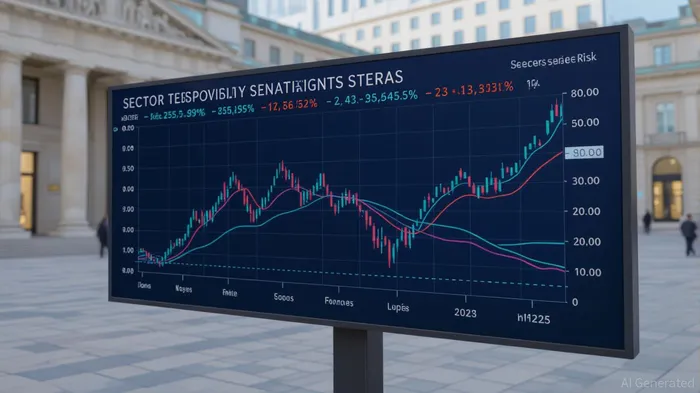
The European Central Bank's (ECB) September 2025 decision to maintain its key interest rates at 2% underscores a pivotal juncture for European equities. With inflation stabilizing near the 2% target and growth projections revised upward to 1.2% for 2025, investors must recalibrate their strategies to account for the ECB's data-dependent approach and the looming end of quantitative tightening by late 2026 [1]. This analysis explores how macroeconomic signals and ECB policy dynamics are reshaping sector rotation opportunities in European markets.
ECB Policy: A Data-Dependent Tightrope
The ECB's refusal to pre-commit to a specific rate path reflects its cautious stance amid global uncertainties, including U.S. tariff policies and fragile eurozone growth [2]. While headline inflation is projected to average 2.1% in 2025 and core inflation at 2.4%, the central bank's emphasis on meeting-by-meeting adjustments suggests volatility in short-term expectations [3]. For equities, this environment favors sectors insulated from rate hikes and those poised to benefit from accommodative liquidity.
Sector Rotation: Winners and Losers in a Stabilizing Cycle
Financials: Mixed Signals
Banks and insurers face a paradoxical landscape. While higher deposit rates (currently 2%) could boost net interest margins, the ECB's prolonged rate pause may dampen lending growth. However, S&P Global Ratings' forecast that quantitative tightening will conclude by late 2026 hints at a potential liquidity rebound, which could favor regional banks reliant on central bank support [4].Utilities and Defensive Sectors: Rate-Sensitive Pressures
High-yield sectors like utilities and consumer staples, which typically thrive in low-rate environments, may face headwinds as the ECB's policy normalization looms. With core inflation remaining above target, investors might rotate out of these sectors toward more cyclical plays.Industrials and Defense: Policy-Driven Tailwinds
Government spending on infrastructure and defense, highlighted in the ECB's statement, provides a tailwind for industrials and aerospace firms. These sectors are likely to outperform as public investment offsets private-sector caution driven by global trade tensions [2].Technology and Innovation: A Long-Term Bet
While the ECB's focus on inflation control may delay aggressive rate cuts, the eurozone's push for green and digital transitions offers long-term growth catalysts. Sectors aligned with EU sustainability goals, such as renewable energy and advanced manufacturing, could attract capital as policy support solidifies.
Strategic Implications for Investors
The ECB's data-dependent approach necessitates a dynamic rotation strategy. Investors should prioritize sectors with strong cash flows and low sensitivity to rate fluctuations in the near term, while maintaining exposure to cyclical plays that could benefit from a 2026 liquidity shift. Defensive allocations should be tempered, given the ECB's commitment to price stability.
Conclusion
European equities stand at a crossroads, with ECB policy serving as both a constraint and a catalyst. As the central bank navigates a fragile growth-inflation balance, sector rotation strategies must align with macroeconomic signals rather than speculative bets. For now, industrials and defense offer the most compelling opportunities, while financials and technology require a longer-term lens. Investors who align their portfolios with the ECB's evolving priorities will be best positioned to capitalize on 2026's potential liquidity inflection.







Comentarios
Aún no hay comentarios