
Navigating the EU-US Trade Crossroads: Sector-Specific Strategies for a Post-July 9 World
The clock is ticking toward July 9, 2025—a pivotal deadline that could reshape transatlantic trade relations. With reciprocal tariffs on hold since April and the EU's delayed €8 billion retaliation looming, investors face a landscape of volatility and opportunity. Here's how to position portfolios for the short-term storm and long-term realignment of global trade.
The Stakes: A Tariff Timeline and Legal Fog
The July 9 deadline marks the end of suspensions for most countries' tariffs, except China. By July 14, the EU's delayed retaliatory tariffs on $8 billion of U.S. goods—from agricultural products to industrial machinery—could finally take effect. Meanwhile, automotive tariffs (25% on non-USMCA vehicles), steel tariffs (25% for UK, 50% for others), and ongoing disputes over digital services taxes (DSTs) create sector-specific challenges. Legal battles, such as the pending Court of International Trade ruling on fentanyl-related tariffs, add uncertainty.
Sector-Specific Plays: Where to Look Now
1. Automotive: Navigating Quotas and Regional Deals
The U.S. automotive tariffs, in place since April 2025, have forced automakers to rethink supply chains. The UK's 7.5% tariff quota (under the U.S.-UK Economic Prosperity Deal) offers a strategic advantage. Companies with UK-based production or partnerships, such as Ford (F) or Volkswagen Group, could outperform peers reliant on higher-tariff regions.
Short-Term Risk: Automakers exposed to non-UK European markets (e.g., Stellantis) may see margin pressure.
Long-Term Play: U.S. automakers with diversified production (e.g., Tesla's (TSLA) Gigafactory in Texas) could weather tariffs better.
2. Steel: Leverage the UK and Watch for Exemptions
U.S. steel tariffs hit 25% for UK imports and 50% for others, but aerospace and Section 232 exemptions create carve-outs. Investors should favor firms with UK facilities (e.g., ThyssenKrupp) or those supplying exempt sectors like aerospace (e.g., Boeing (BA)).
Key Insight: The EU's focus on reducing reliance on U.S. steel could boost demand for Asian producers like Baosteel (600019.SS), but geopolitical risks in the Indo-Pacific remain.
3. Digital Services: The DST Double Game
The U.S. threat of Section 301 tariffs against the EU over DSTs creates a paradox: EU countries may double down on taxing U.S. tech giants, while U.S. firms lobby for exemptions. Investors should favor EU-based digital infrastructure firms (e.g., Telefonica (TEF)) or cloud providers like SAP (SAP) that can shift revenue streams.
Risk Alert: U.S. tech giants could face retaliatory EU tariffs, squeezing margins unless they localize operations.
4. Asia-Pacific Partnerships: Diversification Beyond the Atlantic
As EU-U.S. tensions rise, the EU's pivot to Asia-Pacific (e.g., China, India, ASEAN) could benefit firms with strong regional ties. TotalEnergies (TTE.France) or Siemens Gamesa (SGREN) in renewables may gain from EU-China energy deals. Meanwhile, Asian exporters like Samsung (005930.Korea) could capitalize on EU supply chain reconfigurations.
Short-Term Volatility vs. Long-Term Realignment
The July 9 deadline will trigger immediate market jitters, but the real shift lies in trade patterns. Companies that can:
- Adapt to exemptions (e.g., aerospace, Section 232 carve-outs),
- Localize production in low-tariff zones (UK, Asia-Pacific), or
- Navigate DST regimes (e.g., shifting profits to lower-tax jurisdictions)
will outperform.
Investment Recommendations
- Diversify into EU equities: The Euro Stoxx 50 (SX5E) offers exposure to industries like automotive and tech that may benefit from EU retaliatory measures.
- Hedge with tariffs-resistant sectors: Invest in renewable energy (e.g., NextEra Energy (NEE)) or cybersecurity firms (e.g., Palo Alto Networks (PANW)), which face fewer direct tariff threats.
- Monitor legal outcomes: A favorable ruling in the fentanyl tariff case (expected post-July 31) could stabilize trade policies.
Conclusion: Position for a New Trade Order
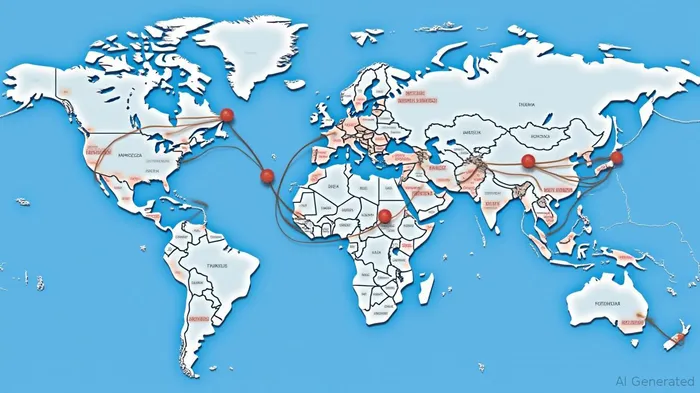
The July 9 deadline is more than a date—it's a catalyst for a prolonged realignment of trade. Investors must balance short-term caution (e.g., avoiding EU-US automotive stocks) with long-term bets on sectors and regions insulated from tariffs. The winners will be those who see beyond the noise and position for a world where trade routes are redrawn, not just delayed.
Stay vigilant, diversify strategically, and let the tariffs work for you—not against you.





Comentarios
Aún no hay comentarios