
Navigating the EU-US Trade Crossroads: Sector-Specific Risks and Opportunities in a Tariff-Driven Landscape
The escalating EU-US trade dispute, now centered on the EU's proposed €72 billion retaliatory tariff list, has created a volatile backdrop for investors. With the August 1 deadline looming for US tariffs on EU goods, the EU's countermeasures—including duties on BoeingBA-- aircraft, US automobiles, and bourbon—threaten to reshape supply chains and sector dynamics. This article explores the investment implications for aerospace, automotive, and luxury goods sectors, while offering strategies to capitalize on shifts in trade patterns and geopolitical risk management.
Aerospace: Boeing's Headwinds and European Competitiveness
The EU's targeting of Boeing aircraft, valued at €11 billion in the retaliation list, marks a direct challenge to the US aerospace giant. If tariffs proceed, Boeing's profit margins could compress as the EU imposes a retaliatory rate of up to 50%, effectively raising costs for European buyers. Boeing's reliance on European suppliers for components, such as wings and avionics, adds further complexity, as supply chain disruptions could amplify production delays.
Boeing's stock has already dipped amid trade war fears, but investors must weigh two scenarios: a negotiated settlement (which could reverse tariffs) or a prolonged standoff. A safer bet in this sector lies with European competitors like Airbus (EADSF), which stands to gain market share if EU buyers pivot to its aircraft. Airbus, already a leader in the single-aisle market, could leverage its diversified supply chain and EU government support to capitalize on Boeing's woes.
Automotive: Regional Diversification and Electric Vehicle Plays
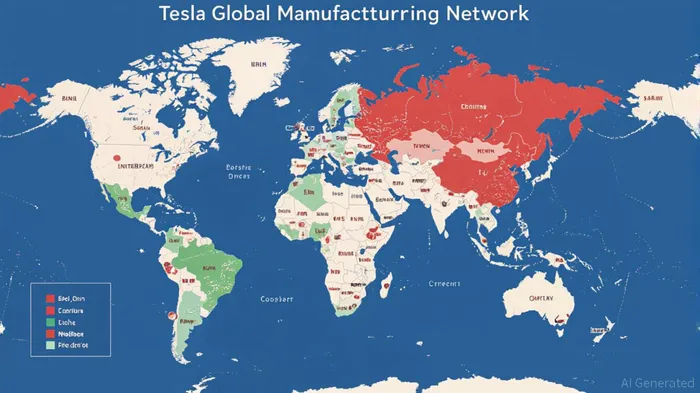
The EU's €8 billion tariff on US automobiles—including brands like Ford (F) and General MotorsGM-- (GM)—targets a sector already grappling with shifting consumer preferences and supply chain bottlenecks. The tariffs could accelerate the relocation of production to EU-friendly regions. For instance, TeslaTSLA-- (TSLA), with its Gigafactory in Germany, may emerge as a relative winner, as its European production avoids the US-EU crossfire.
Investors should also consider automakers with exposure to emerging markets, such as ToyotaTM-- (TM) or Volkswagen (VLKAF), which can pivot production to regions outside the tariff zone. Additionally, electric vehicle (EV) companies with strong EU ties, such as Renault (RENA.PA) or Polestar (backed by Geely), could benefit from regulatory tailwinds in Europe's green transition, even as traditional combustion-engine exports face tariffs.
Bourbon and Luxury Goods: Brand Resilience and Geographic Alternatives
The EU's €1.2 billion tariff on bourbon, a symbolic blow to American whiskey exports, highlights the vulnerability of niche luxury goods. Companies like Brown-Forman (BFB), the maker of Jack Daniel's, could see European sales decline as prices rise. However, luxury goods often exhibit pricing power, and brand loyalty may mitigate some demand erosion. Investors should monitor Brown-Forman's ability to offset EU losses with gains in Asia or through premiumization strategies.
A smarter play might be to invest in European luxury spirits producers, such as France's Rémy Cointreau (RCO.PA) or Pernod Ricard (PERP.PA), which could fill the gap left by US bourbon. Similarly, premium wine and champagne producers, like LVMH's Moët & Chandon, may benefit from diverted consumer spending in the EU.
Strategic Portfolio Moves for Investors
1. Short Boeing, Long Airbus: If tariffs proceed, Boeing's valuation could remain depressed, while Airbus gains market share.
2. Shift to EV and Geographically Diversified Automakers: Tesla and Toyota offer exposure to regions and technologies less vulnerable to trade friction.
3. Rotate into European Luxury Brands: Rémy Cointreau and Pernod Ricard present opportunities to capitalize on US bourbon's decline in Europe.
4. Hedge with Trade-Resilient ETFs: Consider ETFs like the iShares Global Consumer Discretionary ETF (RXI) or sector-specific funds that emphasize supply chain flexibility.
The Diplomatic Wild Card
While sector-specific plays offer tactical advantages, the ultimate outcome hinges on whether the EU and US can avert a full-blown trade war. A negotiated deal—such as a tariff rollback in exchange for concessions on industrial subsidies—could reverse the retaliation list, creating a rebound for Boeing, US automakers, and bourbon producers. Investors should maintain flexibility, using stop-losses or option strategies to protect against sudden shifts in the diplomatic landscape.
Conclusion
The EU's €72 billion retaliation list is both a threat and an opportunity. Investors must balance sector-specific risks with the potential for diplomatic resolution. By focusing on European competitors, EV leaders, and luxury goods with pricing power, portfolios can navigate the volatility while positioning for a post-trade-war recovery. The key is to stay agile, monitor tariff implementation timelines, and prioritize companies with diversified supply chains and geographic footprints.





Comentarios
Aún no hay comentarios