
Navigating ESG Equity Strategies in a High-Volatility, Speculative Market Environment
The global financial landscape in late 2025 remains defined by volatility, driven by geopolitical tensions, regulatory shifts, and macroeconomic uncertainty. In this environment, ESG (Environmental, Social, and Governance) equity strategies have emerged as critical tools for investors seeking to balance risk mitigation with long-term returns. Recent academic and industry research underscores that ESG integration is not merely a moral imperative but a strategic advantage, particularly in turbulent markets. This article examines how investors can leverage ESG frameworks to navigate volatility, with a focus on governance-driven hedging, sector rotation, and risk-adjusted return strategies.
ESG as a Buffer Against Market Shocks
Studies from 2023–2025 consistently highlight that companies with strong ESG profiles exhibit greater resilience during crises. For instance, Boccaletti et al. found that firms with higher ESG scores demonstrated less negative cumulative abnormal returns (CARs) during the Russia-Ukraine conflict, suggesting that ESG performance acts as a buffer against geopolitical shocks. Similarly, research on Japanese firms during the COVID-19 pandemic revealed a positive correlation between ESG strength and stock returns, with these companies maintaining better liquidity and market stability. These findings align with broader empirical evidence indicating that ESG practices enhance corporate governance, stakeholder trust, and operational resilience-factors that mitigate downside risks during market downturns.
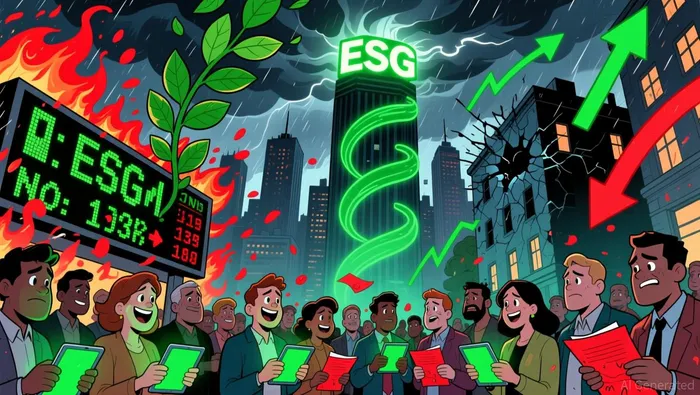 However, the relationship between ESG and financial performance is nuanced. Negi's work notes that investor sentiment and market volatility can cause ESG stock returns to deviate from fundamental values, challenging traditional financial theories. This underscores the need for investors to combine ESG metrics with dynamic risk management tools, rather than relying solely on static ESG scores.
Sector Rotation and Strategic Positioning
Sector rotation has become a cornerstone of ESG equity strategies in high-volatility environments. A 2025 analysis by Morgan Stanley revealed that sustainable funds outperformed traditional counterparts in the first half of the year, with a median return of 12.5% versus 9.2%. This outperformance was partly attributed to higher exposure to global and European markets, which saw stronger returns during the period. Investors are increasingly aligning sector allocations with macroeconomic cycles and long-term trends such as the energy transition. For example, green energy and industrials have shown robust growth potential amid regulatory tailwinds, while U.S. growth equities remain under pressure due to shifting interest rate expectations.
The dynamic interplay between green and traditional equities also demands agility. During the 2023–2025 period, ESG indices in North America and developed Europe emerged as volatility transmitters, while emerging markets became receivers. This highlights the importance of geographic diversification and sector-specific hedging. For instance, clean technology firms in emerging markets, though aligned with sustainability goals, face heightened exposure to external shocks and require tailored risk mitigation frameworks.
Governance-Focused Hedging and Risk Mitigation
Governance-focused hedging strategies have proven particularly effective in volatile ESG markets. In the EUA market, unconditional hedging instruments like futures contracts outperformed conditional options in mitigating price risks. This approach is increasingly adopted by enterprises to stabilize cash flows and manage regulatory uncertainties. For example, Delta Air Lines' fuel-saving initiatives and Standard Chartered's net-zero roadmap demonstrate how governance-aligned strategies can reduce operational risks while enhancing long-term profitability.
In emerging markets, advanced tools such as forward contracts and scenario-based risk assessments are critical. A 2025 study found that dynamic asset allocation strategies responsive to geopolitical risk regimes significantly improved risk-adjusted returns in ESG-focused fixed-income portfolios. Starbucks' use of third-party-verified standards to reduce energy and water consumption in its "Greener Stores" further illustrates how structured ESG frameworks can address operational and reputational risks.
Challenges and Opportunities
Despite the advantages, ESG investing faces challenges such as greenwashing and data reliability. Critics argue that inconsistent reporting standards and selective disclosures can distort ESG metrics. However, the rise of science-based transition plans-like Standard Chartered's climate roadmap-demonstrates that rigorous, externally verified strategies can overcome these hurdles. Moreover, the global ESG fund industry now manages over $2.5 trillion in assets, reflecting growing investor confidence in the sector's ability to deliver competitive returns.
Conclusion
In a high-volatility, speculative market environment, ESG equity strategies offer a dual benefit: mitigating downside risks while capitalizing on long-term trends. By integrating governance-driven hedging, sector rotation, and dynamic risk management tools, investors can position portfolios to withstand shocks and seize opportunities. As regulatory and technological landscapes evolve, the key to success lies in adopting a selective, data-driven approach that aligns with both sustainability goals and financial resilience.







Comentarios
Aún no hay comentarios