
Navigating Equity Market Shifts Amid Tariff Delays and AI Surge: Sector Rotation and Geographic Reallocation Strategies
The global equity landscape in Q3 2025 is a study in contrasts: while artificial intelligence (AI) fuels a tech-driven boom in Europe and Asia, U.S. markets grapple with tariff-induced uncertainties that are reshaping capital flows. Investors must now adopt a strategic approach to sector rotation and geographic reallocation, balancing opportunities in AI-powered sectors against risks tied to trade tensions and policy volatility.
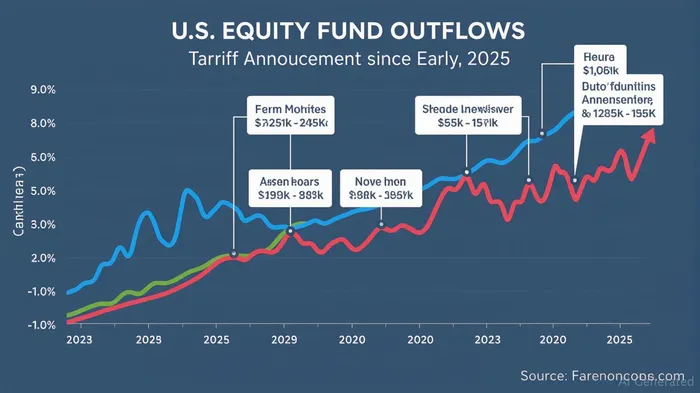
The Tariff Overhang: U.S. Fund Outflows and Economic Trade-Offs
The U.S. tariff regime—ranging from 24% on Japanese goods to 50% on EU imports—has created a "wait-and-see" market mentality. Despite minimal immediate market disruption, J.P. Morgan estimates that tariffs could shave 0.5–1.3% off U.S. GDP in 2025, with inflation pressures (PCE up 1–1.5%) complicating Federal Reserve policy.
Investment Implications:
- Underweight U.S. cyclicals: Sectors like autos, metals, and semiconductors face headwinds. For instance, 50% tariffs on copper threaten to push prices below $9,100/tonne by year-end, squeezing manufacturers' margins.
- Monitor Fed policy shifts: A potential rate cut in late 2025 could stabilize markets, but the Fed's focus on inflation anchoring may delay relief.
The AI Surge: European Tech as the New Equity Frontier
Europe's tech sector has emerged as a bright spot, with AI investments driving growth and valuations. Companies like Planisware SAS (AI-driven workflow automation) and Storytel AB (AI-enhanced content curation) exemplify the region's innovation.
Key Drivers:
1. Fiscal support: Germany's €500 billion infrastructure fund and the EU's AI Act provide regulatory clarity and capital for tech adoption.
2. Currency tailwinds: A weaker U.S. dollar (+10% YTD for EUR/USD) enhances returns on non-dollar assets, favoring European equities.
3. Sector diversification: AI is reshaping industries beyond software—banking (fraud detection), healthcare (diagnostics), and utilities (grid optimization) are all beneficiaries.
Investment Thesis:
- Overweight European tech equities: Focus on companies with AI-driven revenue streams and exposure to structural growth (e.g., cybersecurity, cloud infrastructure).
- Consider ETFs: The iShares MSCI Europe Tech ETF (ITEC) offers diversified exposure to the region's tech leaders.
Bond Hedging: Navigating Rate Risks and Currency Shifts
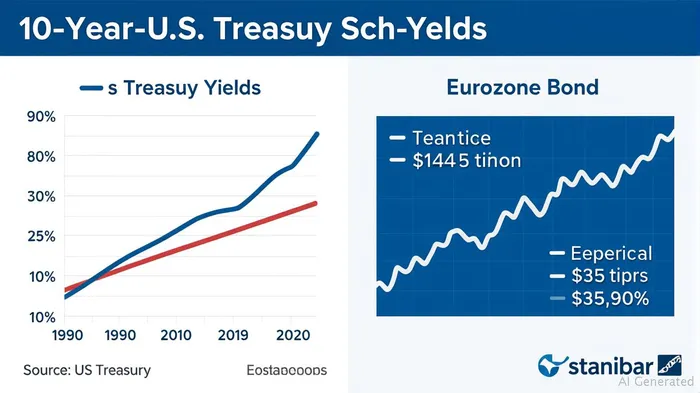
As the Fed holds rates until late 2025 and the ECB stabilizes after cuts, bond markets demand tactical hedging.
Strategies:
- EUR/USD carry trades: Borrow in low-yielding euros (ECB rates at 2.5%) to invest in higher-yielding U.S. bonds, while hedging against dollar volatility.
- Peripheral European bonds: Italian BTPs (yielding 3.5% vs. U.S. Treasuries at 4.1%) offer attractive spreads amid ECB support.
- AI-linked corporate bonds: Tech firms like Verve Group SE (digital media) issue bonds with covenant-lite terms, appealing to yield-seeking investors.
Asian/EM Risks: Trade Tensions and Structural Challenges
While Asian markets benefit from AI demand, tariff delays and geopolitical risks—particularly in the Middle East—cloud the outlook.
Key Concerns:
1. Supply chain fragility: U.S. tariffs on semiconductors (up to 50%) disrupt Asian chipmakers reliant on global markets.
2. Currency volatility: EM currencies like the Indian rupee (-8% YTD vs. USD) face pressure from trade deficits and inflation.
3. Debt overhang: EM corporate debt at $13 trillion, with 30% in high-yield categories, raises default risks amid Fed policy uncertainty.
Investment Caution:
- Underweight EM equities: Avoid exposures unless trade agreements (e.g., U.S.-China) de-escalate tensions.
- Focus on defensive sectors: Healthcare and utilities in Asia may outperform as rate-sensitive areas stabilize.
Conclusion: A Roadmap for Navigating the Shift
Investors must position portfolios for two simultaneous trends: AI's transformative impact and tariff-driven instability. European tech equities and strategic bond hedging offer growth and stability, while Asian/EM markets demand caution until trade policies stabilize.
Final Takeaways:
1. Rotate into European tech (e.g., AI, cybersecurity) and bond strategies leveraging EUR/USD carry trades.
2. Avoid cyclicals in the U.S. and EM equities until trade risks abate.
3. Monitor geopolitical developments (e.g., U.S.-China talks) and Fed policy shifts for tactical adjustments.
The path forward is clear: align with innovation while hedging against uncertainty.







Comentarios
Aún no hay comentarios