
Navigating Re-Engagement Risk and Growth Potential in Crypto-Native Platforms: Investor Sentiment and Platform Resilience in 2025
The first quarter of 2025 tested the mettle of crypto-native platforms, exposing vulnerabilities while also revealing unexpected resilience. From the $1.4 billion Lazarus exploit at Bybit to Phemex's $69.1 million hack and KuCoin's $300 million DOJ settlement, the sector faced a perfect storm of security breaches, regulatory scrutiny, and geopolitical volatility. Yet, amid the chaos, patterns of recovery and adaptation emerged, offering critical insights for investors assessing re-engagement risk and long-term growth potential.
Case Studies: Controversies and Resilience Metrics
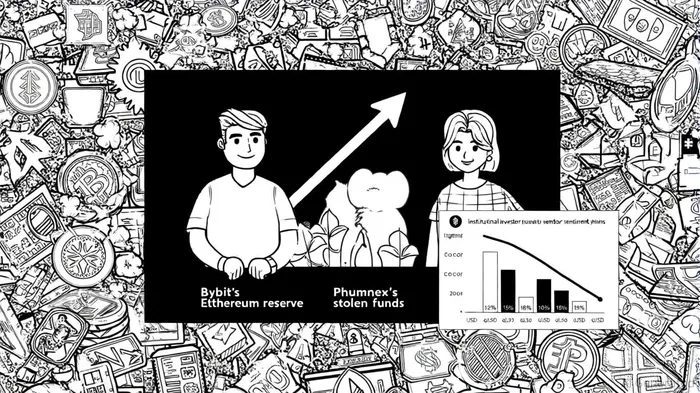
Bybit's response to the Lazarus hack exemplifies the duality of crisis and opportunity. Despite losing 779,000 ETH in reserves, the platform executed a rapid recovery, restoring 94% of its reserves by mid-2025 and reclaiming 21% of the derivatives market share from 18% post-hack, according to a Glassnode report. This resilience was driven by transparent operational responses, including real-time reserve updates and enhanced security audits. Similarly, KuCoin's $300 million settlement with the DOJ, while costly, catalyzed a 13.7% surge in its native token (KCS) and reinforced investor confidence in its compliance-driven strategy, according to a CoinEdition article.
In contrast, Phemex's $69.1 million breach highlighted the fragility of centralized systems. With only 0.4% of stolen funds recovered-a stark contrast to the 21.2% recovery rate in Q1 2024-Phemex's case underscores the persistent risks of inadequate security infrastructure, as reported by TheStreet. These divergent outcomes reveal a critical truth: post-controversy recovery hinges on a platform's ability to rebuild trust through transparency, regulatory alignment, and technological upgrades.
Institutional Investor Sentiment: A New Era of Adoption
Despite macroeconomic headwinds, institutional investors have doubled down on crypto. A Coinbase-EY-Parthenon survey of 350 institutions found that 75% plan to increase digital asset allocations in 2025, with 59% targeting over 5% of AUM in crypto-related products-a finding also noted in the Glassnode report. Stablecoins, in particular, have become a cornerstone of institutional portfolios, with 84% of respondents citing their utility for yield generation and cross-border transactions.
This shift is not merely speculative. BlackRock's launch of a BitcoinBTC-- ETF in Europe and EthenaENA-- Labs' $100 million stablecoin project signal a maturation of the asset class. Even as EthereumETH-- faced $1.4 billion in net outflows in Q1 2025, Base and SolanaSOL-- attracted $3.45 billion in net inflows, driven by yield farming and Mainnet upgrades, according to a Caldwell Law review. These trends suggest that institutional adoption is no longer a "hype cycle" but a structural shift.
Regulatory Clarity: A Double-Edged Sword
The SEC's evolving stance in 2025 has further complicated the landscape. While the agency dismissed high-profile cases against Ripple and CoinbaseCOIN--, it introduced new guidance on custodied crypto assets and mining activities, treating self-mining as non-securities under the Howey testTST--, according to a Fenwick analysis. This regulatory pivot has created both clarity and uncertainty: on one hand, it reduces the risk of arbitrary enforcement; on the other, it leaves gray areas around DAO liability and token classification.
Legal battles like SEC v. Ripple and SEC v. Coinbase remain pivotal. Ripple's argument that XRPXRP-- is not an investment contract could redefine the Howey test's application to digital assets, while Coinbase's defense against securities law violations may set precedents for exchange operations. KuCoin's settlement is an example of how costly resolutions can simultaneously mitigate regulatory risk and restore market confidence. For investors, these cases represent both risks (protracted litigation) and opportunities (regulatory frameworks that foster innovation).
Future Outlook: Altcoin Rallies and Macro Risks
Looking ahead, the crypto market is poised for a potential altcoin rally as Bitcoin dominance approaches critical levels. Analysts note that Base and Solana's Q1 inflows-$3 billion and $450 million, respectively-reflect growing demand for scalable infrastructure, a trend similarly observed in the Caldwell Law review. However, this optimism must be tempered by macroeconomic risks, including the Trump administration's pro-crypto rhetoric (which triggered portfolio devaluations in Q1 2025) and global compliance gaps, as highlighted by TheStreet.
The key to navigating these dynamics lies in platform-specific metrics. Platforms that prioritize decentralized governance, robust security audits, and regulatory compliance-like Bybit and KuCoin-are better positioned to weather future crises. Conversely, those reliant on centralized custodians or opaque operations (e.g., Phemex) face higher re-engagement risks.
Conclusion: Balancing Risk and Reward
The 2025 turbulence has underscored a fundamental truth: crypto-native platforms are neither invincible nor obsolete. Their growth potential is inextricably tied to their ability to adapt post-controversy. For investors, the path forward requires a nuanced lens-weighing institutional adoption trends against regulatory uncertainties, and platform resilience against macroeconomic volatility.
As the sector matures, the winners will be those who treat crises not as setbacks but as catalysts for innovation. In a market where trust is currency, the platforms that rebuild it fastest will command the highest valuations.





Comentarios
Aún no hay comentarios