
Navigating the U.S. Economic Slowdown: How to Invest in a 1.4%-GDP World
The U.S. economy is at a crossroads. While the Federal Reserve projects 1.4% GDP growth for 2025—a downward revision from earlier estimates—the Conference Board's Leading Economic Index (LEI) has triggered a recession signal, forecasting growth of just 1.6%. This divergence highlights a fragile landscape where tariff-driven inflation, weakening manufacturing orders, and rising unemployment claims are testing investor resilience.
The stakes are high for equity and bond investors alike. In this environment, success hinges on understanding which sectors can weather the slowdown and whether fixed income offers a safer harbor as the Fed pivots. Let's dissect the risks and opportunities.
The Recession Signal: More Slowdown Than Crash?
The Conference Board's LEI declined by 2.7% over six months ending in May 2025, meeting its “3Ds” criteria for a recession signal: prolonged duration, significant depth, and widespread diffusion of weakness. Components like consumer pessimism, falling manufacturing orders, and rising unemployment claims all contributed to the decline.
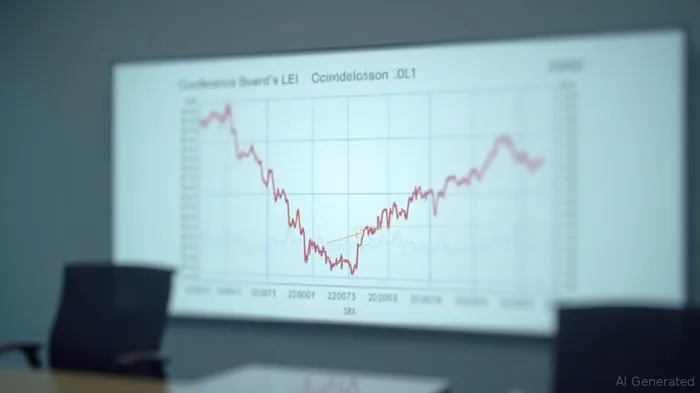
However, the Conference Board explicitly warns this is not an outright recession call but a caution about a sharp growth deceleration. The Fed's own projections, while more optimistic, acknowledge downside risks, with 13 of 30 participants citing recession concerns.
Investment Takeaway:
The slowdown is real, but a full-blown recession is not inevitable. This nuance matters for portfolio construction—avoid panic selling but stay defensive.
Equities: Where to Find Resilience
Defensive Sectors Lead the Way
Healthcare and utilities are the clear winners in this environment. Healthcare's stability stems from inelastic demand—people don't stop needing medicine or hospital visits during downturns. Utilities, too, benefit from regulated pricing and steady cash flows.
Utilities Example:
Companies like NextEra Energy (NEE) or Dominion Energy (D) offer dividend yields above 4%, a rare premium in a low-rate world. Their stable earnings make them a hedge against equity volatility.
Avoid the Cyclical Sectors
Auto manufacturers (e.g., GM, Ford) and tech hardware stocks are vulnerable to weaker consumer spending and supply chain disruptions. Tariffs have already inflated input costs, squeezing margins.
The Contrarian Play: Industrials on Rate Cuts
While industrials (e.g., Boeing, Caterpillar) have underperformed due to manufacturing weakness, they could rebound if the Fed cuts rates later in 2025. A shows bond markets are already pricing in a pivot.
Fixed Income: Bond Yields Near Peak?
The Fed's median projection for the federal funds rate in 2025 is 3.9%, down from earlier highs, signaling a potential easing cycle. This bodes well for bonds.
Why Bonds Might Rally:
- Tariff-Driven Inflation Easing: As trade tensions cool, core inflation (excluding volatile items like energy) could drop faster than expected.
- Fed Pivot: If unemployment hits 4.5% by year-end, as projected, the Fed may cut rates to 3% by 2026, boosting bond prices.
Investors should prioritize intermediate-term Treasuries (2-5 years) and high-quality corporate bonds, which offer yield premiums without excessive interest-rate risk.
The Case for Volatility and Diversification
The market is pricing in mixed signals. Equity volatility (as measured by the VIX) has risen, but earnings expectations remain stubbornly high. Investors should:
1. Hedging with Options: Use put options on broad market ETFs (e.g., SPY) to protect against sharp declines.
2. Dollar-Cost Averaging: Gradually deploy cash into resilient sectors rather than timing the bottom.
3. Stay Short-Term in Tech: Avoid long-term bets on tech until supply-chain inflation eases.
Final Take: Position for a Slower, Not Stopped, Economy
The Fed and Conference Board's conflicting forecasts underscore a critical truth: the U.S. economy is slowing, not collapsing. Investors should:
- Focus on Dividend Aristocrats: Companies with long histories of payouts (e.g., Procter & Gamble, Johnson & Johnson) offer stability.
- Avoid Junk Bonds: Defaults could rise if corporate profits weaken.
- Monitor the Fed's Next Move: A rate cut in late 2025 could spark a rotation into cyclicals.
In this 1.4%-growth world, patience and diversification are your best tools. The opportunities lie in sectors that thrive on stability—and the wisdom to avoid overreacting to the noise.
Disclosure: This article is for informational purposes only and does not constitute investment advice. Readers should consult a financial advisor before making investment decisions.







Comentarios
Aún no hay comentarios