
Navigating Earnings Season Volatility in a Geopolitically Charged Market
The global market landscape in late 2025 is defined by a volatile interplay of geopolitical tensions and technological innovation. From the protracted conflicts in Eastern Europe to escalating U.S.-China trade frictions, investors face a complex environment where defense and AI-driven tech stocks are both beneficiaries and barometers of systemic risk. As earnings seasons unfold amid this backdrop, strategic positioning requires a nuanced understanding of how geopolitical dynamics amplify sector-specific opportunities and risks.
Defense Sector: A Geopolitical Tailwind
The defense industry has emerged as a cornerstone of capital allocation in 2023–2025, driven by a global surge in military spending. According to a report by Morgan Stanley, global defense expenditures reached $2.4 trillion in 2023, with the U.S. defense budget crossing the $1 trillion threshold in 2025-bolstered by a $156 billion supplemental appropriation. This spending spree, fueled by conflicts like the Russia-Ukraine war and NATO's "European Rearmament" initiative, has directly benefited defense contractors such as RTX CorporationRTX--, General DynamicsGD--, and Northrop GrummanNOC--. European nations, aligning with NATO's 2% GDP defense-spending target, have unlocked an additional $54 billion in global defense investment, further solidifying the sector's growth trajectory.
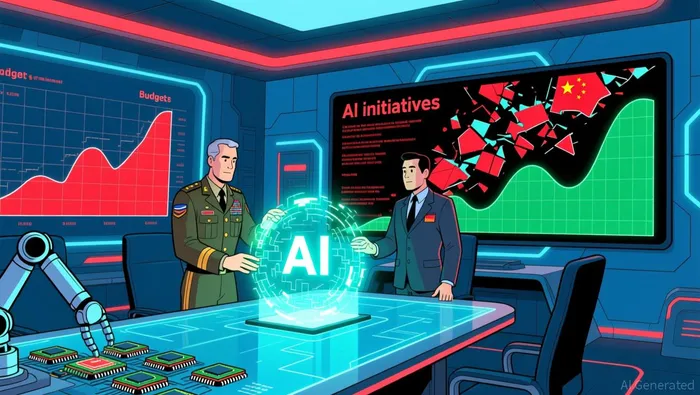
Investors should note that defense stocks are not merely reacting to geopolitical events but are actively shaping the technological response. For instance, the U.S. allocated $67 billion to AI integration in defense systems in 2023-8.7 times China's investment-highlighting a strategic pivot toward AI-enhanced capabilities. This trend underscores the sector's resilience, as defense firms increasingly partner with AI-driven companies like Palantir Technologies, whose stock surged by over 156% in 2025.
AI-Driven Tech Stocks: Growth Amid Valuation Concerns
The AI sector has experienced a dual-edged dynamic in 2025. On one hand, demand for generative AI and digital infrastructure has driven earnings outperformance for firms like Alphabet and Nvidia, which leveraged their AI advancements to outpace peers. On the other, the sector faces bottlenecks in energy infrastructure, with data centers struggling to meet surging computational demands. This dichotomy creates both opportunities and risks for investors.
According to Deloitte's 2025 Technology Industry Outlook, AI-related investments contributed significantly to U.S. GDP growth, but valuation volatility remains a concern as markets reassess long-term AI scalability. For instance, while the "Magnificent 7" tech stocks dominated headlines in 2024, Q4 2025 saw a rotation toward defensive sectors like healthcare and materials, as investors sought stability amid Fed rate-cut uncertainty. This shift suggests that AI-driven tech stocks may require active management to balance growth potential with macroeconomic headwinds.
Strategic Positioning: Diversification and Sector Rotation
To navigate this volatility, investors should adopt a multi-pronged approach:
Diversify AI Exposure: Beyond pure-play AI firms, consider companies providing infrastructure for AI compute, such as data center operators or energy providers. For example, bitcoin miners with established power infrastructure are well-positioned to transition into AI data centers, offering a lower-risk entry point.
Leverage Thematic ETFs: ETFs like the SPDR® Galaxy Transformative Tech Accelerators ETF (TEKX) or the iShares Future AI & Tech ETF (ARTY) provide broad exposure to the AI value chain, mitigating concentration risk. These vehicles also allow investors to capitalize on ancillary sectors, such as cybersecurity and robotics, which are increasingly intertwined with defense spending.
Active Sector Rotation: As Q4 2025 demonstrated, defensive sectors outperformed tech stocks following the Fed's rate-cut decision. A dynamic rotation strategy could involve shifting toward economically resilient sectors during geopolitical flare-ups while maintaining a core position in AI and defense stocks.
Conclusion: Balancing Geopolitical Realities and Technological Momentum
The intersection of geopolitical volatility and AI-driven innovation presents a unique inflection point for investors. Defense stocks offer a hedge against global instability, while AI-driven tech firms represent the cutting edge of economic transformation. However, success in this environment demands disciplined risk management-whether through sector rotation, thematic ETFs, or infrastructure diversification. As 2026 approaches, the ability to align portfolios with both the urgency of geopolitical realignments and the long-term promise of AI will define resilient investment strategies.





Comentarios
Aún no hay comentarios