
Navigating Dairy Sector Reforms: How Food Safety Regulations Are Reshaping Supply Chains and Investor Confidence
The dairy industry is undergoing a seismic shift as food safety regulations evolve to address supply chain vulnerabilities and restore consumer trust. From 2023 to 2025, regulatory frameworks have increasingly prioritized traceability technologies and sustainability metrics, reshaping how dairy producers manage compliance, production, and market expectations. These changes are not only redefining operational efficiency but also creating new investment opportunities for stakeholders who recognize the long-term value of transparency and innovation.
Supply Chain Vulnerabilities and Regulatory Responses
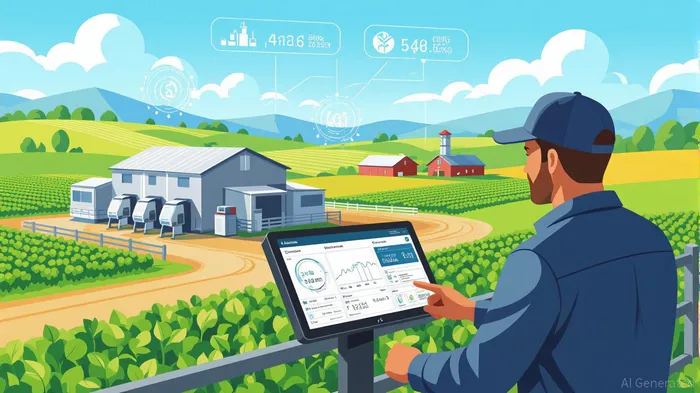
Recent food safety regulations have zeroed in on critical supply chain weaknesses, such as adulteration risks, contamination, and fraud. For instance, the adoption of end-to-end traceability systems-powered by , IoT, and -has become a cornerstone of regulatory compliance. These systems enable real-time tracking of dairy products from farm to shelf, ensuring transparency and rapid response to safety incidents.
A case study from Saudi dairy firms , reducing spoilage and enhancing compliance with safety standards.
Regulators are also pushing for alignment with the (SDGs), emphasizing carbon-neutral production and ethical sourcing. Dairy ERP systems now monitor carbon footprints, while innovations like and regenerative agriculture practices are gaining traction.
These measures not only mitigate environmental risks but also address consumer concerns about sustainability, which are increasingly tied to purchasing decisions.
Consumer Trust and Market Demand
Consumer trust in the dairy sector has been fragile in recent years.
A 2025 survey revealed . consumers expressed confidence in food safety, , driven by perceptions that profit is prioritized over safety and frequent food recalls. In the dairy sector, however, traceability is proving to be a trust-building tool.
According to a global study, . This demand is reshaping market dynamics, with companies that adopt transparent practices gaining a competitive edge.
The regulatory push for traceability also aligns with broader consumer trends. For example, the "" (MAHA) movement has heightened awareness of food additives and pathogens, further emphasizing the need for science-based safety measures and clear communication from producers
as research shows. Companies that leverage technologies like and biosensors for rapid pathogen detection are better positioned to meet these expectations while minimizing recall risks.
Market Implications and Investor Behavior
The financial implications of these regulatory and consumer shifts are profound.
The global food traceability market, , , . Similarly,
the dairy testing market, critical for ensuring safety and quality, . These figures underscore the growing ROI for investors in traceability and safety technologies.
Dairy companies adopting these innovations have already seen tangible financial benefits. For example, cloud-based traceability platforms and smart labels are enhancing data interoperability, reducing operational costs, and improving customer retention.
The dairy herd management market, which supports traceability through IoT-based health monitoring, , . Such growth is attracting capital to firms that integrate automation and AI into their supply chains, as these tools optimize efficiency and reduce waste.
Conclusion
The dairy sector's response to food safety regulations is a masterclass in aligning compliance with market demands. By addressing supply chain vulnerabilities through traceability and sustainability, producers are not only meeting regulatory expectations but also capitalizing on a consumer base increasingly willing to pay for transparency. For investors, the sector offers a compelling mix of technological innovation and financial growth potential. As the global food traceability market surges and consumer trust begins to stabilize, early adopters of these technologies are likely to dominate the next decade of dairy industry evolution.







Comentarios
Aún no hay comentarios