
Navigating Currency Risks in Asia-Pacific: Trade Tariffs, Central Banks, and the AUD/JPY Opportunity
The Asia-Pacific region is at a crossroads. As U.S.-Japan trade tensions escalate toward the August 1 tariff deadline, and the Reserve Bank of Australia (RBA) defies expectations with a surprise rate hold, currency markets are bracing for volatility. For investors, this environment presents a high-reward, high-risk landscape—particularly in the AUD/JPY and USD/JPY pairs. Here's how to position for divergent monetary policies and geopolitical shifts.
The Yen's Weakness: Trade Tariffs and a Dovish Bank of Japan
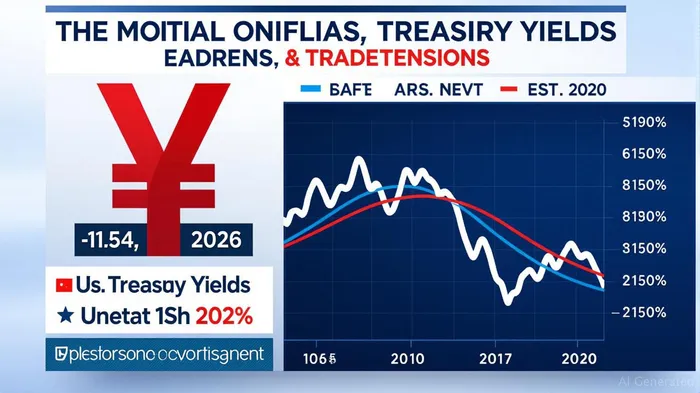
The yen (JPY) faces a perfect storm. U.S. President Donald Trump's threat to impose 25% tariffs on Japanese imports by August 1 has introduced acute uncertainty. While Japan negotiates fiercely—especially over rice imports—the U.S. has warned of retaliation if Tokyo retaliates. This dynamic has already weakened the yen, as investors price in the risk of prolonged trade friction.
Compounding the JPY's struggles is Japan's economic stagnation. Real wages fell by 2.9% year-on-year in May—the sharpest drop in nearly two years—while inflation remains stubbornly above wage growth. The Bank of Japan (BoJ), already constrained by its yield curve control (YCC) policy and negative rates, has little room to stabilize the currency. This divergence from Australia's firmer monetary stance creates a yield differential favoring the AUD.
The RBA's Surprise Hold: A Bullish Signal for the AUD
The RBA's decision to keep the cash rate at 3.85% in July, despite markets pricing in a 25-basis-point cut, sent shockwaves through forex markets. The AUD/JPY pair surged to 95.50, testing key resistance levels. Why did the RBA hold?
- Policy Prudence: The bank cited weak global growth and inflation risks as reasons to avoid premature easing.
- Economic Resilience: Australia's labor market remains tight, and commodity exports—particularly iron ore—benefit from China's rerouted trade flows.
- Interest Rate Advantage: Australia's rates remain higher than those in most advanced economies, including the U.S. and Japan, attracting capital inflows.
Technical Outlook: A breakout above 95.00 could propel the pair toward 97.32 (February high) and 99.15 (yearly peak). Supports at 94.65 (Tenkan-sen) and 94.18 (Senkou Span A) offer near-term anchors.
USD/JPY: Caution Amid Geopolitical Crosscurrents
While the AUD/JPY offers a clear bullish case, the USD/JPY requires vigilance. Key risks loom:
- Trade Tensions: If the U.S. imposes tariffs on Japanese autos or semiconductors, the yen could gain as a safe-haven asset, pressuring USD/JPY downward.
- Geopolitical Summits: The Shanghai Cooperation Organization (SCO) summit in late July and U.S.-Australia military exercises (Talisman Sabre) may heighten regional tensions. A hawkish outcome could boost the yen.
- Election Dynamics: Though no major Asia-Pacific elections occur around July 20, Japan's upper house election on July 27 could reshape its trade strategy, adding uncertainty.
Investors should avoid aggressive long USD/JPY positions until trade negotiations clarify.
Investment Strategy: Exploit Policy Divergence and Technical Breakouts
- Go Long AUD/JPY:
- Target: 95.00–97.32.
- Risk Management: Set stops below 94.18; consider averaging into positions as resistance levels hold.
Fundamental Catalysts: RBA's policy stability, iron ore price trends, and China's trade rerouting.
Monitor USD/JPY with Caution:
- Watch for Breakdowns: Below 140.00 could signal yen strength if trade fears spike.
Avoid Overcommitment: Allocate smaller risk capital here until geopolitical clarity emerges.
Hedging Considerations:
- Pair AUD/JPY longs with short USD/JPY options to offset downside risks from sudden yen appreciation.
Conclusion: Central Banks and Trade Are the New Compass
The AUD/JPY's upward trajectory hinges on the RBA's resolve to avoid rate cuts and Japan's inability to resolve trade disputes. Meanwhile, USD/JPY faces a precarious balance between dollar strength and yen-safe-haven demand. Investors should prioritize technical breakouts and central bank communication over macroeconomic noise. With the August 1 tariff deadline looming, this is a market where position sizing and discipline will separate winners from losers.
Final Call: Bullish on AUD/JPY (target 97.32+), neutral to cautious on USD/JPY until trade risks abate.
Stay agile—geopolitics and policy shifts can turn opportunities into pitfalls overnight.







Comentarios
Aún no hay comentarios