
Navigating Cryptocurrency Market Corrections: Macroeconomic Triggers and Investor Psychology in 2023-2025
The cryptocurrency market has remained a volatile asset class, with corrections in 2023–2025 driven by a confluence of macroeconomic triggers and shifting investor psychology. Understanding these dynamics is critical for investors seeking to navigate the unpredictable tides of digital assets.
Macroeconomic Triggers: The Invisible Hand of Corrections
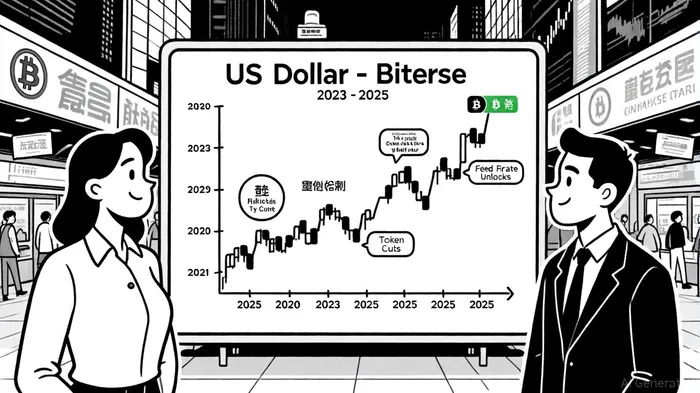
The Federal Reserve's monetary policy has been a primary driver of crypto market corrections. Emergency rate cuts, while intended to stimulate liquidity, have often signaled underlying economic fragility. For instance, in late 2025, anticipated Fed rate cuts led to an initial 12% drop in BitcoinBTC-- prices before a partial recovery, as investors interpreted the move as a sign of systemic weakness, according to a Markets FinancialContent analysis. Concurrently, the U.S. national debt surpassing $37 trillion reinforced Bitcoin's narrative as a hedge against fiat devaluation. However, this also created short-term anxieties, as higher government bond yields siphoned liquidity away from riskier assets like crypto, as noted in a TechAnnouncer analysis.
Token unlocks have further exacerbated volatility. In September 2025, large-scale unlocks of tokens such as CHEEL, AptosAPT-- (APT), and Sonic (S) overwhelmed market demand, triggering sharp sell-offs. Smaller altcoins were particularly vulnerable, with some losing over 30% of their value within days, as the Markets FinancialContent analysis reported. On a broader scale, U.S.–China trade tensions and delayed regulatory approvals for crypto ETFs intensified liquidations, with $5 billion in crypto positions liquidated in late 2025 alone, according to a TradersUnion analysis.
Investor Psychology: Fear, Herd Behavior, and the Retail-Institutional Divide
Macroeconomic uncertainty has amplified emotional responses among investors. During periods of tightening monetary policy, fear-driven de-risking has shifted capital from speculative altcoins to Bitcoin, which is increasingly viewed as a "safe haven" within crypto, as the TechAnnouncer analysis noted. Conversely, loose monetary policy has fueled speculative fervor, with retail investors often driven by social media hype and herd behavior. Studies show that positive sentiment (greed) can drive trading activity more substantially than negative sentiment (fear) in certain cryptocurrencies, creating self-reinforcing cycles, as demonstrated in a ScienceDirect study.
Retail and institutional investors, however, have exhibited divergent behaviors. Retail investors, influenced by price surges and social trends, tend to act impulsively. For example, Bitcoin's March and November 2024 rallies saw a surge in new retail participation, though adoption slowed outside these high-momentum periods, as noted by the Markets FinancialContent analysis. In contrast, institutional investors have maintained a strategic focus on long-term positioning, leveraging deeper research and capital to weather volatility. The 2021 GameStop phenomenon demonstrated retail investors' ability to influence markets, but institutional actors still dominate long-term trajectories, as the TechAnnouncer analysis observed.
The Interplay of Macro and Micro: A Perfect Storm
The 2025 market correction exemplifies how macroeconomic triggers and investor psychology collide. Rising debt, token unlocks, and trade tensions created a perfect storm, amplified by leveraged positions and thin liquidity. Whale dumping and ETF outflows further accelerated the sell-off, with altcoins facing disproportionate volatility, as the TradersUnion analysis explained. Meanwhile, social media-driven overconfidence led many retail investors to hold onto losing positions, exacerbating losses when panic set in, a pattern also highlighted in the Markets FinancialContent analysis.
Implications for Investors
For investors, the lesson is clear: macroeconomic fundamentals and psychological dynamics must be analyzed in tandem. Diversification across asset classes and risk management tools (e.g., stop-loss orders) are essential during volatile periods. Additionally, monitoring institutional activity and regulatory developments can provide early signals of market shifts.
As the crypto market matures, its correlation with traditional financial systems will likely deepen. Investors who understand the interplay between macroeconomic triggers and behavioral biases will be better positioned to capitalize on opportunities and mitigate risks in this evolving landscape.






Comentarios
Aún no hay comentarios