
Navigating Crypto Volatility: Lessons from $354M in Liquidations and Legal Losses
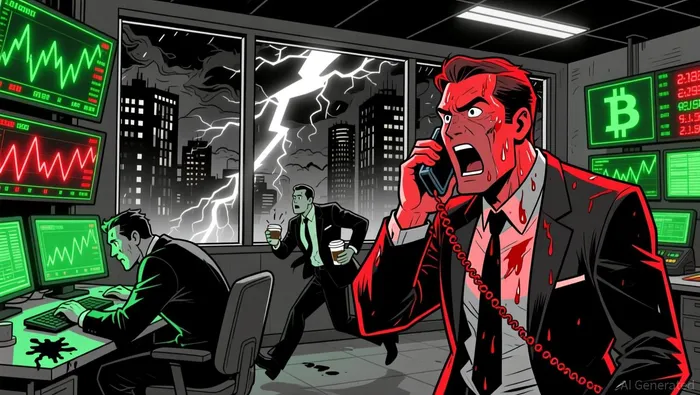
The Fragility of Leverage
Leveraged trading in crypto has always been a double-edged sword, but recent events underscore its dangers. When markets reprice rapidly-driven by macroeconomic headwinds like the "higher for longer" interest rate scenario-long positions become particularly vulnerable, as highlighted in a Markets FinancialContent report. The November 6 liquidation spike, for instance, occurred as BitcoinBTC-- hovered near $110,000 and EthereumETH-- languished below $4,000, reflecting broader investor caution, according to the same report. For traders, this means overexposure to leveraged longs during periods of regulatory uncertainty or macroeconomic stress can lead to catastrophic losses.
Legal Losses: A Case Study in Risk Mismanagement
The $354 million Bitcoin loss by Florida man Michael Prime offers a cautionary tale, according to a Cryptonews report. After lying to federal authorities about owning a significant Bitcoin fortune, Prime's appeal was rejected by the U.S. Court of Appeals for the Eleventh Circuit. The court ruled that his "inexcusable delay" in claiming the assets-coupled with inconsistent statements-justified the destruction of the hard drive containing his private keys, as detailed in a Decrypt report. This case highlights two critical risk management failures:
1. Timely Action: Digital assets require proactive management. Without immediate access to private keys or secure backups, even legitimate claims can be rendered moot.
2. Consistency in Claims: Inconsistent statements erode credibility and open the door for legal dismissal.
For institutional players, this underscores the need for robust custodial solutions and legal frameworks to protect digital assets.
Macro-Sensitive Strategies: Navigating Regulatory and Interest Rate Shifts
The 2025 crypto landscape is shaped by two macro forces: regulatory clarity and interest rate dynamics. The European Union's Markets in Crypto-Assets (MiCA) regulation and the U.S. GENIUS Act are creating a more structured environment, but compliance costs now consume 34% of operational budgets, as reported in a Markets FinancialContent report. Meanwhile, the "higher for longer" rate scenario has dampened speculative fervor, pushing investors toward stablecoins and regulated altcoins with clear use cases, according to the same report.
Strategic positioning here requires a balance. Investors must hedge against interest rate risks while capitalizing on regulatory tailwinds. For example, stablecoins-projected to double in supply to $400 billion-are gaining traction as a bridge to central bank digital currencies (CBDCs), but their redemption rates have spiked as investors seek safer havens, according to the same report.
Risk Management Frameworks: From Compliance to Custody
Banks and institutional players are adopting advanced risk management tools to survive this environment. QKS Group's 2025 SPARK Matrix™ highlights ProcessUnity as a leader in vendor risk management, leveraging AI-powered tools like Evidence Evaluator to automate compliance and reduce manual workloads, according to a Globenewswire report. Similarly, blockchain intelligence platforms are critical for detecting suspicious activity, with Know Your Transaction (KYT) systems becoming a standard for anti-money laundering (AML) compliance, as noted in a blog post from Anaptyss.
On the custody front, multi-party computation (MPC) and cold storage solutions are gaining traction to secure digital assets, as also noted in the Anaptyss blog. For retail investors, this means choosing platforms with transparent security protocols and regulatory backing.
Strategic Positioning for 2025 and Beyond
- Diversify Leverage Exposure: Avoid overconcentration in long positions during macroeconomic uncertainty. Use short-term, low-leverage strategies to capitalize on volatility without overexposure.
- Adopt Regulatory-Aligned Portfolios: Prioritize assets with clear regulatory catalysts, such as DuskDUSK-- Network (DUSK) or PIVXPIVX-- (PIVX), which benefit from compliance-driven demand, as noted in a Markets FinancialContent report.
- Leverage RegTech Tools: Institutions should integrate AI-driven compliance platforms to stay ahead of evolving regulations while reducing operational costs, as suggested in the Anaptyss blog.
The crypto market's future hinges on its ability to adapt. As liquidations mount and legal missteps cost fortunes, the lesson is clear: volatility is inevitable, but preparedness is a choice.






Comentarios
Aún no hay comentarios