
Navigating the Crypto Security Minefield: Identifying Resilient Assets in a High-Risk Landscape
The crypto industry's rapid evolution has brought unprecedented innovation, but it has also exposed glaring vulnerabilities. From 2022 to 2024, over $7 billion was lost to hacks alone, with losses spiking to $2.2 billion in 2024 and surpassing $2.17 billion in the first half of 2025. The ByBit hack-a $1.5 billion breach attributed to North Korea's Lazarus group-epitomized the scale and sophistication of modern cyber threats. For investors, the challenge lies in distinguishing resilient assets and protocols from those prone to exploitation. This analysis examines the 2025 security landscape, identifies key vulnerabilities, and highlights protocols and strategies that have demonstrated robustness amid escalating risks.
The Evolving Threat Landscape
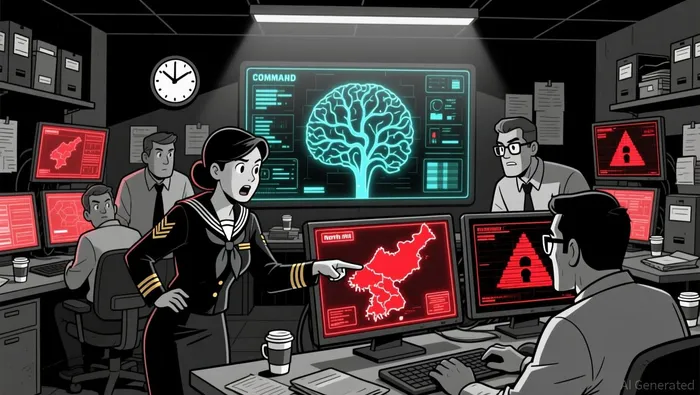
The 2025 surge in crypto theft was driven by North Korea-linked actors, who accounted for 52% of annual losses, or $2.02 billion. These groups employed advanced tactics, including embedding IT workers within crypto firms and impersonating recruiters to harvest credentials. Operational security failures emerged as the primary attack vector, with multi-sig wallets compromised through human error rather than code flaws. The UXLINK incident, where attackers exploited compromised signers to drain $1.46 billion, underscored the fragility of administrative controls.
Phishing attacks also remained pervasive, with fake exchange sites and social engineering scams accounting for 16.6% of H1 2025 losses. A single U.S. citizen lost $330 million in BitcoinBTC-- through a targeted social engineering scheme, highlighting the vulnerability of individual users. Meanwhile, AI-driven exploits surged by 1,025%, targeting insecure APIs and AI agents integrated into blockchain ecosystems.
Resilient Protocols and Mitigation Strategies
Despite these challenges, certain protocols and practices have demonstrated resilience. Decentralized finance (DeFi) platforms, for instance, saw a decline in hack-related losses compared to previous cycles, thanks to improved monitoring and emergency response systems. The VenusXVS-- Protocol incident in 2025 showcased the efficacy of real-time monitoring: suspicious activity was flagged, allowing the protocol to pause operations and reverse transactions before significant losses occurred.
Regulatory advancements also played a critical role. The EU's Markets in Crypto-Assets (MiCA) Regulation and the U.S. GENIUS Act for stablecoin oversight introduced stringent reserve requirements. These frameworks compelled platforms to adopt institutional-grade security measures, such as Threat-Led Penetration Tests (TLPTs) under the EU's Digital Operational Resilience Act (DORA). Additionally, cross-chain security protocols and governance controls-emphasized at the 2025 DeFi Security Summit-reduced systemic risks by addressing single points of failure in bridges and oracles.
Key Resilient Assets and Protocols
Investors seeking to mitigate risk should prioritize assets and protocols with the following characteristics:
1. Hardware-Backed Multi-Sig Wallets: Protocols like BitGo and GnosisGNO-- Safe have adopted hardware-backed signing solutions to prevent operational breaches.
2. Real-Time Monitoring Systems: Platforms with on-chain analytics and automated threat detection, such as the Venus Protocol, have minimized breach impacts.
3. Regulatory Compliance: Stablecoins adhering to MiCA and GENIUS Act standards, such as USDC and EURS, benefit from enhanced reserve transparency and audit requirements.
4. Cross-Chain Security Audits: Projects like ChainlinkLINK-- and The Graph have integrated multi-chain validation to prevent bridge-related exploits.
The Road Ahead
While 2025's losses were alarming, the industry's response has been equally dynamic. Over 70% of jurisdictions advanced stablecoin frameworks, fostering a more secure environment. However, gaps persist, particularly in unregulated cross-chain bridges and decentralized exchanges, as highlighted by the ByBit incident. For investors, the key takeaway is to align with protocols that prioritize operational hygiene, proactive threat detection, and compliance with emerging regulations.
As AI-driven attacks and geopolitical threats evolve, resilience will hinge on continuous innovation and collaboration. The crypto sector's ability to adapt-through technology, governance, and regulation-will ultimately determine which assets thrive in this high-stakes landscape.






Comentarios
Aún no hay comentarios