
Navigating Crypto Liquidation Events: Assessing Investor Compensation and Strategic Recovery Pathways
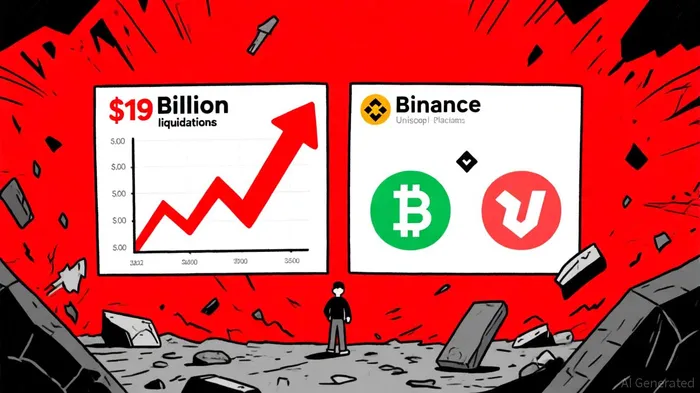
The cryptocurrency market's inherent volatility has once again been laid bare by two of the most significant liquidation events in history. In October 2025, a global risk-off wave triggered by U.S. President Donald Trump's 100% tariff threat on Chinese imports led to a $19 billion collapse in leveraged long positions, with BitcoinBTC-- and EthereumETH-- bearing the brunt of the losses, Coindesk reported. Just months earlier, a mid-July event saw $700 million in liquidations, primarily affecting Ethereum and XRPXRP--, as shifting altcoin sentiment and Bitcoin dominance trends exacerbated price swings, KITCO reported. These episodes underscore the critical need for investors to understand both the mechanics of liquidation events and the evolving landscape of compensation mechanisms.
The Anatomy of Recent Liquidation Events
The October 2025 crash was a textbook example of leverage-induced cascading failures. As macroeconomic uncertainties spiked, leveraged traders faced margin calls, triggering a self-reinforcing cycle of forced selling. Over $8 billion in long positions were liquidated within 48 hours, with Ethena's USDe briefly depegging to $0.98, exposing vulnerabilities in stablecoin pegs during extreme volatility, Coindesk reported. By contrast, the July event, while smaller in scale, highlighted altcoin fragility. Ethereum and XRP lost over 20% of their value in a single day, with institutional players holding 3.5 million BTCBTC-- playing a pivotal role in amplifying price swings, KITCO noted.
Legal Frameworks and Investor Rights
Legal developments since 2023 have reshaped how investors approach compensation claims. A landmark High Court ruling recognized cryptocurrency as property capable of forming a trust, with non-consenting customers (NCCs) who rejected 2018 Terms and Conditions (T&Cs) gaining proprietary rights over their assets, a CMS Law update explains. This contrasts sharply with Celsius Network's 2023 bankruptcy, where users who accepted clickwrap agreements were deemed unsecured creditors, leaving them with minimal recovery prospects, as outlined by Quinn Emanuel. These cases emphasize the importance of scrutinizing platform terms: investors must proactively review T&Cs to determine whether they hold legal ownership or merely unsecured claims.
Compensation Mechanisms: Centralized vs. Decentralized
Binance's response to the October liquidation event illustrates the mixed landscape of investor compensation. The exchange pledged to review losses tied to technical failures-such as system latency or failed transactions-on a case-by-case basis, while explicitly excluding market-driven losses, Yahoo Finance reported. Co-founder Yi He urged affected users to contact customer service, with compensation tied to account activity analysis, Yahoo Finance said. Meanwhile, decentralized finance (DeFi) platforms like UniswapUNI-- and AaveAAVE-- demonstrated structural resilience, processing record volumes without significant disruptions. DeFi liquidations totaled only a few hundred million dollars, aided by hardcoded stablecoin pricing and liquidity vaults, according to Yahoo Finance.
Strategic Recovery Opportunities
For investors navigating post-liquidation recovery, three strategies emerge as critical:
1. Platform Due Diligence: Prioritize exchanges with trust-based asset management frameworks, as seen in the 2023 High Court ruling noted in the CMS Law update.
2. Legal Recourse: For centralized platforms, assess T&C terms to determine eligibility for compensation or legal claims, as demonstrated in the Celsius case and detailed by Quinn Emanuel.
3. Diversification into DeFi: Leverage DeFi's structural safeguards, such as Uniswap's automated market makers (AMMs), to mitigate systemic risks, a point echoed by Yahoo Finance.
Conclusion
The October and July 2025 liquidation events serve as stark reminders of the crypto market's dual nature: high reward and high risk. While compensation mechanisms like Binance's initiative offer partial relief, they remain contingent on technical failures rather than market forces. Investors must adopt a proactive approach, combining legal awareness, platform selection, and diversification to navigate future volatility. As regulatory frameworks evolve-such as proposed stablecoin legislation-strategic adaptability will be key to turning crisis into opportunity.






Comentarios
Aún no hay comentarios