
Navigating the Crypto Fear Index: Strategic Entry Points Amid Market Turbulence
The Crypto Fear Index: A Contrarian Compass
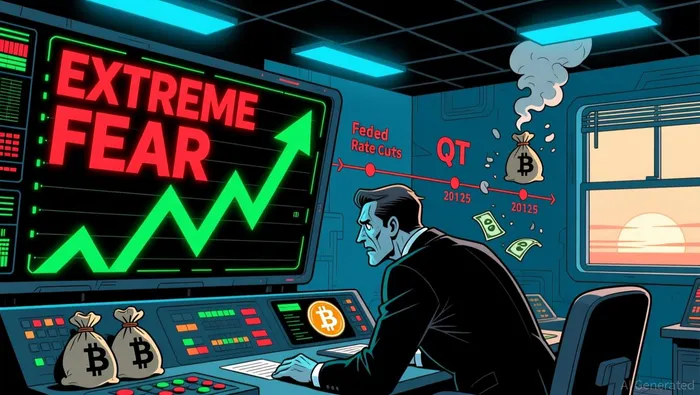
The Crypto Fear & Greed Index, measured on a scale from 0 (extreme fear) to 100 (extreme greed), reflects market sentiment through metrics like price momentum, volatility, and social media engagement. While it lacks direct predictive power for price bottoms-extreme fear levels often precede prolonged sideways movement-it acts as a contrarian indicator when combined with macroeconomic catalysts. For instance, a drop below 10 historically correlates with a 2.1% median 30-day return for BitcoinBTC--, albeit with inconsistent follow-through. However, when these fear signals align with Fed policy pivots, the odds of a meaningful rebound increase significantly.
Fed Policy Shifts: QT Slowdowns and Rate Cuts as Catalysts
The Federal Reserve's 2025 policy adjustments highlight the interplay between macroeconomic conditions and crypto markets. In April 2025, the Fed reduced its QT pace from $25 billion to $5 billion per month, signaling caution amid rising economic uncertainty. This slowdown, coupled with three projected rate cuts in July, September, and November 2025, created a more accommodative environment for risk assets. Historical data shows a 15% surge in crypto markets following these shifts, underscoring the sector's sensitivity to Fed policy.
A pivotal case study emerged in October 2025, when the Fed cut rates by 25 basis points and halted QT. While Bitcoin initially fell 2.55% amid leveraged position liquidations, the long-term outlook for crypto improved as the dovish pivot signaled a broader easing of financial conditions. Similarly, rate cuts in late 2024 and early 2025 supported crypto markets despite geopolitical tensions, as investors priced in the Fed's response to inflation and tariff-driven growth concerns.
Strategic Entry Points: Fear as a Signal, Not a Guarantee
The most actionable entry points arise when extreme fear coincides with Fed-driven macroeconomic pivots. For example, in late 2024, the Fear Index hit "extreme fear" levels as Bitcoin dropped to seven-month lows, driven by a broader market correction and fading expectations of Fed rate cuts. This period aligned with the Fed's pause in rate cuts, as officials prioritized monitoring inflation and tariff impacts. While the immediate rebound was muted, the subsequent rate cuts in 2025 provided a tailwind for risk assets, validating the contrarian case for buying during fear-driven selloffs.
Another example is the July 2025 rate cut, which occurred amid a backdrop of rising tariffs and economic uncertainty. The Fed's aggressive rate cuts were priced into the market, but the Fear Index's extreme levels highlighted undervaluation in crypto assets. Investors who positioned during this period benefited from the Fed's accommodative stance, which supported a 15% market surge.
Positioning for a Macro Rebound: A Framework
To leverage the Fear Index effectively, investors should adopt a multi-faceted approach:
1. Monitor Fed Policy Signals: Track QT adjustments and rate cut expectations, as these directly influence liquidity and risk appetite.
2. Use Fear as a Contrarian Filter: Extreme fear levels (below 10) combined with Fed dovishness (e.g., rate cuts) create asymmetric risk-reward setups.
3. Diversify Across Timeframes: While short-term volatility is inevitable, historical data suggests that rebounds often take weeks or months to materialize.
Conclusion
The Crypto Fear Index is not a standalone indicator but a valuable tool when contextualized with Fed policy shifts. As the Fed's 2025 adjustments demonstrate, extreme fear periods can coincide with pivotal macroeconomic pivots, offering strategic entry points for risk assets. By combining sentiment analysis with macroeconomic fundamentals, investors can navigate turbulence and position for a Fed-driven rebound.






Comentarios
Aún no hay comentarios