
Navigating the Crossroads: UK Offshore Energy's Path to Resilience and Strategic Divestment in 2025
The UK's offshore energy sector stands at a pivotal juncture in 2025, balancing ambitious decarbonization goals with mounting operational and financial headwinds. While the government's 2030 offshore wind deployment targets and net-zero commitments remain intact, the industry faces a perfect storm of regulatory uncertainty, supply chain bottlenecks, and shifting capital priorities. For investors, understanding the interplay between sectoral resilience and strategic divestment is critical to navigating this complex landscape.
Challenges Undermining Sectoral Resilience
The UK's offshore wind industry, a cornerstone of its energy transition, is grappling with systemic delays in project approvals. According to a report by the Institution of Civil Engineers, securing consents for offshore wind developments now takes up to a decade, stifling momentum and deterring long-term investment [1]. Compounding this, the ongoing Review of Electricity Market Arrangements (REMA) has created policy ambiguity, particularly around grid connection reforms and the future of the Contracts for Difference (CfD) auction mechanism. Recent revisions to strike prices and proposed zonal pricing models have further eroded investor confidence, with developers citing "unpredictable cost structures" as a key barrier to project bankability [3].
Supply chain constraints represent another critical vulnerability. Component manufacturing and installation costs have surged by 30–50% since 2021, driven by global inflation and underdeveloped infrastructure for floating wind technologies [2]. While the UK government's £1 billion supply chain investment-split between Great British Energy and The Crown Estate-signals intent to address these gaps, industry leaders emphasize that fragmented port planning and workforce shortages remain unmet challenges [3].
Strategic Divestment: A New Normal
The sector's fragility has accelerated consolidation among operators. In a landmark move, Shell and Equinor merged their UK offshore oil and gas operations, creating one of the North Sea's largest producers. This reflects a broader trend: over 40% of supply chain companies report declining business environments, with 90% seeking growth opportunities outside the UK [1]. The UK government's pause on new oil and gas licenses and its 9% annual decline in hydrocarbon output since 2020 have intensified pressure on smaller players to exit or partner with larger entities [4].
Private capital is increasingly stepping into this void. The formation of Neo Next Energy-a joint venture between HitecVision-backed NEO Energy and Repsol UK-exemplifies how strategic alliances are being leveraged to optimize operations and scale capabilities in a high-cost environment [2]. Such moves are not merely defensive; they aim to position firms for the next phase of the energy transition, where offshore wind, carbon capture and storage (CCS), and hydrogen will dominate.
Building Resilience Through Strategic Alignment
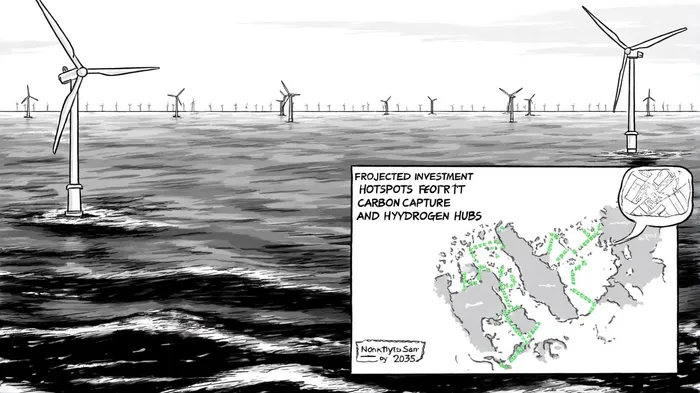
To unlock the sector's £200 billion investment potential by 2035, the UK must prioritize three pillars: policy clarity, supply chain cohesion, and long-term infrastructure planning [4]. The Crown Estate's Future of Offshore Wind report underscores the need for streamlined seabed leasing and grid infrastructure upgrades to reduce developer risks [2]. Meanwhile, OEUK's 2025 Supply Chain Report highlights the importance of public-private collaboration in expanding capabilities for CCS and hydrogen, which are projected to account for 30% of the sector's value pool by 2035 [1].
Conclusion: A Sector at a Crossroads
The UK's offshore energy industry is a microcosm of the global energy transition's challenges and opportunities. For investors, the path forward lies in balancing short-term divestment strategies with long-term bets on resilient technologies. While the sector's current fragility is undeniable, strategic alignment between government and industry-coupled with targeted capital deployment-could yet position the UK as a global leader in offshore renewables. The next 18 months will be decisive.







Comentarios
Aún no hay comentarios