
Navigating the Crossroads: Telecom Investment in Pakistan Amid Political Uncertainty and Digital Ambition
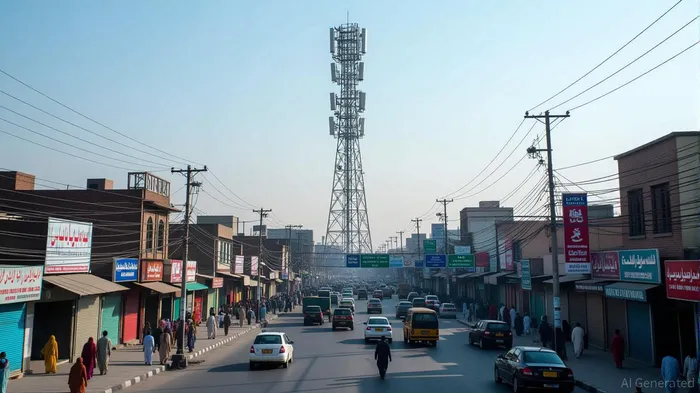
In 2025, Pakistan's mobile data infrastructure sector stands at a precarious crossroads. For foreign investors, the country's telecom sector offers a tantalizing mix of high-growth potential and systemic risk. On one hand, Pakistan's digital economy is expanding rapidly, driven by a young, tech-savvy population and rising internet penetration. On the other, political instability, regulatory unpredictability, and geopolitical tensions continue to cast a shadow over long-term investment prospects.
The Dual Edges of Opportunity
Pakistan's telecom sector has long been a cornerstone of its digital transformation. With over 138 million mobile broadband users as of late 2024, the demand for data services is surging. However, the sector's infrastructure lags behind. Fixed broadband penetration remains at a mere 1.3 percent, and only 14.8 percent of cell towers are fiber-connected—a critical bottleneck for 5G deployment. The Asian Development Bank (ADB) has warned that without urgent reforms, Pakistan risks falling further behind in digital readiness, stifling economic growth and exacerbating inequality.
Yet, the sector's challenges are not insurmountable. Pakistan's strategic location as a bridge between South Asia, the Middle East, and East Asia makes it an attractive hub for regional digital services. Government incentives, such as tax exemptions for IT and freelancing sectors, further sweeten the deal. U.S. firms like AT&T and EricssonERIC-- could benefit from infrastructure upgrades, while Pakistani tech hubs like Lahore's “Silicon Valley” may attract venture capital.
Political and Economic Volatility: A Looming Threat
The ADB's July 2025 report underscores a sharp decline in foreign direct investment (FDI) in Pakistan's telecom sector, with inflows dropping from $1.67 billion in 2021–22 to $750 million in 2022–23—a 91 percent drop year-on-year by March 2025. This collapse reflects growing investor unease over a deteriorating business environment. High taxation, poor spectrum allocation, and regulatory unpredictability have created a hostile climate for foreign operators.
Political instability compounds these issues. The anticipated visit by U.S. President Donald Trump to Pakistan in September 2025—a potential first in two decades—has sparked optimism about diplomatic normalization. However, the same report notes that Pakistan's governance risks, including military influence and inconsistent policy enforcement, remain significant hurdles. Recent closures of land routes to Iran and Iraq for security reasons, coupled with monsoon-related infrastructure damage, further highlight the fragility of the operating environment.
Strategic Reforms: A Path Forward
The ADB has called for urgent reforms to unlock the sector's potential. Key recommendations include:
1. Spectrum Pricing Reforms: Starting prices for spectrum auctions, often set in U.S. dollars and deemed unaffordable by private operators, must be adjusted to encourage participation.
2. Tax Policy Clarity: A long-term tax guarantee for the telecom sector could stabilize investor confidence.
3. Right-of-Way (RoW) Streamlining: Annual RoW fees, which burden operators compared to regional peers like India, should be restructured.
For investors, these reforms represent both a test of Pakistan's political will and an opportunity to capitalize on a sector poised for transformation. The U.S.-Pakistan trade agreement, which lowered tariffs on Pakistani exports, signals a potential shift in economic collaboration. However, Trump's transactional diplomacy and the broader geopolitical landscape—marked by India-Pakistan tensions and the Iran-Israel standoff—introduce volatility that cannot be ignored.
Investment Advice: Balancing Risk and Reward
For foreign investors, the telecom sector in Pakistan demands a nuanced, risk-managed approach. While the sector's growth potential is undeniable, success hinges on navigating political and regulatory uncertainties.
- Prioritize Partnerships: Collaborating with local firms like Jazz (Telenor Pakistan) or TRG Telecommunications can mitigate operational risks. These partnerships provide on-the-ground expertise and regulatory navigation.
- Diversify Exposure: Investors should avoid over-concentration in Pakistan's telecom sector. Pairing investments in Pakistani infrastructure with U.S. firms like Ericsson (ERIC) or AT&T (T), which are positioned to supply 5G technology, could balance regional risk with global growth.
- Monitor Geopolitical Signals: The Trump visit and U.S.-Pakistan rapprochement could catalyze short-term gains, but long-term stability depends on broader reforms. Track developments in spectrum auctions and tax policy changes using tools like and .
Conclusion: A Calculated Bet
Pakistan's telecom sector is a high-reward, high-risk proposition. While political instability and regulatory challenges persist, the country's digital ambitions and strategic location offer a compelling case for investment. For those willing to navigate the complexities, the sector could yield outsized returns—provided they approach it with caution, adaptability, and a long-term horizon.





Comentarios
Aún no hay comentarios