
Navigating the Crossroads: Short-Term Profit-Taking Risks vs. Long-Term AI/Cloud Fundamentals in the Nasdaq Rally
The Nasdaq's recent rally, fueled by optimism over Federal Reserve rate cuts and AI-driven innovation, has created a market crossroads. Investors now face a critical question: Should they capitalize on short-term momentum or anchor their strategies to the long-term structural shifts reshaping technology? To answer this, we dissect the latest Commitments of Traders (COT) report for Nasdaq-100 futures and contrast it with the evolving landscape of AI and cloud computing.
Short-Term Profit-Taking Risks: A COT Report Deep Dive
The September 23, 2025, Nasdaq-100 COT report for Nasdaq-100 futures reveals a mixed bag of positioning. Commercials, often seen as market stabilizers, hold a net short position of -27,826, a 10.46% decline from the prior week. This suggests hedging or bearish sentiment among institutional players, potentially signaling caution ahead of earnings season or macroeconomic data releases. Meanwhile, Large Speculators (Leveraged Funds) maintain a net long position of +24,019, and Small Traders add to the bullish bias with a net +3,807.
The Open Interest of 281,162 contracts, down 14.4% from the previous week, indicates profit-taking activity. When Open Interest declines alongside rising prices, it often signals a lack of fresh buying momentum-a classic warning sign for overextended rallies. Historically, such divergences have preceded corrections, particularly in markets driven by speculative flows, according to a Morgan Stanley analysis (see linked analysis above).
Adding to the tension, the COT Index for the Nasdaq-100 stands at 34.35%, reflecting a moderate concentration of positions. While not yet at extreme levels, this metric suggests that market participants are leaning toward consensus, which can amplify volatility during shifts in sentiment.
Long-Term Structural Trends: AI and Cloud Computing as the New Infrastructure
While short-term risks loom, the long-term fundamentals of the Nasdaq remain anchored in the relentless growth of AI and cloud computing. By 2025, the AI cloud computing market is projected to reach $150 billion, driven by AI-as-a-Service (AIaaS) platforms, IoT integration, and enterprise adoption of generative AI, according to the DataInsights report. Key players like AWS, MicrosoftMSFT-- Azure, and Google Cloud are not only expanding their AI/ML offerings but also reshaping global supply chains and energy strategies to meet surging demand, as highlighted in a Forbes article.
However, this growth is not without challenges. Major hyperscalers are grappling with slowing free cash flow and market saturation in core segments, a point emphasized in the Morgan Stanley analysis cited above. For instance, speculative deals between AI startups and chipmakers like AMD and Nvidia have drawn comparisons to the dot-com era's circular financing models, where inflated demand perceptions could mask underlying fragility - a concern also noted in the DataInsights report. Additionally, the infrastructure demands of AI-ranging from data centers to rare-earth materials-are forcing companies to prioritize ESG considerations and energy efficiency, as discussed in the Forbes article.
Balancing the Equation: A Strategic Framework for Investors
For investors, the key lies in balancing short-term tactical adjustments with long-term strategic allocations. Here's how:
Short-Term Hedging: Given the COT report's mixed signals, investors should consider reducing exposure to overbought Nasdaq positions or hedging with inverse ETFs. The commercials' bearish stance and declining Open Interest suggest a potential pullback, particularly if Fed rate-cut expectations wane.
Long-Term Positioning: Allocate capital to AI/cloud infrastructure stocks and ETFs with strong ESG profiles. Firms with robust free cash flow and diversified revenue streams (e.g., Microsoft, Amazon) are better positioned to weather near-term volatility while capitalizing on long-term growth, as noted in the DataInsights report.
Diversification Across AI Sub-Sectors: Avoid overconcentration in speculative AI startups. Instead, focus on companies providing foundational tools (e.g., cloud platforms, semiconductor manufacturers) that benefit from secular trends described in the Forbes article.
Conclusion
The Nasdaq's rally is a double-edged sword: a testament to AI's transformative power but also a reminder of the perils of speculative excess. While the COT report highlights near-term profit-taking risks, the structural tailwinds of AI and cloud computing remain intact. Investors who navigate this crossroads with discipline-hedging short-term risks while anchoring to long-term fundamentals-will be best positioned to capitalize on the next phase of the tech-driven bull market.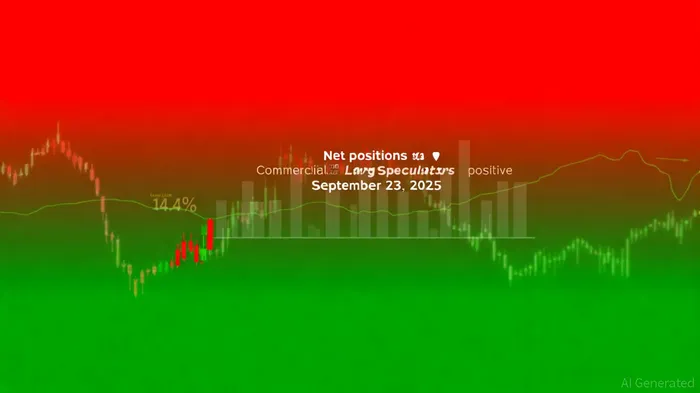





Comentarios
Aún no hay comentarios