
Navigating Corn Futures Volatility: Short-Term Opportunities Amid Global Supply Dynamics
The corn futures market in early 2026 has emerged as a focal point for traders seeking to capitalize on a confluence of supply constraints, robust demand, and geopolitical uncertainties. With prices hovering near $4.40 per bushel as of January 6, 2026, the market reflects a delicate balance between tightening global supplies and persistent export demand. This analysis explores the drivers of volatility and outlines actionable strategies for short-term traders navigating this complex landscape.
Market Fundamentals: A Tug-of-War Between Supply and Demand
The 2025/26 marketing year has been marked by historically low USDA-projected ending stocks, a direct result of unseasonably tight global supply conditions. South America, a critical corn exporter, has seen unexpected domestic absorption of early output-particularly in Brazil-limiting exportable surpluses. Meanwhile, U.S. export inspections have surged, with weekly shipments reaching 68.7 million bushels, a figure well above seasonal averages. This dynamic has created a supply bottleneck, pushing prices to near-May highs.
Demand-side pressures are equally pronounced. China's growing dairy sector, for instance, has driven a sharp increase in livestock feed consumption. Simultaneously, biofuel mandates in the U.S. and Brazil continue to anchor demand, while global trade flows remain sensitive to U.S.-China trade negotiations and developments in Ukraine. These factors underscore the market's vulnerability to geopolitical shocks, which could amplify price swings in the near term.
Technical Analysis: Bullish Near-Term Signals Amid Mixed Indicators
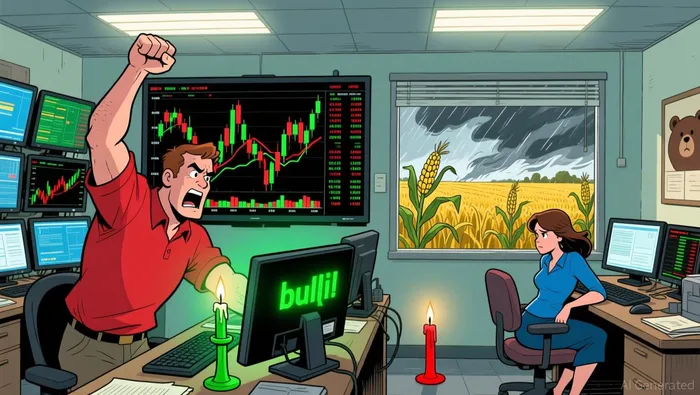 For short-term traders, technical indicators offer a nuanced outlook. The RSI for corn futures (ZCU2025) stands at 59.14, signaling a potential buy opportunity, though it also suggests bearish pressure as it approaches oversold territory. The MACD, however, is turning negative, hinting at waning momentum. A critical watchpoint is the 418–411 support zone on the 8-hour chart, where unfilled orders (UFOs) could trigger renewed buying pressure if prices retest this level.
Bollinger Bands and the 20-day average volume further complicate the picture. While the former suggest a "Hold" stance, the latter shows a 40% sell signal, reflecting divergent market sentiment. Traders are advised to monitor volume delta closely, as post-breakout weakness indicates a lack of immediate confirmation for sustained bullish momentum.
Trading Strategies: Leveraging Volatility with Precision
Given the market's volatility, traders can adopt a dual approach:
1. Support-Level Reentry: Positioning for a retest of the 418–411 support zone, where historical buying interest could drive a breakout. This strategy aligns with the "buy the dip" logic observed in recent price action.
2. Contract Flexibility: Utilizing micro corn futures (MZC) for smaller, more agile positions or standard contracts (ZC) for larger exposure, depending on risk tolerance. Margin requirements vary significantly between the two, offering tailored leverage options.
However, caution is warranted. While short-term indicators are bullish, medium- to long-term signals for the Corn Price Index Futures remain bearish, reflecting skepticism about sustained price strength.
Risks and Considerations
The market's sensitivity to external shocks cannot be overstated. A record corn crop in South America, if realized, could flood global markets and erode gains. Similarly, geopolitical tensions-such as a deterioration in U.S.-China trade relations-could disrupt export flows. Weather patterns in Brazil and Argentina will also play a pivotal role in shaping supply dynamics over the next few months.
Conclusion
Corn futures present a compelling case for short-term traders, but success hinges on a disciplined approach. The interplay of tight supplies, strong demand, and geopolitical risks creates both opportunities and hazards. By combining technical analysis with a keen eye on fundamental drivers, traders can navigate this volatile market with greater confidence. As always, risk management remains paramount in an environment where unexpected developments can swiftly alter the trajectory of prices.







Comentarios
Aún no hay comentarios