
Navigating the Consumer Discretionary Sell-Off: Is This a Buying Opportunity for Mattel?
The consumer discretionary sector has been one of the hardest-hit areas of the market in 2025, with shifting spending patterns, inflationary pressures, and a broader macroeconomic slowdown creating headwinds for retailers and manufacturers alike. MattelMAT-- (NASDAQ:MAT), a bellwether in the toys and entertainment space, has not been immune to these forces. However, for contrarian value investors, the company's recent struggles may present an opportunity to acquire a fundamentally strong business at a discount.
A Sector in Retreat, but Not Without Hope
The Consumer Discretionary sector's woes are well-documented. Families are prioritizing essentials over discretionary purchases, while rising production and logistics costs are squeezing margins. Mattel's Q3 2025 results underscored these challenges: revenue fell 5.9% year-on-year to $1.74 billion, missing Wall Street estimates, and non-GAAP earnings came in 15.9% below expectations. The Zacks Toys - Games - Hobbies industry report highlights a "challenging near-term outlook" for the sector, with Mattel's Zacks Rank of #3 (Hold) reflecting cautious sentiment.
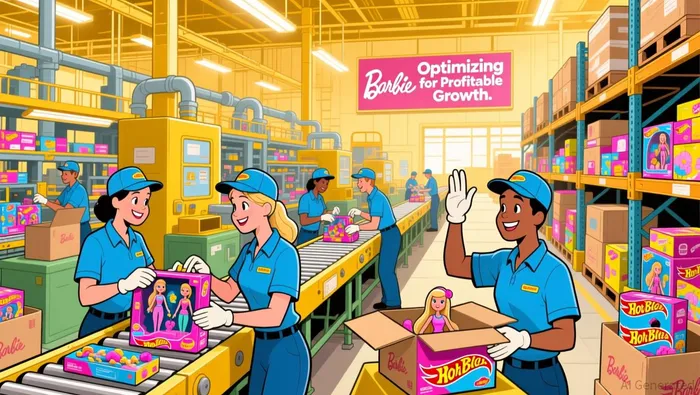
Yet, beneath the surface, there are signs of resilience. Mattel's CEO, Ynon Kreiz, noted a "significant acceleration in U.S. retailer orders" in Q4, suggesting that the worst may already be priced in. Meanwhile, the company's strategic focus on high-margin segments-such as its Optimizing for Profitable Growth program and the enduring popularity of Hot Wheels-positions it to capitalize on its intellectual property portfolio.
Valuation Metrics Suggest Undervaluation
Mattel's current valuation appears compelling when compared to both its historical averages and industry peers. As of August 1, 2025, the company's P/E ratio stands at 10.81, far below its 10-year average of 24.61 and the sector average of 19.1. This discount is even more pronounced when considering its debt-to-equity ratio, which has declined from 2.00 in 2023 to 1.18 in Q1 2025. While still higher than the Consumer Discretionary sector's average of 0.58-0.68 according to market analysis, the trend indicates improved financial discipline.
Analysts have also highlighted Mattel's attractive risk-rebalance. UBS and Bank of America Securities have set price targets of $29.00 and $27.00, respectively, implying 37% and 28% upside from current levels. Even the most cautious forecast-Roth MKM's $20.00 "Hold" rating-suggests limited downside. These divergent views reflect a market grappling with macroeconomic uncertainty but underscore Mattel's potential as a value play.
Strategic Catalysts and Long-Term Positioning
Mattel's long-term success hinges on its ability to adapt to evolving consumer preferences. The company's reduced exposure to China-a source of volatility in recent years-has stabilized its supply chain. Additionally, its film lineup and partnerships with major studios (e.g., Barbie and Wonka) provide recurring revenue streams that transcend cyclical retail demand.
The Hot Wheels brand, in particular, remains a cash-cow. With its recent foray into electric vehicles and collectibles, the franchise has demonstrated cross-generational appeal and high-margin potential. For investors, this diversification into durable, IP-driven products offers a buffer against the sector's broader volatility.
Risks and Cautionary Notes
No investment is without risk. Mattel's Q3 results highlight the fragility of its retail-dependent business model. A continued shift toward digital entertainment could further erode demand for physical toys. Additionally, while the company's debt load has improved, its leverage remains elevated relative to peers like Jakks Pacific (4.91 P/E) and Build-A-Bear Workshop (11.87 P/E).
Macroeconomic headwinds-such as a potential recession or prolonged inflation-could also delay a recovery in consumer spending. However, Mattel's low P/E ratio and strong cash flow generation suggest it is already priced for worst-case scenarios, leaving room for upside if the business stabilizes.
Conclusion: A Contrarian Case for Mattel
For value investors, Mattel represents a classic case of "buying the business, not the stock." While the company's near-term results are disappointing, its low valuation, improving balance sheet, and strategic focus on high-margin IP position it as a potential winner in a post-recessionary environment. Analysts' divergent price targets-from $20 to $29-reflect this duality: a floor set by caution and a ceiling driven by optimism about its long-term potential.
In a market where fear often overshadows fundamentals, Mattel's current discount offers a compelling entry point for those willing to bet on its ability to navigate the storm. As the adage goes, "When the tide goes out, you learn who's been swimming naked." For Mattel, the question is whether its moats-strong brands, recurring revenue streams, and a leaner cost structure-are deep enough to withstand the downturn.







Comentarios
Aún no hay comentarios