
Navigating the New Cold War: Strategic Asset Positioning in the U.S.-China Trade Fray
The U.S.-China trade conflict has entered a new phase of escalation, with President Donald Trump's 145% tariff threats, according to a Politico report, and China's rare earth export controls, reported by a Discovery Alert story, creating a high-stakes chess match for global investors. As the Trump-Xi APEC summit looms, strategic asset positioning must account for both the immediate volatility and the long-term structural shifts in supply chains, technology, and maritime trade.
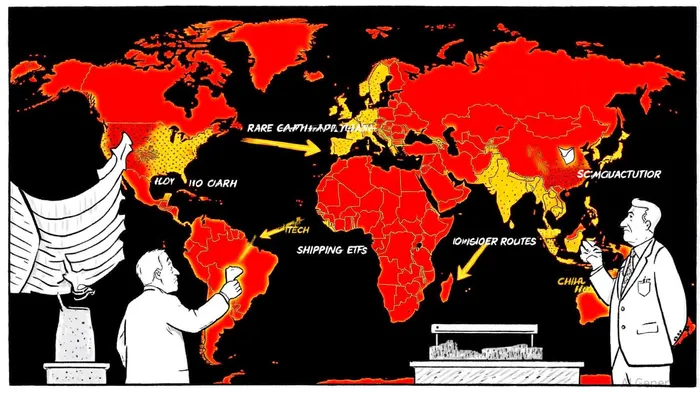
1. Rare Earths: The Invisible Lever in Geopolitical Chess
China's dominance in rare earth elements (REEs)-controlling 63% of global mine output and 90% of processing capacity, according to a Business News Today analysis-has become a weaponized asset. Recent export restrictions on materials critical to semiconductors, EVs, and defense tech have forced the U.S. to accelerate domestic production. The Department of War's $400 million investment in MP MaterialsMP-- and international partnerships like Greenland's Critical MetalsCRML-- Corp-Ucore collaboration, noted in a Rare Earth Exchanges report, signal a race to diversify supply chains. However, these efforts remain nascent, leaving investors with a binary choice:
- Short-term: Hedge against REE shortages via ETFs tracking rare earth mining (e.g., RAREX) or tech-sector exposure to EVs and AI.
- Long-term: Position in U.S.-backed refining projects (e.g., Lynas Rare Earths) and synthetic alternatives (e.g., lab-grown magnets).
2. Semiconductors: The Tariff-Driven Great Migration
The Trump administration's revocation of TSMCTSM-- and Samsung's China production waivers has triggered a $200 billion U.S. semiconductor investment boom, according to a CTOL report. TSMC's Arizona expansion and the 100% tariff on offshore chips are reshaping global manufacturing, but high costs and geopolitical risks persist. Investors should:
- Short-term: Allocate to U.S. chipmakers (e.g., Intel, AMD) and equipment firms (e.g., ASML, Lam Research) benefiting from CHIPS Act incentives.
- Long-term: Monitor AI-specific chips (GPUs, HBMs) for volatility, as demand outpaces supply amid trade disruptions.
3. Shipping: The New Frontline of Economic Warfare
Port fee wars-U.S. tariffs on Chinese vessels and China's retaliatory measures-are disrupting maritime trade. The U.S. is incentivizing domestic shipbuilding via the $21 billion Shipyard Infrastructure Optimization Program, according to a Silk Road Consulting piece, while South Korea's 54% share of U.S. container ships positions it as a key beneficiary. Strategic moves for investors:
- Short-term: Short Chinese shipping stocks (e.g., COSCO) and long U.S. and South Korean maritime ETFs.
- Long-term: Bet on digital twins and AI-driven logistics platforms optimizing non-Chinese routes.
4. Macro Asset Positioning: Gold, Bonds, and the "New Normal"
As trade tensions drive inflation and supply chain fragility, defensive assets are gaining traction. Gold has hit record highs, according to a New York Times report, while long-dated U.S. Treasuries offer inflation hedging. Meanwhile, sector rotation toward resilient indices like the NSE 30 and away from trade-exposed S&P 500 sectors reflects market pragmatism.
Conclusion: Preparing for the "Next-Next" War
The Trump-Xi negotiations may delay immediate hostilities, but the structural decoupling of U.S.-China trade is irreversible. Investors must balance short-term hedging (gold, bonds, tech ETFs) with long-term bets on U.S. supply chain resilience (rare earths, semiconductors, shipping). The winners of this new cold war will be those who anticipate the "next-next" conflict, not the next one.





Comentarios
Aún no hay comentarios