
Navigating U.S.-China Trade Tensions: Sector-Specific Opportunities in Supply Chain Resilience and Tariff-Resistant Industries
1. Electronics: The "China Plus One" Strategy and Domestic Reshoring
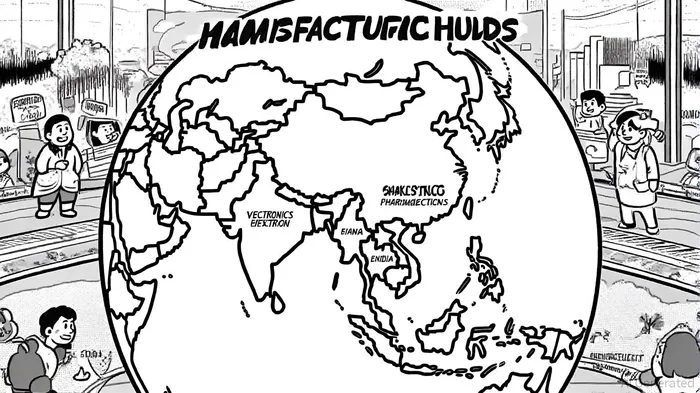
The electronics sector, particularly semiconductors, has been a focal point of U.S.-China trade tensions due to its reliance on Chinese manufacturing for critical components. Tariffs imposed in 2025 have accelerated a shift toward the "China plus one" strategy, with companies diversifying production to Vietnam, India, and Mexico, according to an MSU study. However, the sector's long-term resilience hinges on reshoring efforts.
The CHIPS and Science Act, passed in 2022, has spurred significant domestic investment. IntelINTC--, TSMCTSM--, and Texas InstrumentsTXN-- are expanding U.S. chip manufacturing facilities, supported by federal subsidies, as noted in Global Trade Magazine. These moves are not merely defensive; they reflect a strategic pivot toward securing control over high-tech supply chains. For investors, this trend underscores the importance of companies with strong ties to domestic production and R&D capabilities.
2. Pharmaceuticals: Onshoring and Policy-Driven Resilience
The pharmaceutical industry has emerged as a prime example of policy-driven supply chain resilience. Faced with the risk of tariffs on imported active pharmaceutical ingredients (APIs), U.S. companies have aggressively invested in domestic manufacturing. Eli Lilly, for instance, announced a $27 billion investment in 2025 to expand U.S. production, including three new API facilities, according to Fox Business. AstraZeneca and Roche have followed suit, committing billions to onshore operations, as reported by Forbes.
These investments are bolstered by federal initiatives like the FDA's PreCheck program, which streamlines regulatory approvals for domestic manufacturers, per Windshire's analysis. For investors, the sector offers a dual opportunity: long-term stability through reduced geopolitical exposure and growth potential from government incentives.
3. Automation: Mitigating Labor and Logistical Risks
Automation has become a cornerstone of supply chain resilience, particularly in labor-intensive industries. A 2025 Deloitte survey found that 95% of manufacturers plan to invest in AI/ML, generative AI, or causal AI within five years. Automation reduces reliance on overseas labor arbitrage and mitigates bottlenecks caused by prolonged lead times.
However, the transition is not without challenges. The "productivity J-curve"-where initial AI adoption leads to short-term efficiency losses-highlights the need for patience and capital allocation, a point explored in an MIT Sloan article. Companies like Rockwell Automation and ABB are leading the charge, offering scalable solutions for smart factories. Investors should prioritize firms with robust automation ecosystems and partnerships with AI-driven logistics platforms.
4. Regionalization: Proximity Over Cost Efficiency
The shift toward regionalization-relocating production closer to end consumers-has gained momentum. A Deloitte report notes that 86.2% of manufacturers have de-risked their supply chains by expanding operations in the U.S., Mexico, and Canada (Supply chain resilience). This trend is particularly evident in the automotive and electronics sectors, where proximity to markets reduces exposure to cross-border tariffs and shipping delays.
For example, automotive companies are establishing regional hubs in Mexico to serve U.S. demand, leveraging the USMCA trade agreement, as reported by Global Trade Magazine. While regionalization increases costs, it enhances agility-a critical factor in an era of unpredictable trade policies.
Challenges and Considerations
Despite these opportunities, investors must weigh the costs of reshoring and automation. Reshoring requires substantial capital, and automation demands workforce retraining. A 2025 Deloitte survey found that 46% of manufacturers face moderate to significant challenges in filling production and operations roles. Additionally, the long-term economic costs of fragmented supply chains remain uncertain, with studies showing welfare losses for the U.S. and its trading partners, according to CEPR.
Conclusion: Strategic Allocation in a Fragmented World
The U.S.-China trade war has forced industries to prioritize resilience over efficiency. For investors, the most promising opportunities lie in sectors that are either inherently tariff-resistant (e.g., pharmaceuticals) or actively reengineering their supply chains (e.g., electronics, automation). While the path to resilience is costly, the long-term benefits-reduced geopolitical risk, policy tailwinds, and operational agility-justify strategic allocation.





Comentarios
Aún no hay comentarios