
Navigating the New U.S.-China Tariff Landscape: Strategic Investment Opportunities in Supply Chain-Resilient Tech and DeFi Platforms
The U.S.-China trade relationship in 2025 remains a volatile battleground, with tariffs evolving into a strategic tool for reshaping global supply chains and geopolitical influence. Recent developments, including President Trump's 100% additional tariff on Chinese imports, according to a CNN report and the 90-day tariff truce, according to China Briefing, have created a complex web of duties that are reshaping investment dynamics. For investors, the focus is shifting toward sectors and technologies that mitigate supply chain fragility and leverage decentralized systems to bypass traditional trade bottlenecks.
Supply Chain-Resilient Tech: A New Era of Decoupling
The U.S. and China's escalating tariffs-now totaling 130% on Chinese goods, as noted in a CNN report-have accelerated efforts to decouple critical industries. China's proposed export controls on rare earth minerals, also reported by CNN, a vital component for semiconductors and green energy technologies, have further intensified this trend. Investors are increasingly prioritizing companies that offer alternatives to China-dependent supply chains.
- Rare Earth and Critical Minerals Substitutes: Firms developing synthetic rare earth materials or recycling technologies are gaining traction. For example, companies like MP Materials (U.S.) and Avalon Rare Metals (Canada) are scaling operations to reduce reliance on Chinese exports, according to the Supply Chain Report.
- Automation and AI-Driven Supply Chains: Tariff-driven cost pressures are pushing manufacturers to adopt AI-powered logistics and predictive analytics. Startups like C3.ai and SAP are capitalizing on demand for real-time supply chain optimization tools, a trend highlighted by China Briefing.
- Nearshoring and Regionalization: The U.S. is incentivizing domestic production through tariffs on Chinese wood products (e.g., 25% on upholstered furniture), and the 20% IEEPA-driven duty on Chinese imports, according to an official CBP statement. This has boosted demand for nearshoring platforms like Flex and Jabil, which manage localized manufacturing ecosystems, as noted by the Supply Chain Report.
Data from the U.S. Census Bureau indicates a 22.2% decline in furniture imports from China in the first half of 2025, with a 53.4% drop in June alone, a trend discussed in the Supply Chain Report. Such trends underscore the viability of supply chain diversification as a long-term investment theme.
DeFi Platforms: Bypassing Geopolitical Frictions
As tariffs complicate cross-border trade, decentralized finance (DeFi) platforms are emerging as a critical infrastructure for global commerce. Traditional banking systems, already strained by U.S. sanctions and Chinese countermeasures noted by China Briefing, are being outpaced by blockchain-based solutions that enable frictionless transactions.
- Cross-Border Trade Finance: Platforms like Uniswap and Curve Finance are facilitating trade settlements in stablecoins (e.g., USDCUSDC--, DAI), reducing exposure to volatile fiat currencies and tariff-driven inflation, a development covered by the Supply Chain Report.
- Supply Chain Tokenization: Projects such as VeChain and IBM's Food Trust are tokenizing goods to create transparent, auditable supply chains. This is particularly valuable in sectors like pharmaceuticals and electronics, where U.S. tariffs have disrupted traditional logistics, and where CBP guidance has increased compliance scrutiny.
- Decentralized Identity (DID) Systems: With CBP's 25% USMCA-compliance tariffs raising origin-verification burdens, verifying the origin of goods has become a compliance nightmare. DID platforms like Sovrin and uPort are enabling tamper-proof provenance tracking, reducing the risk of non-compliance.
The U.S. Treasury's recent report on crypto adoption notes a 40% year-over-year increase in DeFi-based trade settlements, driven by businesses seeking to circumvent tariff-related bottlenecks, a trend the Supply Chain Report also highlights. This trend is likely to accelerate as the 90-day truce expires on November 10, according to China Briefing, with no clear resolution in sight.
Risks and Opportunities in the Near Term
While the current tariff environment presents clear risks-such as inflationary pressures and supply chain bottlenecks-it also creates opportunities for innovation. Investors should monitor:
- Tariff Investigations: The U.S. Commerce Department's 50-day investigation into furniture imports, covered by the Supply Chain Report, could lead to further sector-specific duties or exemptions.
- DeFi Regulatory Clarity: The SEC's upcoming guidance on stablecoins and cross-border transactions may legitimize DeFi as a mainstream trade tool, a development the Supply Chain Report has discussed.
- Rare Earth Substitutes: Breakthroughs in synthetic materials or recycling could reduce China's strategic leverage, reshaping the tech sector, as noted in the CNN reporting.
Conclusion
The U.S.-China tariff war is no longer a macroeconomic sideshow-it is a catalyst for systemic change in global trade and finance. For investors, the path forward lies in supporting technologies and platforms that decouple from fragile supply chains and leverage decentralization to bypass geopolitical friction. Supply chain-resilient tech and DeFi are notNOT-- just defensive plays; they are the building blocks of a post-tariff world.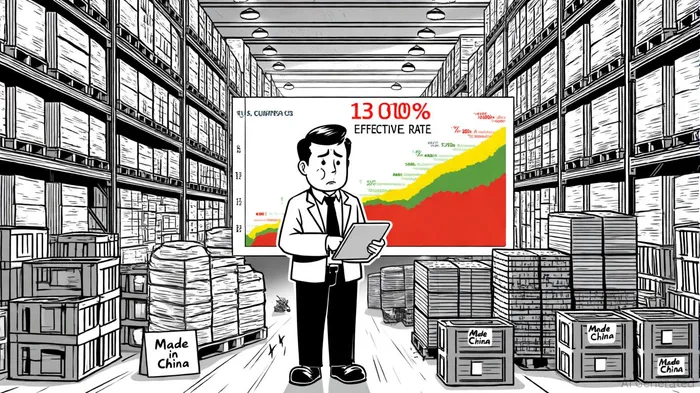





Comentarios
Aún no hay comentarios