
Navigating U.S.-China Geopolitical Risks: Sector-Specific Opportunities in Trade and Tech
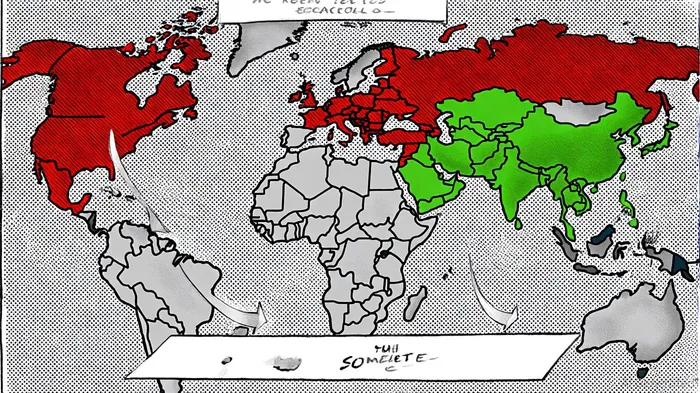
The U.S.-China trade tensions of 2025 have reshaped global economic dynamics, creating both headwinds and unexpected opportunities. While tariffs and retaliatory measures have disrupted traditional supply chains, they have also accelerated strategic realignments in sectors ranging from manufacturing to technology. Investors navigating this landscape must balance risk mitigation with a keen eye for innovation and adaptation.
1. Sectors Under Pressure: Automotive, Semiconductors, and Agriculture
The automotive industry has borne the brunt of 2025's 25% tariff on imported vehicles and parts, with electric vehicle (EV) manufacturers facing projected price hikes of $2,000–$5,000 per unit. This has led to a 15–20% downward revision in U.S. EV sales, as consumers grapple with affordability challenges [1]. Meanwhile, China's 34% retaliatory tariff on U.S. agricultural exports has crippled American farmers, who rely on China for soybeans and other commodities [4].
The technology sector, particularly semiconductors and AI components, faces a dual threat: U.S. export controls and Chinese countermeasures. These restrictions have forced firms to prioritize domestic production, slowing the flow of critical technologies and fragmenting global value chains [3]. For instance, the “electrical equipment and electronics” sector, which relies on 30% of its output on global supply chains, has seen sharp declines in production efficiency [2].
2. Sectors Finding Resilience: Retail, Travel, and Nearshoring-Driven Manufacturing
Amid the chaos, some sectors have thrived. Retailers like NikeNKE-- and Foot Locker have benefited from reduced tariffs, with shares rising as companies pass savings to consumers [1]. The travel sector has also rebounded, as lower trade tensions spurred optimism about discretionary spending, boosting airlines and hospitality firms [1].
Manufacturers are increasingly adopting nearshoring and reshoring strategies to mitigate exposure. For example, companies in the apparel and footwear industries—historically reliant on Chinese production—are diversifying to Vietnam, India, and Mexico [1]. This shift, while costly in the short term, is creating long-term opportunities for firms that can optimize localized supply chains.
3. Strategic Opportunities in Technology and Innovation
Despite the challenges, the tech sector holds untapped potential. The U.S.-China rivalry has accelerated investments in domestic semiconductor manufacturing, with firms like IntelINTC-- and TSMCTSM-- expanding U.S. facilities to bypass export controls [3]. Similarly, AI startups are capitalizing on the decoupling by developing proprietary tools tailored to U.S. markets, reducing reliance on Chinese components [3].
Investors should also consider the indirect benefits of policy uncertainty. The erosion of trust in global partnerships has spurred innovation in automation and digital logistics, with companies like AmazonAMZN-- and DHL investing in AI-driven supply chain solutions [5].
4. Macroeconomic Implications and Investor Takeaways
The trade war's macroeconomic toll is evident: U.S. GDP growth forecasts have been slashed to 0.8% in 2025, while inflation remains stubbornly above 4–5% [1]. However, these pressures are also driving structural changes. For instance, the manufacturing sector's contraction has highlighted the need for supply chain resilience, creating demand for firms specializing in predictive analytics and inventory optimization [4].
Conclusion
The U.S.-China trade tensions of 2025 are a double-edged sword. While they have disrupted traditional industries, they have also catalyzed innovation and strategic realignment. Investors who focus on sectors with strong adaptation mechanisms—such as nearshoring-capable manufacturing, domestic tech innovation, and resilient retail—can mitigate geopolitical risks while capitalizing on emerging opportunities. As the global economy recalibrates, agility will be the key to long-term success.





Comentarios
Aún no hay comentarios