
Navigating the China-EU Trade Crossroads: Sector-Specific Risks and Rewards in a Post-2025 Landscape
The China-EU trade relationship in 2025 is a mosaic of competition and cooperation, with market access tensions reshaping cross-border investment opportunities across tech, manufacturing, and renewable energy sectors. As the two blocs navigate their 50th anniversary summit and ongoing trade disputes, investors must parse the risks and rewards in each sector to position themselves effectively.
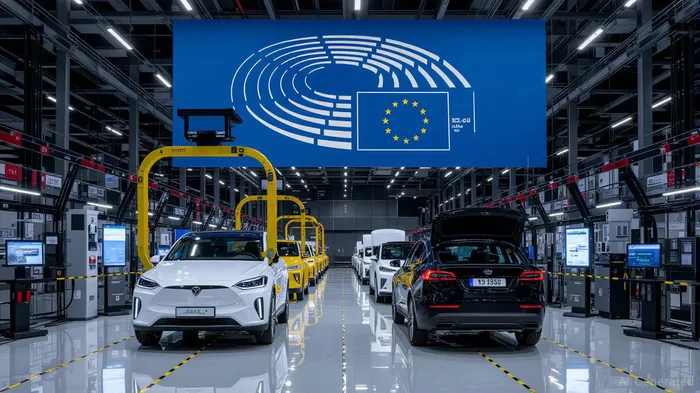
Tech Manufacturing: Balancing Tariffs with Innovation
The electric vehicle (EV) sector epitomizes the China-EU trade paradox. While Chinese EVs captured 25% of the EU market in 2024, Brussels has imposed tariffs of up to 45% to counter perceived subsidies. Investors must weigh the risks of further trade barriers against the structural growth of the EV market.
Risks:
- Subsidy Backlash: The EU's anti-subsidy probes, such as the ongoing investigation into BYD's Hungarian plant, could disrupt supply chains and delay production timelines.
- Data Security: The €530M TikTok fine for data transfers to China underscores heightened EU scrutiny of Chinese-owned tech firms, complicating investments in digital infrastructure.
Rewards:
- Sectoral Compromises: A “price undertaking” mechanism—whereby Chinese EVs agree to minimum pricing—could defuse tariff tensions. Investors in EU EV manufacturers like Renault or BMW could benefit if tariffs are rolled back.
- Joint Ventures: EU firms partnering with Chinese firms (e.g., BASF's 50-50 joint venture in Zhanjiang) may gain access to subsidies and local markets, though at the cost of equity dilution.
Manufacturing: Rare Earths and Strategic Vulnerabilities
China's dominance in rare earth elements—controlling 60% of global mining and 90% of processing—has created supply chain risks for EU industries reliant on components for wind turbines, semiconductors, and defense systems.
Risks:
- Export Controls: China's 2023 restrictions on gallium and germanium caused EU semiconductor prices to spike by 50%. Similar moves could disrupt manufacturing sectors like aerospace or robotics.
- Market Access Asymmetry: EU firms face restrictive joint venture requirements in 40+ sectors, while Chinese firms enjoy unfettered access to EU markets.
Rewards:
- Diversification Plays: The EU's Critical Raw Materials Act targets 10% domestic extraction by 2030. Investors should watch firms like Norwegian Norsk Hydro or German ThyssenKrupp, which are scaling up rare earth recycling and mining projects.
- Reciprocity Frameworks: Post-summit agreements may ease restrictions in sectors like chemicals or machinery, rewarding firms with cross-border production capabilities.
Renewable Energy: Growth Amid Geopolitical Crosscurrents
China's clean energy leadership—surpassing 2030 solar and wind targets—creates both opportunities and dependencies. The EU's green transition relies on Chinese solar panels and EV batteries, even as it seeks to reduce reliance through initiatives like the Critical Raw Materials Act.
Risks:
- Trade Diversion: U.S. tariffs have spurred Chinese solar panel exports to the EU, potentially flooding markets and depressing prices.
- Climate Policy Misalignment: The EU's carbon border tax could penalize Chinese goods, while China's subsidies for solar manufacturers may distort EU markets.
Rewards:
- Technology Partnerships: Collaborations on EV charging standards or grid-scale storage could yield patents and market share. Investors in firms like Vestas (wind) or NextEraNEE-- (solar) may benefit from cross-border tech-sharing agreements.
- Geographic Diversification: The EU's push for North Sea wind farms and African solar projects reduces overexposure to China's supply chains.
Post-Summit Outlook and Investment Strategy
The July 2025 summit offers a critical pivot point. While sectoral compromises (e.g., EV tariffs, rare earth access) could stabilize trade, deeper issues like forced technology transfers and China's state subsidies remain unresolved. Investors should adopt a sector- and geography-aware approach:
- Tech:
- Buy: EU EV manufacturers if tariff agreements materialize.
Avoid: Pure-play Chinese EV firms exposed to anti-subsidy probes.
Manufacturing:
- Invest: In EU rare earth recycling firms and raw material projects.
Hedge: Against supply chain disruptions via diversified portfolios.
Renewables:
- Focus: On EU-China climate partnerships in grid tech and storage.
- Monitor: Post-summit updates on the Critical Raw Materials Act and carbon border tax implications.
Final Consideration
The China-EU relationship is a high-stakes game of strategic interdependence. Investors must balance the growth potential of sectors like EVs and renewables against the risks of trade friction and supply chain fragility. A pragmatic, diversified approach—rooted in sector-specific analysis and geopolitical awareness—will be key to capitalizing on this evolving landscape.
Stay informed, stay flexible, and position for the sectors where competition and cooperation intersect.







Comentarios
Aún no hay comentarios