
Navigating China's Deflationary Risks and Monetary Easing: Strategic Opportunities in Yuan-Denominated Fixed-Income and A-Shares
China's economic landscape in 2025 is defined by a delicate balancing act: persistent deflationary pressures coexist with a central bank cautiously deploying targeted monetary easing. For investors, this environment presents both risks and opportunities, particularly in yuan-denominated fixed-income and A-shares. By dissecting recent data and policy shifts, we can identify strategic entry points and hedging strategies.
Deflationary Pressures: A Persistent Headwind
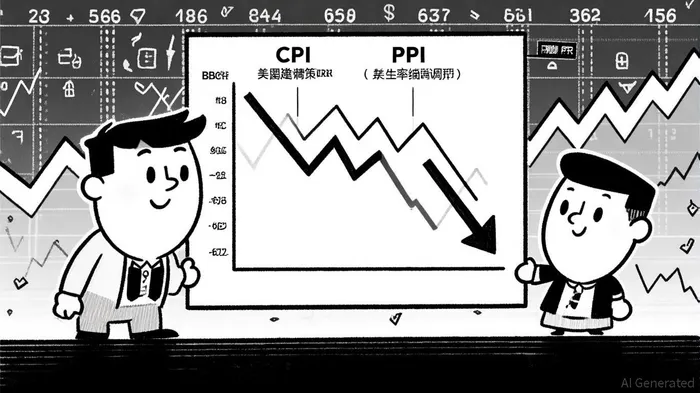
China's consumer price index (CPI) has turned negative, with a year-on-year decline of 0.4% in August 2025, followed by a sharper 0.3% drop in September[1][6]. Food prices, a critical component of China's CPI basket, have fallen by over 4% annually, reflecting weak household demand and base effects[1]. Meanwhile, the Producer Price Index (PPI) remains in deflationary territory, at −2.3% year-on-year in September, marking 36 consecutive months of contraction[6]. This dual deflationary trend-consumer and producer-signals a broader slowdown in economic activity, driven by soft domestic demand and global trade uncertainties.
The PBOC's recent interventions, such as the May 2025 RRR cut and seven-day reverse repo rate reduction[3], aim to inject liquidity and stabilize expectations. However, these measures have yet to fully reverse the deflationary momentum, underscoring the need for further action.
Monetary Easing: A Cautious but Calculated Approach
The PBOC's 2025 policy playbook reflects a shift toward a more orthodox monetary framework, with interest rate cuts and RRR reductions becoming central tools[2]. In May 2025, the central bank reduced the RRR by 0.5 percentage points, injecting 1 trillion yuan into the financial system[3], while also lowering the seven-day reverse repo rate by 0.1 percentage points[5]. These steps align with a broader strategy to reduce social financing costs and support high-priority sectors, such as technology and infrastructure[4].
Notably, the PBOC has also introduced innovative tools, including the Securities, Fund, and Insurance Swap Facility (SFISF), which has provided liquidity to over 300 listed companies through share buybacks and market-making activities[2]. This targeted approach avoids broad-based stimulus, instead focusing on stabilizing asset prices and bolstering confidence in capital markets. However, the central bank remains wary of exacerbating equity market volatility, as seen in the September 2025 stock rally that has complicated the timing of further rate cuts[4].
Strategic Opportunities in Fixed-Income and A-Shares
For investors, the interplay between deflationary risks and monetary easing creates a nuanced playing field.
1. Yuan-Denominated Fixed-Income: A Defensive Play
The PBOC's commitment to maintaining FX stability-through firm daily fixes and liquidity tools[1]-provides a floor for the yuan, reducing currency risk for foreign investors. Meanwhile, the central bank's rate cuts and RRR reductions are likely to drive down borrowing costs, making government and high-grade corporate bonds more attractive. With CPI and PPI deflation expected to persist through 2025[3], real yields on fixed-income assets could rise, offering a hedge against declining nominal prices. Investors should prioritize bonds with short maturities and strong credit profiles to mitigate duration risk.
2. A-Shares: Sectoral Selectivity in a Fragmented Recovery
The PBOC's targeted stimulus, including the SFISF and sector-specific guidance[2], has injected liquidity into equity markets, particularly in sectors like photovoltaic equipment manufacturing and coal processing[6]. These industries, which have shown early signs of stabilization, could outperform in a weak recovery environment. Additionally, the PBOC's focus on consumption incentives and technological innovation[4] suggests continued support for consumer discretionary and tech stocks. However, investors must remain cautious about overvalued sectors, as the central bank's reluctance to trigger volatile capital flows[1] may limit broad-based rallies.
Risks and the Road Ahead
While the PBOC's calibrated approach mitigates systemic risks, challenges remain. The property sector's ongoing distress and the fading impact of fiscal measures could drag on growth, with GDP projected to rise by 4.8% in 2025[3]. Moreover, the central bank's delay in rate cuts to avoid market volatility[4] introduces uncertainty about the pace of reflation.
For investors, the key lies in balancing defensive fixed-income allocations with selectively positioned A-shares. The PBOC's emphasis on multi-channel interventions[1] suggests that opportunities will emerge in sectors directly benefiting from policy support, while the yuan's stability offers a tailwind for foreign capital.
Conclusion
China's 2025 economic narrative is one of cautious optimism. Deflationary pressures persist, but the PBOC's evolving toolkit-combining orthodox rate cuts with innovative liquidity facilities-provides a framework for a gradual reflation. For investors, the path forward requires a dual focus: leveraging fixed-income assets to hedge against deflation while capitalizing on A-shares with strong policy tailwinds. As the central bank navigates this complex landscape, strategic positioning will be critical to capturing value in a market defined by both risk and resilience.







Comentarios
Aún no hay comentarios