
Navigating the China-Canada Trade Storm: Canola and Steel Sector Opportunities Amid Tariff Turmoil
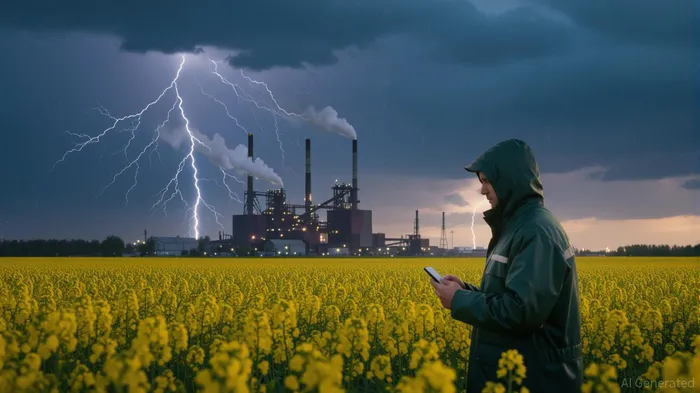
The China-Canada trade dispute has escalated into a full-blown tempest, with canolaCAN-- and steel sectors bearing the brunt of retaliatory tariffs and WTO battles. For investors, this is a high-stakes chess match where geopolitical moves translate into market volatility. Let's dissect the risks and opportunities in these two critical sectors.
Canola: A $5 Billion Market on the Brink
China's 75.8% anti-dumping duty on Canadian canola seed—announced in August 2025—has effectively strangled a $4.9 billion market. China imported 5.86 million metric tonnes of canola seed in 2024, accounting for 68% of Canada's total exports. The timing of this tariff, just weeks before the 2025 harvest, has triggered a liquidity crisis for farmers, with ICE canola futures plummeting 6.5% in a single day.
Risks to Watch:
- Stranded Inventory: Farmers face frozen logistics and plummeting prices, with local elevator bids dropping $1 per bushel overnight.
- Supply Chain Disruption: China's broader retaliatory measures (100% tariffs on canola oil and meal) have created a comprehensive trade blockade.
- Geopolitical Leverage: China's focus on oilseed self-sufficiency under its 14th Five-Year Plan suggests long-term pressure on Canadian exports.
Opportunities for Resilience:
- Diversification: Canada must pivot to value-added processing (e.g., biofuels under the Clean Fuel Standard) and expand into U.S., Japanese, and Mexican markets.
- Domestic Demand: The Clean Fuel Standard could create a $16 billion annual market for canola as a low-carbon feedstock.
- WTO Legal Battles: A Canadian challenge to China's duties could force negotiations, though resolution may take 12–18 months.
Steel: A WTO Showdown with Industrial Implications
China's WTO lawsuit against Canada's 25% tariffs on steel imports—targeting products “melted and poured” in China—highlights a strategic clash. Canada's measures, framed as anti-dumping protections, have drawn ire from Beijing, which claims they violate WTO rules.
Risks to Watch:
- Tariff Reciprocity: China's retaliatory tariffs on Canadian agricultural products (e.g., canola) create a feedback loop of economic pain.
- U.S. Tariff Spillovers: Canadian steel producers face indirect pressure from U.S. tariffs under Trump's policies, squeezing margins.
- Legal Uncertainty: The WTO dispute could drag on for years, leaving investors in limbo.
Opportunities for Resilience:
- Domestic Steel Demand: Canada's steel industry, valued at $12 billion annually, could benefit from infrastructure spending and green energy projects.
- Strategic Alliances: Restarting trade talks with China (as agreed by PM Carney and Premier Li Qiang) could unlock tariff reductions.
- ETF Exposure: Consider ETFs like the iShares Global Steel Index (STL) to hedge against sector-specific volatility.
Investment Strategy: Hedging and Diversification
- Short-Term Hedging:
- Canola Producers: Use futures contracts to lock in prices and mitigate currency risks (e.g., CAD/CNY fluctuations).
Steel Producers: Invest in companies with diversified export markets, such as Stelco Inc. (STL.TO), which has expanded into U.S. and European markets.
Long-Term Diversification:
- Agricultural Tech: Support firms developing biofuel technologies (e.g., Renewable Energy Group (REGI)) to capitalize on Canada's Clean Fuel Standard.
Steel Innovation: Target companies investing in green steel (e.g., SSAB AB (SSABb.ST)) to align with global decarbonization trends.
Geopolitical Monitoring:
- Track WTO rulings and bilateral negotiations. A resolution could unlock $2.6 billion in Canadian agricultural exports.
- Watch for China's potential pivot to alternative canola suppliers (e.g., Australia, Ukraine) and adjust investments accordingly.
Conclusion: Weathering the Storm with Strategy
The China-Canada trade war is a masterclass in how geopolitical tensions ripple through commodity markets. For canola, the immediate pain is real, but long-term resilience hinges on diversification and domestic demand. In steel, the WTO showdown underscores the need for strategic flexibility. Investors who position themselves to hedge short-term risks while capitalizing on long-term structural shifts—like the clean energy transition—will emerge stronger.
In this volatile landscape, the key takeaway is clear: adaptability is the investor's greatest asset. Stay informed, stay diversified, and don't let the storm blind you to the opportunities ahead.







Comentarios
Aún no hay comentarios